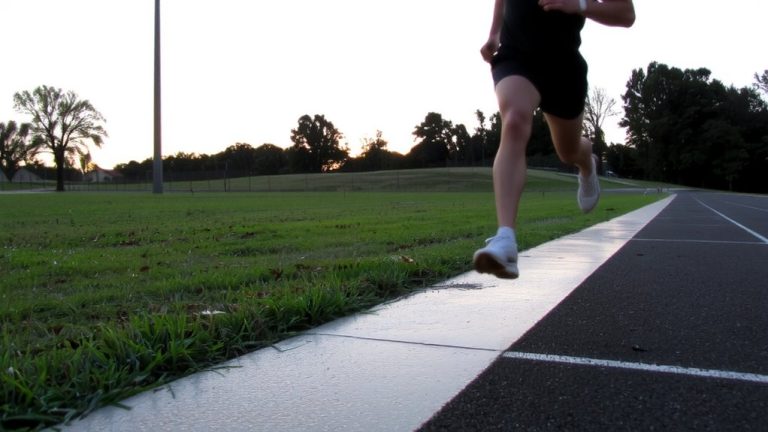
Designing a 400-Meter Repeat Plan for Competitive 1500m Runners
You run 1500m with 48% anaerobic lactic output, so 400m repeats at 90–95% race pace build essential speed endurance, like Saucony Endorphin Speed 3s help maintain turnover. Start with 6 x 400m, 90s rest, hitting even splits and HR Zone 3–4. Use 2:1 work-to-rest early, then shorten rest to simulate final 800m stress. Track heart rate; if it’s above 90% max, repeat the week. Phase in volume over 6 weeks, and there’s more to fine-tuning your set structure.
We are supported by our audience. When you purchase through links on our site, we may earn an affiliate commission, at no extra cost for you. Learn more. Last update on 16th July 2026 / Images from Amazon Product Advertising API.
Notable Insights
- Structure 400m repeats at 90–100% of 1500m race pace to target VO2 max and lactate threshold.
- Use 6–8 repetitions with 2-minute rest initially, progressing to shorter rests to simulate race intensity.
- Align work-to-rest ratios with training phase-longer rests for power, shorter for metabolic conditioning.
- Progress weekly by adding reps or reducing rest, ensuring even pacing and RPE ≤8/10.
- Phase training over 4-week blocks, peaking in race-specific sets with quality-focused volumes.
Why 400m Repeats Work for 1500m Runners
While you’re training for the 1500m, hitting 400-meter repeats gives your body exactly what it needs to race stronger, longer, and smarter. These Workouts push your VO2 max by running at 80–90% effort, boosting aerobic power critical for success. You’re also raising your lactate threshold, so your muscles clear and buffer lactate more efficiently during hard efforts. That means you sustain race pace with less fatigue. 400-meter repeats build speed endurance, letting you handle the 1500m’s blend of aerobic (40%) and anaerobic lactic (48%) demands. Doing 6 to 8 reps at 90% with 2-minute rest trains your body to recover partially while under stress, mimicking the final 800m grind. This 2:1 work-to-rest ratio reduces injury risk and integrates smoothly into your training process. You’ll run sharper, stay stronger, and finish faster-all by nailing the right stimulus at the right time.
How to Pace 400m Intervals for 1500m Success
How fast should you really run your 400s if you’re training for a strong 1500m? Aim for 95–100% of your current race pace-this workout is designed to boost running economy and lactate threshold. You should feel in control, like you could run 4 more repeats. That effort means you’re pacing it right, not going too hard too soon.
| Rep | Target Split | Heart Rate Zone |
|---|---|---|
| 1 | On pace | 3 |
| 3 | Consistent | 4 |
| 5 | Even | 4 |
| 8 | Race pace | 4 |
Interval workouts thrive on consistent 400m split times. Don’t chase splits-let them come naturally. The rest period keeps you sharp, not flat. This pacing strategy mirrors real race demands, so you’ll be ready when it counts.
How Long to Rest Between 400m Repeats for 1500m Gains
What if your rest periods were just as important as the repeats themselves? They are. For 1500m gains, the amount of rest between 400m repeats shapes the workout’s focus. A 1:1 work-to-rest ratio-say, 65 seconds run, 65 seconds jog-lets you sustain a pace would match your goal race pace, building stamina without excessive fatigue. Even though full recovery (3–5 minutes) allows higher intensity, it’s best saved for reps at 95–100% of 400m speed, training neuromuscular power. Shorter rest, like 30–45 seconds, creates metabolic stress and boosts lactate tolerance, ideal in threshold phases. Your ideal rest is slightly different based on your target, fitness, and phase. Adjust rest to control intensity, keep form sharp, and align with 1500m demands-precision here fine-tunes real-world race performance.
Schedule 400m Repeats by Training Phase
You’ve nailed down how rest intervals shape the impact of your 400m repeats, and now it’s time to map those efforts into your season plan. In Phase I (Base Building), you’ll run 7 x 400m at 65–75% intensity, 2-minute rest, boosting anaerobic lactic capacity. This training phase builds endurance without overstressing your system. By Phase II (Pre-Competitive), shift to once weekly: 5 x 150m up to 2 x 300m at 400m race pace, using longer rest intervals (6–15 min) for quality. In Phase III (Competitive), replace traditional 400m repeats with race-specific splits-like 2 x (250m + 150m) at race pace, 60 sec rest-capping volume at 800m. Each phase lasts four weeks, with week 4 a down week for recovery and testing. This structured progression aligns with competitive periodization, ensuring peak performance when it counts.
How to Safely Increase Reps and Pace Over 6 Weeks
While your body adapts to the rhythm of 400m repeats, you’ll start Week 1 at a controlled but purposeful intensity-6 x 400m at 90–95% of your 1500m race pace, with 90 seconds of rest between each-to build foundation without tipping into excessive fatigue. As training progresses, add 1–2 reps weekly, reaching 10 x 400m by Week 6 to boost anaerobic capacity. Only increase pace after Week 3 if you hit even splits and perceived effort stays at 8/10 or lower. This speed work sharpens race readiness for advanced runners. Use a 2:1 work-to-rest ratio early (e.g., 80 seconds run, 40 seconds walk), then cut rest by 10–15 seconds in Weeks 5–6 to mimic race demands. Monitor heart rate post-workout; if it exceeds 90% of max, repeat the current week. Smart running builds resilience without breakdown.
How to Balance 400m Repeats With Other Workouts
Once you’ve built a consistent base with weekly 400m repeats and safely scaled reps and pace over six weeks, it’s time to integrate these sessions into a smarter, more balanced weekly structure. One workout of 6–10 x 400m at 95–100% race pace should anchor your week, spaced at least 48 hours from longer intervals or tempo runs to prevent interference. Pair this with types of workouts like 90-second cruise intervals or hill sprints early in the week to spread fatigue across energy systems. In Phase II, add anaerobic alactic work-5 x 150m sprints-to Training Plans, enhancing race tactics and stride efficiency. Your running coach might suggest reducing volume to 4 x 400m in taper weeks to maintain sharpness. Balancing 400m repeats with complementary efforts guarantees peak performance without overreaching.
Common 400m Repeat Mistakes 1500m Runners Make
Why do so many 1500m runners fail to get the most out of their 400m repeats? You’re probably starting too fast-means running over 90% effort in the first three, which spikes lactate and kills your sixth and seventh. That doesn’t help you run faster on race day. Poor pacing, like flying the first three and fading hard, ruins the workout’s purpose. You also might not be taking enough rest-90 seconds is the minimum, but many cut it short. Taking 2–3 minutes of rest between three repetitions lets you hit target pace consistently. Skipping dynamic drills before means you’re risking injury at 80–90% intensity. And doing these weekly without recovery stalls VO2 max gains. Proper rest, warm-up, and even splits are non-negotiables that help you run faster, safely.
On a final note
You’ll build strength and speed by running 400m repeats at 95% effort, resting 90 seconds between reps, and wearing lightweight trainers like the Nike ZoomX Invincible Run 2 for joint protection. Start with 4 x 400m, add 1 rep weekly, and pair with easy runs and protein-rich recovery meals. Avoid overstriding, and track pace with a GPS watch to stay consistent, sharp, and injury-free.