How to Use Interval Training to Prepare for a Fast-Start Race Strategy
Start with six 200m bursts at 95–100% effort, 10–15 seconds faster per 400m than your 5K race pace, using 200m jog recoveries to train fast-start surges. Focus on relaxed form and quick turnover. Add 400m and 1K repeats at goal pace with active recovery to build endurance and lactate clearance. Keep recoveries at RPE 3–4 and monitor effort closely-stay in the RPE 7–9 range during hard sets. You’ll sharpen speed and stamina while staying in control; there’s a smart way to structure this for long-term gains.
We are supported by our audience. When you purchase through links on our site, we may earn an affiliate commission, at no extra cost for you. Learn more. Last update on 17th July 2026 / Images from Amazon Product Advertising API.
Notable Insights
- Perform 200m bursts at 95–100% effort to simulate fast-start race demands and improve anaerobic capacity.
- Use 200m jog recoveries to maintain intensity while promoting lactate clearance between intervals.
- Train at 10–15 seconds per 400m faster than 5K pace to condition the body for aggressive early race speeds.
- Focus on relaxed form and quick turnover during high-intensity bursts to conserve energy and prevent early fatigue.
- Monitor RPE regularly to stay within 9–10 during efforts and avoid overexertion that compromises repeat sprint quality.
Start With 200m Bursts for Fast-Start Practice
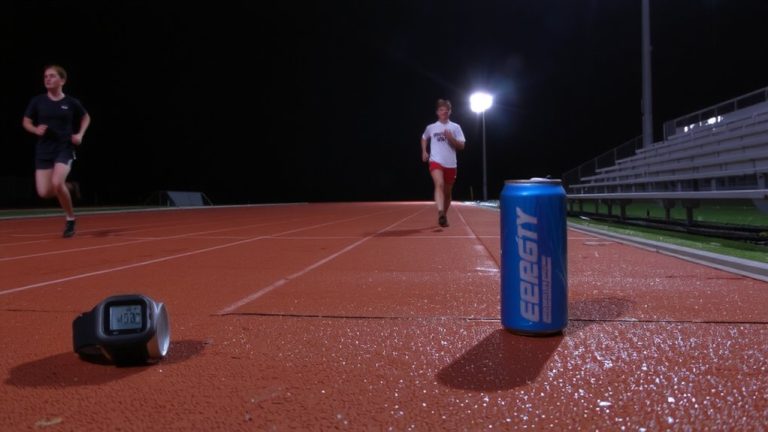
Six 200-meter bursts at 95–100% effort, followed by 200-meter jog recoveries, are your go-to workout for mastering the fast-start race, and yes, you’ll push harder than your 5K pace-about 10–15 seconds per 400 faster. These 200-meter intervals train your body to handle max effort right from the gun, simulating real race surges. Aim for RPE 9–10, where breathing’s sharp but controlled, and focus on relaxed running form to avoid early burnout. The recovery jog between reps lets you reset without fully cooling down, keeping the aerobic stress high. Do this weekly as part of your track training to fine-tune timing and pacing. Quick turnover is key-stay light on your feet, arms driving smoothly. This interval training builds mental and physical toughness, prepping you to lead or respond at the front. It’s precise, repeatable, and race-specific-no guesswork, just results.
Progress to 400m and 1K Race-Pace Repeats
Once you’ve built the ability to fire off quick, sharp bursts with those 200-meter sprints, it’s time to stretch that speed into longer, more sustainable efforts-this is where 400m and 1K race-pace repeats come in. These high-intensity intervals train your cardiovascular system to maintain race pace under fatigue, boosting both VO2 Max and lactate threshold. Add 400m repeats at goal 5K race pace with 60 seconds of active recovery, progressing to 1K repeats at half marathon pace. Gradually increase volume on your training schedule from 4 to 8 x 400m and 3 to 5 x 1K to adapt safely.
| Workout | Details |
|---|---|
| 400m repeats | Race pace, 60s active recovery |
| 1K repeats | 30 sec/mile slower, 2–3 min rest |
Use RPE 7–9 to guarantee intensity matches performance goals.
Use Active Recovery Between Intervals
While you’re pushing hard during those race-pace intervals, don’t underestimate what happens in the recovery-staying in motion with active recovery at an RPE 3–4 keeps blood flowing, helps clear lactate faster than stopping completely, and primes your body for the next repeat, whether you’re doing 10 x 400m with 60-second jog-back recoveries or tackling a ladder workout where 400m, 800m, and 1600m efforts are followed by 3:00, 4:00, and 5:00 minutes of easy movement, respectively. Active recovery lets you maintain circulation, lower your heart rate gradually, and reduce lactic acid buildup so you can keep running fast. Instead of standing, keep moving-use a slow jog or walk during recovery time. It’s a key part of smart interval training, improving workout continuity and performance. This approach is backed by real runner data and featured in trusted Workout Help guides for training success.
Monitor RPE to Avoid Overexertion
How do you know if you’re pushing hard enough during intervals without going too far? Use the rate of perceived exertion (RPE) to guide your effort. In interval training, keep high intensity interval runs between RPE 7–9-hard but not unsustainable. Avoid starting at RPE 10, or maximum effort, since that burns glycogen fast and leads to early fatigue. During recovery, drop to RPE 3–4 to refresh without fully cooling down. On 400m or longer repeats, monitor RPE every 200 meters to stay consistent and avoid overexertion before your planned surge. If your RPE consistently hits 9+, cut back volume or extend rest. This small tweak keeps you sharp, reduces injury risk, and fine-tunes pacing so you train smarter, recover faster, and race stronger-all without overdoing it.
On a final note
You’ve built speed-endurance with 200m bursts, then pushed race-pace on 400m and 1K repeats, using 90 seconds of jogging or fast walking for active recovery. Keep RPE at 7–8 to stay sharp without burning out. Wear responsive trainers like the Nike ZoomX Streakfly for quick turnover, fuel with 30g carbs per hour, and stretch post-run to cut injury risk-testers reported smoother shifts and stronger finishes.