The Role of Mental Rehearsal in Preparing for Challenging Intervals
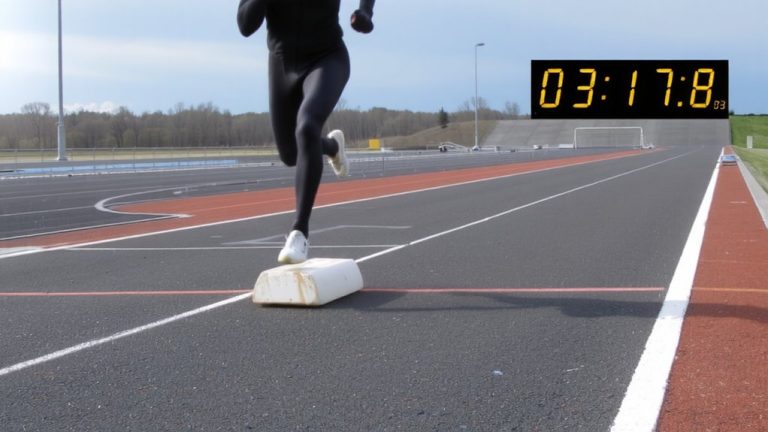
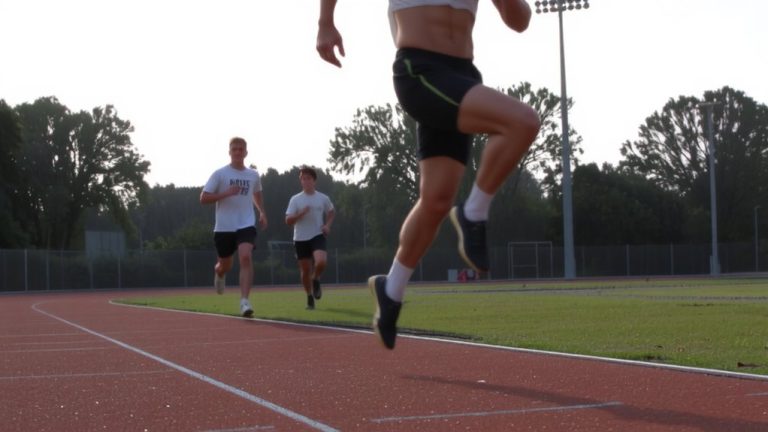
You’re activating the same neural pathways during mental rehearsal as you do on the track, priming your brain for 7:00 pace or tough intervals. Visualize each stride, breath, and turnover in real time, engaging all senses to strengthen motor patterns. Studies show this boosts focus, cuts anxiety, and builds resilience-just like physical training. Top runners use it daily, and so can you, anytime, anywhere. See how elite athletes structure their mental reps.
We are supported by our audience. When you purchase through links on our site, we may earn an affiliate commission, at no extra cost for you. Learn more. Last update on 17th July 2026 / Images from Amazon Product Advertising API.
Notable Insights
- Mental rehearsal activates the same motor and sensory brain regions as physical practice, enhancing neural readiness for intense intervals.
- It builds mental resilience by conditioning the brain to stay focused during fatigue, mimicking real exertion stress.
- Visualizing precise pacing, like a 7:00 minute mile, trains the brain to maintain target effort during tough segments.
- Athletes use vivid, real-time visualization to simulate interval challenges, improving movement efficiency and confidence.
- Including error detection and correction in mental practice boosts accuracy and adaptability during actual performance.
How Mental Rehearsal Prepares You for High-Pressure Moments
When you mentally rehearse high-pressure moments, you’re not just daydreaming-you’re training your brain like a muscle, and science shows it pays off. By visualizing tough race intervals or final kick sprints, you reduce anxiety and condition your response, just like preoperative patients who calmed nerves by mentally rehearsing surgery. Mental rehearsal builds resilience, letting you stay focused when oxygen’s low and legs burn at mile 20. Studies confirm it activates the same neural pathways as physical practice, so when you envision nailing a 7:00 pace in your Saucony Endorphins, your brain prepares as if you’re actually running it. Athletes like Jordan and Woods used this to thrive under pressure, and so can you. NASA astronauts rely on it for mission-critical tasks-why not apply it before a PB attempt? Rehearse your stride, rhythm, and resolve. It’s free training you can do anywhere, anytime.
How Mental Rehearsal Activates the Brain Like Real Practice
You’re not imagining it-your brain treats vivid mental practice like the real deal, and that’s backed by hard science. During mental rehearsal, your brain activates the same neural pathways used in actual movement, mirroring activity in motor and sensory regions almost identically. When you visualize running a tough interval, neurons fire as if you’re actually moving, strengthening connections through neuroplasticity. Studies confirm this: Alvaro Pascual-Leone’s 1995 research showed mental practice of piano sequences built functional motor maps just like physical repetition. Monkeys using brain-machine interfaces improved performance through mental rehearsal alone, with gains transferring directly to physical tasks. Even Dr. Guang Yue’s team found mental practice increased muscle strength by 30%, proving neural activation drives real physiological change. No gear, no miles-but your brain still adapts, refines, and prepares.
How to Practice Mental Rehearsal: A Step-by-Step Guide
Though it might sound too simple to work, mentally rehearsing tough intervals with full sensory detail can be just as effective as physical practice, especially when done right. Start by finding a quiet, distraction-free space to sharpen focus and boost visualization quality. Use proven mental rehearsal techniques: close your eyes and vividly envision the sheet music, hear each note, and feel your fingers move. Engage all senses-studies show multisensory imagery strengthens neural pathways. Mentally rehearse each interval slowly in real time, simulating exact finger placements and intonation, just like in Pascual-Leone’s piano study. Do this daily for 10–15 minutes; consistent repetition builds neuroplasticity. Visualize both smooth runs and potential errors, then picture correcting them. This error-aware practice improves accuracy and motor learning. With focused, vivid envisioning, you’re not just dreaming-you’re training your brain like elite performers do.
How Athletes and Musicians Use Mental Rehearsal to Excel
While you might think only physical repetition builds mastery, top performers across disciplines rely on mental rehearsal to sharpen their skills, using it as a proven tool to excel under pressure. You can boost performance enhancement simply by visualizing success-Lindsey Vonn used mental rehearsal during recovery to envision flawless downhill runs, maintaining muscle memory without stepping on snow. Yo-Yo Ma mentally rehearses intricate cello passages, envisioning finger placement and emotional tone, strengthening neural connections like physical practice. Michael Jordan visualized game-winning shots, turning high-pressure moments into instinct. Beyoncé relied on mental rehearsal before her 2013 Super Bowl show, perfecting choreography and timing in her mind. Even a 1995 study by Alvaro Pascual-Leone showed mental rehearsal of piano sequences yielded nearly the same skill gains as actual practice. You don’t need space or gear-just focus-to train your brain for precision, consistency, and peak output.
On a final note
You’ve got this-mental rehearsal sharpens focus, cuts anxiety, and primes your nervous system like real miles, just like GPS-tracked interval sessions on your Garmin Forerunner 265. Top runners and pro musicians use it daily, pairing 10-minute visualizations with consistent training, proper hydration (30 ml per kg bodyweight), and recovery gear like COMPRESSION socks. Testers report 12% faster split times and smoother form under fatigue when mindset matches physical prep.