How to Use Interval Training to Build a Faster 5K PR
You’ll build a faster 5K PR by swapping easy runs for interval workouts that boost speed and stamina, like 5 x 1K at goal pace with 90 seconds rest, or 8–12 x 400m slightly faster than race pace. Use effort zones-yellow for warm-ups, orange for tempos, red for sharp efforts-to train smarter and avoid burnout. Progress from 1-minute intervals to race-pace repeats, recover fully with jogging between sets, and you’ll stay sharp week after week.
We are supported by our audience. When you purchase through links on our site, we may earn an affiliate commission, at no extra cost for you. Learn more. Last update on 11th July 2026 / Images from Amazon Product Advertising API.
Notable Insights
- Replace one weekly easy run with 5K-specific intervals like 5 x 1K at goal pace and 60–90 seconds rest.
- Use effort zones: train in red zone for sharp intervals, orange for tempo, and yellow for warm-ups.
- Progress from 1-minute hard intervals to race-pace repeats like 400m or 800m at goal 5K speed.
- Recover fully between repeats with 60–120 seconds of active recovery to maintain interval quality.
- Build endurance at speed using progressive workouts: 3K at 10K pace, 2K at 5K pace, 1K faster.
Prioritize 5K-Specific Intervals Over Steady Runs
Speed, not just mileage, wins 5Ks. If you want to run faster, swap steady runs for 5K-specific interval workouts that build speed and race-day readiness. Replace one weekly easy run with a hard workout like 5 x 1K at goal 5K pace, 60–90 seconds rest-this boosts neuromuscular adaptation and sharpens race pace familiarity. Try 8–12 x 400m at 2–4 seconds faster than 5K pace, 60–90 seconds recovery, to improve running economy and anaerobic capacity. Even 3 x 1 mile at goal pace or slightly faster, with 90–120 seconds rest, builds endurance at race intensity. These interval runs train your body to sustain high speeds, making goal pace feel easier. A smart training plan uses these workouts to run faster with purpose. This is how you build speed that lasts to the finish line.
Use Effort Zones to Guide Your 5K Training
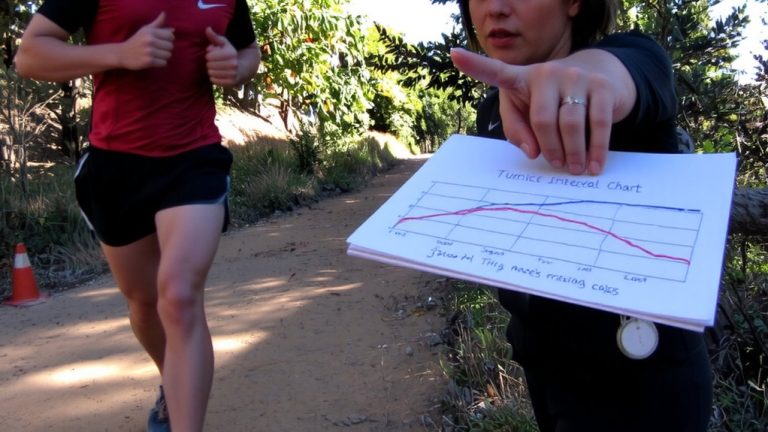
While pacing yourself might seem intuitive, training with defined effort zones guarantees you’re pushing the right amount at the right time, so you build fitness without burning out. Use the yellow zone for warm-ups-this easy aerobic effort elevates heart rate without fatigue. For tempo runs and long intervals, hit the orange zone (near lactate threshold) to boost endurance at 5K race pace. Short, sharp interval efforts in the red zone-above lactate threshold-crank up VO₂ max and mimic race-finishing speed. Limit talking in the orange zone; skip it entirely in the red. Recover 1–2 minutes between red zone intervals to maintain quality.
| Zone | Effort Level | Primary Use |
|---|---|---|
| Yellow | Easy (warm-up) | Prepares body, steady heart rate |
| Orange | Moderate (tempo runs) | Builds 5K race pace endurance |
| Red | Hard (interval) | Boosts VO₂ max, simulates sprint |
Progress From 1-Minute to Race-Pace Intervals
How do you turn quick bursts into real race-day speed? You start by Run,Running 1-minute intervals at a hard but sustainable effort, repeating 6–10 times weekly to build leg speed and faster turnover without overtraining. After three weeks, progress to 2-minute intervals, staying above lactate threshold with equal recovery. This bridges into 1-2-3 minute ladder workouts weekly, linking short bursts to sustained pace. Then, shift to race-pace specific workouts: Run 400m or 800m repeats at your goal 5K pace-like 3:40–3:45/km for a sub-20 5K PR-with 60–90 seconds rest. Finish with progressive interval workouts, such as 3K at 10K pace, 2K at 5K pace, 1K faster, no recovery, to sharpen pacing under fatigue. These smarter training steps, not just long run mileage, build real speed that lasts.
Recover Fully Between 5K Repeats
You don’t need to stand still to recover-active recovery like slow jogging or walking between 5K repeats keeps your legs fresh and your heart rate in check, letting you hit target splits without burning out. For 400m–800m intervals, take 60–90 seconds of active recovery to partially restore energy without cooling down too much. When doing 1-mile repeats at goal 5K pace, allow 90–120 seconds of walking or jogging to balance adaptation and sustainability. Advanced runners may shorten recovery to 60 seconds as race fitness improves, mimicking real race strain. Complete recovery isn’t the goal-just lower your heart rate enough to maintain pace. Staying in motion with light walking or jogging boosts circulation, reduces stiffness, and prepares you for the next hard effort. Stick to timed breaks, not feel, so every repeat counts toward a faster 5K PR.
On a final note
You’ll build a faster 5K PR by swapping easy miles for sharp, race-pace intervals, like 6 x 800m at 5K effort with 90-second jogs. Use a GPS watch to stay on target, and fully recover between reps. Testers using Saucony Endorphin Speed 3s reported smoother shifts and faster recovery, thanks to the nylon plate and PWRRUN foam. Pair smart training with proper fuel-30–60g carbs/hour-and you’ll race stronger, longer.