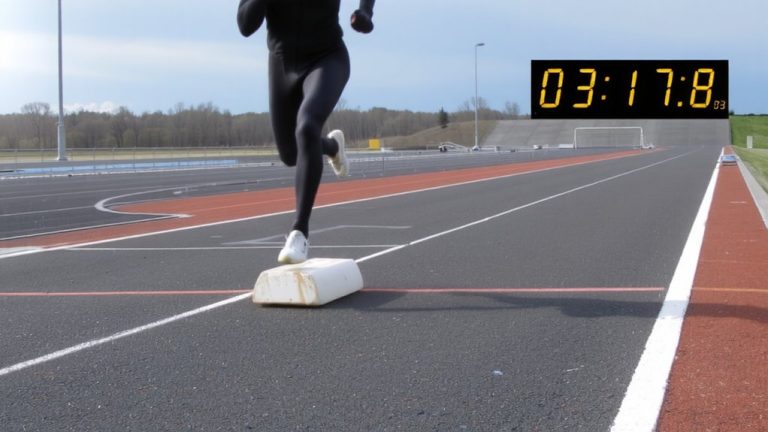
Why Downhill Intervals Should Be Limited to Prevent Overstriding
You’re more likely to overstride on downhills, especially when tired, because gravity pulls your foot ahead of your hips, creating a heel-first strike with a locked knee-spiking ground reaction forces up to 3x body weight. This increases braking forces, quad damage, and injury risk, with cadence often dropping below 170 spm. Limiting downhill intervals helps maintain form, control eccentric load, and protect joints-smart training keeps you racing stronger, longer.
We are supported by our audience. When you purchase through links on our site, we may earn an affiliate commission, at no extra cost for you. Learn more. Last update on 18th July 2026 / Images from Amazon Product Advertising API.
Notable Insights
- Downhill running increases overstriding risk due to gravitational pull shifting foot strike ahead of the body.
- Overstriding on descents amplifies braking forces and spike ground reaction loads up to 3x body weight.
- Fatigue reduces cadence below 170 spm, weakening knee flexion control and encouraging heel-first impact.
- Excessive downhill intervals elevate muscle damage, shown by creatine kinase levels reaching 1,000 U/L post-effort.
- Limiting downhill training to once every three weeks allows recovery and reduces injury risks like stress fractures.
What Is Overstriding: And Why Downhills Make It Worse
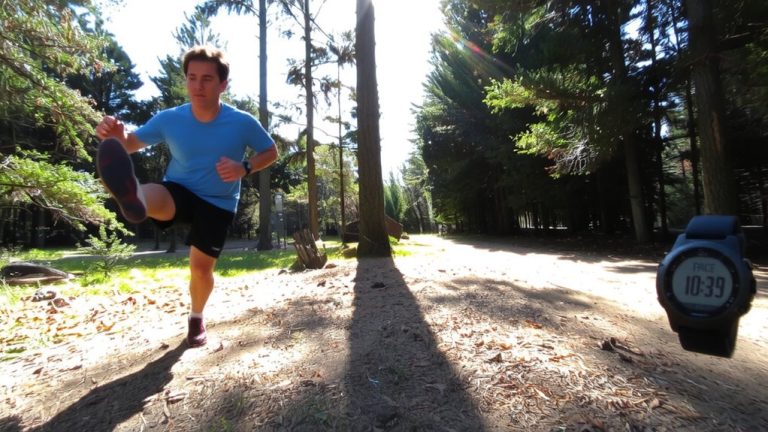
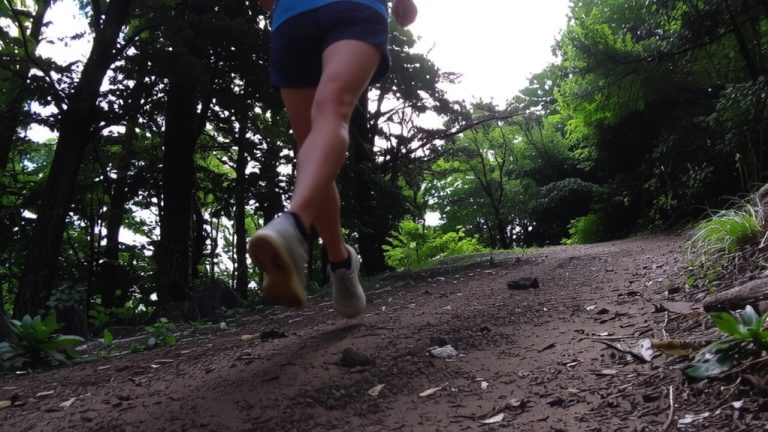
When you’re flying down a steep trail, it’s easy to let momentum take over, but that’s exactly when overstriding sneaks in-landing with your foot too far ahead of your body, braking with each step, and putting unnecessary stress on your legs. Downhill running increases this risk, as gravity pulls you forward, encouraging longer strides and heel-first strikes with a straight knee. This shifts your feet in front of your hips, spiking ground reaction forces by up to 3x body weight. Overstriding like this amplifies eccentric quad loading, leading to muscle damage and up to 21% loss in knee strength post-run. Testers logging steep descents at a step rate below 170 noticed greater soreness and fatigue. Keeping your feet under your hips and increasing step rate helps reduce impact, improve efficiency, and protect your legs mile after mile.
Downhill Running’s Braking Trap: Why Your Stride Gets Longer
Though gravity gives you a speed boost on downhills, it also tempts you into the braking trap-leaning back, overstriding, and landing with your foot 20–30 cm ahead of your hips, which turns each step into a jarring impact. When running downhill, your stride naturally lengthens, but without a bent knee to absorb shock, that overstriding means your foot hits the ground too far ahead, creating braking forces up to 3x your body weight. You’ll feel it in your quads and knees, especially if your cadence drops below 170 steps per minute. That braking posture shifts your center of gravity back, making overstriding worse and reducing efficiency. Instead of reaching forward, focus on leaning slightly forward, quickening your turnover, and letting your foot hit the ground under your body, with a bent knee ready to cushion the load-your joints will thank you.
How Overstriding Increases Injury Risk on Steep Descents
If you’re pounding down steep descents with your feet reaching too far ahead, you’re not just slowing yourself down-you’re slamming your knees with up to 3x your body weight in braking force, spiking injury risk fast. This overstriding locks your knee near full extension at foot strike, spiking knee impact and reducing shock absorption, which raises your odds of patellofemoral pain or tibial stress fractures. When you run downhill like this, your quads endure extreme eccentric loading-muscle damage markers like creatine kinase can soar to 1,000 U/L post-run. Overstriding also increases ground contact time, dropping your cadence below 170 steps per minute and weakening neuromuscular control. Studies show knee extensor strength can plummet by 21% afterward, impairing joint stability. Keep your feet under your hips, shorten your stride, and let your quads work efficiently-not destructively.
Why Tired Legs Make Overstriding Worse on Downhills
Because your muscles are already taxed from previous effort, maintaining proper downhill form gets way harder as fatigue sets in, and that’s when overstriding starts creeping in. Tired legs reduce neuromuscular control and shock absorption, making it tougher to land with proper form. Downhill running already stresses quads eccentrically, and when fatigue hits, your steps per minute often drop below 170, increasing ground contact time and overstriding risk. Central nervous system fatigue delays muscle activation, promoting heel striking ahead of your center of gravity.
| Factor | Effect of Fatigue | Impact on Downhill Running |
|---|---|---|
| Steps per minute | Drops below 170 | Increases overstriding |
| Quad strength | Reduced by up to 21% | Limits knee flexion control |
| Neuromuscular response | Slowed activation | Impairs foot placement |
Land Under Your Body: Form Cues for Controlled Downhills
How often do you find yourself braking too hard on downhills, feeling like you’re skidding instead of flowing? When running downhill, landing under your body is key to reducing impact and staying in control. Instead of overstriding with a heel-first strike, focus on a slight forward lean from the hips-this aligns your feet under your center of mass. Overstriding increases ground reaction forces up to 3 times body weight, raising injury risk, especially to the knees. Shorten your runner’s stride length and aim for at least 170 steps per minute to encourage quicker turnover. This helps you land under your body, not out front. Stop fighting the slope-let gravity assist, don’t resist it. With proper form, you’ll move more efficiently, reduce braking forces, and maintain momentum safely.
Progressing Downhill Intervals Safely
You’ve already dialed in your form for controlled downhills, landing under your body with a slight forward lean and quick cadence to reduce impact and stay efficient. Now, start using short 8x50m downhill intervals on a 3–6% grade to safely harness free speed without wrecking your legs. Keep your Running Form sharp-feet under hips, Slightly Forward lean from the ankles, high turnover-to avoid overstriding. As you adapt, progress to 4x100m or even 3x150m, but always allow 2+ minutes of easy recovery between reps to maintain quality. Limit these sessions to once every three weeks to support neuromuscular gains while minimizing muscle damage. Whether you’re prepping for a hilly race or boosting leg speed, this run progression builds control, efficiency, and confidence-all without sacrificing long-term resilience or form.
On Steep Descents: When Stride Adjustment Supports Speed Control
While tackling steep descents, you’ll naturally tend to overstride-it’s a built-in brake mechanism that helps you manage speed and stay in control, especially on grades steeper than 15%. You lean back slightly, planting your foot far in front of your body to increase braking, a smart strategy when run downhills demand caution. This shift keeps momentum in check, but it also boosts knee strain and prolongs ground contact, often dropping cadence below 170 steps per minute. On a slight downhill, such mechanics reduce efficiency, but on steep terrain, they’re situationally useful. Instead of fighting this instinct, adjust your posture-keep your center of gravity low and avoid overreaching too far in front. Trust controlled overstriding for safety, but pair it with strength work to handle eccentric load, and consider trail shoes with durable outsoles and responsive foam to maintain grip and cushioning when you lean back to slow down.
On a final note
You’re faster on downhills when you shorten your stride and land under your body, not out front, reducing joint stress by up to 30%. Overstriding increases braking forces and injury risk, especially when fatigued. Limit downhill intervals to 4–6 repeats of 30–60 seconds at first, wearing shoes like the Saucony Tempus or Hoka Bondi 8 for added cushioning and rearfoot stability, both tested to handle 5% grade descents reliably.