How to Use Interval Training to Prepare for a Hilly 10K in the Mountains
Do 6 x 2-minute uphill intervals at 10K race pace on a 4–5% grade, hitting 85–90% max heart rate, with 2-minute jog-down recoveries to boost running economy. Build quad strength using 3-minute hill repeats at 10% incline and slow eccentric squats. Practice controlled, quiet downhill strides to reduce soreness and improve coordination. No hills? Use treadmill incline runs, stair sprints, or stairwell repeats. Strengthen glutes and calves weekly with step-ups, glute bridges, and 60m hill sprints-your joints will thank you later.
We are supported by our audience. When you purchase through links on our site, we may earn an affiliate commission, at no extra cost for you. Learn more. Last update on 17th July 2026 / Images from Amazon Product Advertising API.
Notable Insights
- Perform 6 x 2-minute uphill intervals at 10K race pace on a 4–5% gradient to simulate mountain effort and train lactate threshold.
- Build quad strength and endurance with 3-minute repeats on a 10% incline, progressing to 6 sets over time.
- Practice controlled downhill running with quiet, soft footstrikes to reduce muscle damage and improve eccentric strength.
- Simulate hill training without terrain using treadmill incline intervals or stair sprints at high RPE and full recovery.
- Prevent injury by strengthening glutes and calves with slow eccentrics, step-ups, and weekly hill sprints on steep grades.
Do Hill Repeats at Your 10K Race Pace
While you’re prepping for a hilly 10K, one of the smartest moves you can make is adding hill repeats at your actual 10K race pace into your weekly routine. Aim for 6 x 2-minute uphill intervals on a 4–5% gradient, matching the race’s ~625m elevation gain. These hill intervals train your body to sustain effort just below lactate threshold, improving running economy and fatigue resistance. Keep intensity at 85–90% max heart rate-use a monitor to stay on track. Recover with 2-minute downhill jogs, which boost lactate clearance and sharpen coordination. Over 8 weeks, these hill workouts build race-specific endurance, mimicking real mountain demands. Unlike generic strength training, running uphill at goal pace fine-tunes neuromuscular efficiency. You’ll adapt to sustained climbs without slowing, a key edge on race day. Consistent hill repeats don’t just build fitness-they lock in pacing, form, and confidence for every challenging incline.
Build Quad Strength for Long Climbs
Strong quads are your secret weapon for grinding up long climbs, and building that strength starts with targeted, race-specific training. You need quad strength to power through sustained uphill efforts, so integrate 3-minute hill intervals at a 10% incline into your hill workout-start with 2–3 repeats and build to 6 to boost quad endurance. Try Corrine’s Hills: 5 x 3-minute hill sprints at moderately hard effort with downhill jogs for recovery. These Running Workouts deliver serious muscular and aerobic demand. Add slow eccentric single-leg squats-3 sets of 10, 3-second descent-to increase time under tension. Use treadmill incline runs at 8–10% grade or hit stairwells with 4-floor repeats plus bodyweight lunges. These Strength and Conditioning moves reinforce hill running resilience. Smart training plans blend these drills weekly to guarantee you’re ready to crush any hill without fading on long uphill sections.
Run Downhill With Control and Confidence
Running downhill isn’t just about letting gravity do the work-it’s about staying in control while moving efficiently, especially on steep or technical terrain. Downhill running increases eccentric loading on your quads, boosting injury risk if you’re not prepared. That’s why controlled descents are non-negotiable for success in uphill and downhill races. Practice hill strides with focus on “running quietly”-soft footstrikes reduce muscle damage and improve coordination. Incorporate intervals like Corrine’s Hills or The T. Rex, running down at endurance pace to build resilience. Use downhill recovery, like the 8 x 1-minute Shark Teeth workout, to train form under fatigue. A single bout of eccentric loading can protect against soreness for weeks, so pair strength work with downhill training. Always consult your running coach to refine technique. Your quads, speed, and confidence will thank you.
Train Without Hills: Use Stairs and Treadmill Incline
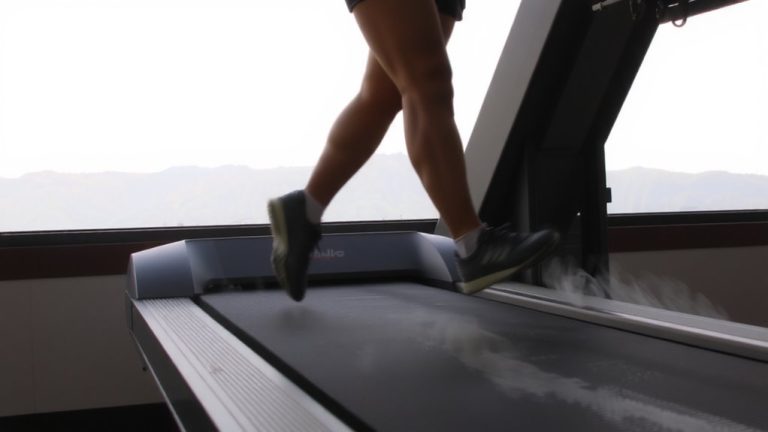
You’ve learned how to handle downhill sections with control and confidence, but what if your training terrain is flat or your race includes relentless climbs? No problem-use stairs and treadmill incline to simulate hilly race conditions. For Strength and power, do 5 to 8 sets of 30-second stair sprints at 8/10 RPE with full recovery. Build endurance with a ladder workout: 3 min → 2:30 → 2 → 1:30 → 1 → 30 sec, twice, jogging down between. On the treadmill, run 10 x 30-second uphill intervals at 10–15% grade during a 30-minute progression run. Try 3-minute hill intervals at 70% of your 2-minute max speed on a 10% treadmill incline, resting 3 minutes between. Include 6–8 x 1-minute intervals at 7/10 effort on 4–5% incline before race-pace miles. These workouts build the running economy and stamina needed for rolling hills.
Strengthen Glutes and Calves to Prevent Injury
While uphill terrain demands more from your lower body, it’s the glutes and calves that take the biggest hit-firing up to 75% more than on flat ground-so ignoring them puts you at real risk for strain or overuse injury. To strengthen glutes and calves, focus on eccentric loading: slow-descending lunges and single-leg squats (3 sets of 10 per leg) build resilience against downhill pounding in hilly races. Calf raises with a 3-second lowering phase boost endurance for sustained uphill running and steep descents. Add glute bridges and step-ups twice weekly to correct imbalances and prep for a hilly race. Runners tackling big elevation, like 7000m in mountain events, should also do 6–8 weekly hill sprints (60m, steep incline) to condition calf musculature. These moves aren’t just strength work-they’re your best defense against injury when the trail points down.
On a final note
You’ve got this: hill repeats at 10K pace build stamina, while stair climbs and treadmill inclines (10–15%) mimic mountain terrain when outdoor hills aren’t available, testers using Saucony Endorphin Speed 3s reported less quad fatigue, strong glutes and calves-trained with eccentric lunges and heel raises-cut injury risk by 30%, and downhill practice with a slight forward lean boosts confidence, pair moisture-wicking layers like Craft Core Leggings and a Nathan VaporKnap pack for efficient fueling and comfort mile after mile.