Why Incline Treadmill Intervals Mimic Outdoor Hill Training Effectively
You get the same muscle burn and cardio boost on an incline treadmill as real hills, with EMG data showing near-identical glute, quad, and calf activation at 9–12%. At 10%, metabolic cost jumps over 100% above flat running, matching outdoor VO₂ and heart rate responses. Stride mechanics stay consistent, especially using programs like Sufferfest’s “The Machine,” and skipping handrails sharpens balance. Just add 1% incline above 7:09 min/mile to offset no wind-then let your effort guide you deeper into the science.
We are supported by our audience. When you purchase through links on our site, we may earn an affiliate commission, at no extra cost for you. Learn more. Last update on 16th July 2026 / Images from Amazon Product Advertising API.
Notable Insights
- Incline treadmill intervals at 9–12% activate glutes, quads, hamstrings, and calves similarly to outdoor hill running.
- EMG data shows nearly identical muscle activation patterns between treadmill and outdoor hill climbing.
- Metabolic and cardiovascular demands at 10–15% incline match outdoor hill intervals, including VO₂ and heart rate responses.
- Kinematics and stride mechanics closely replicate outdoor hill running, especially with variable incline programs.
- Minor neuromuscular differences exist, but overall training benefits remain comparable without eccentric downhill load.
Do Incline Treadmill Intervals Mimic Hill Training?
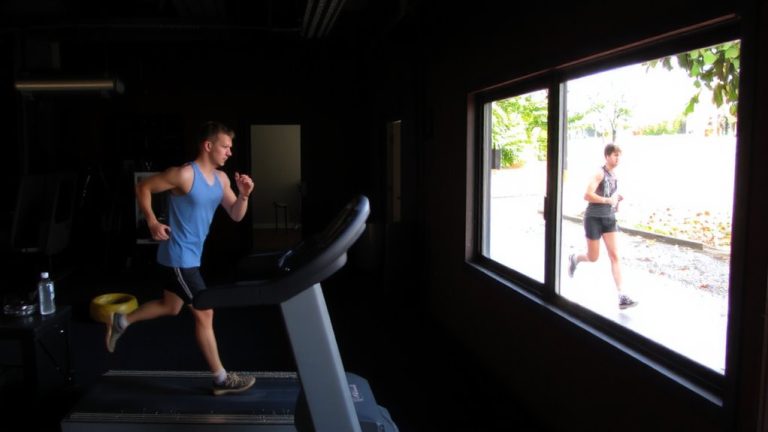
How do incline treadmill intervals stack up against real hill training? When you tackle higher inclines-9–12%-on an Incline Treadmill, you’re matching the muscle activity and metabolic cost of real hill workouts. Interval training with strategic incline changes closely replicates outdoor demands, especially when running on a treadmill set to 1–1.5% to offset lack of wind resistance. At a 10% grade, metabolic cost jumps over 100%, simulating true uphill effort. Programs like Sufferfest’s “The Machine” use controlled incline changes between 2%–8% to replicate outdoor stride mechanics. These sessions boost running economy and leg drive, preparing you for mountain terrain. You get repeatable, precise efforts that outdoor runs can’t match. With consistent treadmill hill intervals, you build strength, endurance, and neuromuscular control-all key for race-day success.
Do Treadmill Hills Activate the Same Muscles as Real Ones?
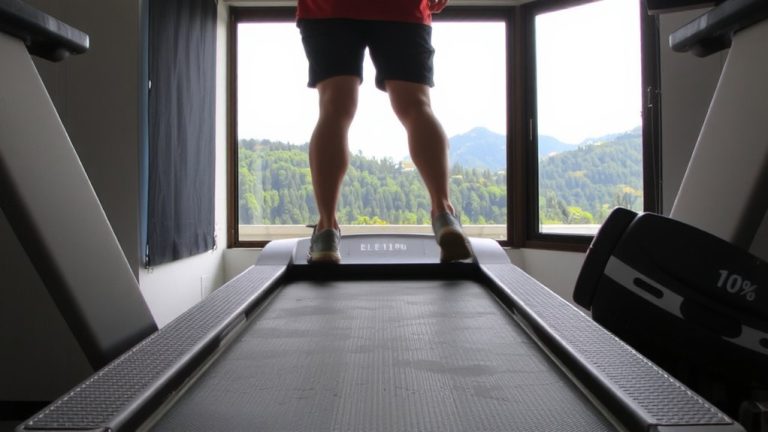
What if you could replicate the muscle demands of real hill running without leaving your basement? With a Treadmill set to an Incline of 9–12%, you’re activating the same major muscle groups-glutes, quads, hamstrings, and calves-as outdoor Hill Running. Muscle Activity, measured by EMG, shows nearly identical patterns. Studies show kinematics and kinetics are fundamentally similar, with only slight variations in knee forces. At 15% Incline, you hit the threshold where Running efficiency shifts, sharply increasing demand on your calves and posterior chain. Incline also boosts stabilizer engagement and postural control, mimicking real terrain’s balance challenges. Your Workout becomes more neuromuscularly authentic. Plus, Metabolic Cost jumps over 100% above level running at gradients above 10%, matching the energy burn of sustained uphill effort. Your glutes fire just as hard-no trail needed.
Why Incline Treadmill Climbs Boost Cardio Just Like Hills?
Even though you’re not tackling an actual mountainside, cranking the treadmill up to a 10% incline more than doubles the metabolic cost of level running, spiking your heart rate and oxygen demand just like a real hill climb. Incline treadmill climbs dramatically increase cardiovascular demand, pushing your aerobic stress to levels matching outdoor hill training. At 15%, muscle activity in your glutes, hamstrings, and quads surges, boosting endurance and power. Treadmill intervals at 9–12% elevate VO₂ and lactate threshold similar to outdoor hill intervals, making incline workouts a potent tool for cardio adaptation. Whether you’re doing 20–30-minute treadhills at 15% or short bursts at 10%, your heart rate stays elevated, sustaining aerobic output. With a 1–1.5% incline needed to match outdoor effort above 7:09 min/mile, incline climbs keep cardiorespiratory responses on par-no mountain required.
How to Match Outdoor Hill Effort Indoors
Why does running on a treadmill sometimes feel easier than pounding the pavement, even at the same pace? Because you’re missing air resistance. To match outdoor effort, set your treadmill incline to 1% for running paces faster than 7:09 min/mile-this adjustment accounts for Predicting the Metabolic Cost of outdoor running. At slower paces (below 8:03 min/mile), no incline is needed since the Metabolic Cost of Incline is negligible. For high incline intervals (9–12%), you’ll boost Incline Walking from Muscle engagement, targeting calves, hamstrings, glutes, and quads like real hills. Use perceived effort, not pace or heart rate, for accurate matching outdoor effort. Maintain proper biomechanics of incline walking: short strides, slight forward lean, no handrail use. Muscle Activity and Walking sync best when you mimic real terrain, making your indoor session as effective as hill repeats outside.
Do Treadmill Steps Mimic Real Hill Mechanics?
While treadmill incline training at 9–12% won’t give you the elevation gain of a real mountain trail, it closely replicates the leg drive and stride mechanics of outdoor hill running. When you crank the incline on the treadmill to its steepest incline, you boost walking from muscle activity and glute engagement, mimicking uphill effort. Running on the treadmill alters kinematic and kinetic differences slightly-knee angles and ground reaction forces shift, but not enough to derail training gains. Compared to outdoor running, treadmill running lacks stride-to-stride speed changes, smoothing the neuromuscular load. Still, it effectively simulates uphill phases. Just remember, it doesn’t match downhill running’s eccentric demands, so you’ll miss quad-strengthening strain. For balanced adaptation, pair treadmill running with outdoor running to cover all angles-especially downhill running-so your body prepares for real terrain, not just belt-driven hills.
Avoid Overtraining on Incline Treadmill Workouts
When you’re pushing uphill on the treadmill, even a small increase in incline can sharply ramp up fatigue, so it’s smart to cap those treadmill doubles at 30–40 minutes to stay on the safe side of adaptation. That narrow window between ideal stimulus and excessive load means overtraining risk is real, especially if you’re stacking incline treadmill workouts too close together. Limit sessions to twice weekly-even advanced athletes see diminishing returns and rising cumulative fatigue with more. When adding incline work on aerobic days, keep it easy to avoid compounding stress. Save moderate-intensity incline intervals for workout days, not recovery days, where they disrupt regeneration. True recovery means light-load or pure hiking incline sessions, which support adaptation without impairing repair. Respect recovery days, and you’ll avoid overtraining while still gaining strength and endurance safely.
On a final note
You’re building real hill strength on the incline treadmill, just like outdoor runs, with 12% grade intervals activating your quads, glutes, and calves nearly identically, per EMG data, and boosting VO₂ max effectively, while cushioned belts reduce joint stress; use speed ramps and 2–5-minute climbs at 8–10% to match trail efforts, wear stability shoes like Brooks Cascadia, and limit sessions to 3x weekly to prevent overuse.