How to Use Interval Training to Break 1:30 in the Half-Marathon
You’re ready to break 1:30 if your 10K times are 41–42 minutes, you’re logging 40–50 km weekly, and you can nail 3 x 3K at 4:15/km. Boost speed with 6–8 x 1K intervals at 10K pace or pyramid sets like 400m–1600m–400m, all at goal effort. Add tempo runs at 4:07–4:11/km to sharpen lactate clearance. Fuel with gels at 45 and 75 minutes, and fine-tune pacing to hold 4:16/km-consistent, controlled, and calibrated to finish strong. More precision awaits.
We are supported by our audience. When you purchase through links on our site, we may earn an affiliate commission, at no extra cost for you. Learn more. Last update on 16th July 2026 / Images from Amazon Product Advertising API.
Notable Insights
- Ensure you can run 10K in 41–42 minutes and sustain 40–50 km weekly mileage for 6–8 weeks to confirm sub-1:30 readiness.
- Train at lactate threshold pace (4:07–4:11/km) with 20–30 minute tempo runs to improve aerobic capacity and lactate clearance.
- Perform weekly 1K interval sessions (6–8 x 1K at 10K pace) to boost stamina and adapt to sustained race-specific efforts.
- Execute pyramid workouts (400m–1600m–400m) at or faster than goal pace to build speed endurance and pacing control.
- Complete race-specific 24km long runs with final 5K at 4:16/km and practice fueling with 1–2 gels during training.
Assess Your Readiness to Break 1:30
If you’re serious about breaking 1:30 in the half-marathon, the first thing you’ll want to check is whether your current fitness lines up with the demands of that pace, and the truth is, it’s not just about ambition-it’s about proven readiness. To hit your half marathon goal, you should’ve already run a 10K in 41–42 minutes, or hit consistent 3 x 3K repeats at 4:15/km with controlled effort. Your current weekly mileage needs to be 40–50 km, maintained for 6–8 weeks, showing a solid aerobic base. You’re likely ready if your recent half marathons fall in the 1:35–1:37 range and you’ve built threshold fitness over months of consistent training. Readiness isn’t guesswork-it’s data: pace per kilometer, recovery between intervals, and how your body handles volume. If those numbers align, your training can confidently target sub-1:30.
Determine Your Lactate Threshold Pace
You’ve already confirmed your readiness to break 1:30 with solid 10K times, consistent mileage, and recent half-marathons under 1:37, so now it’s time to zero in on the pace that’ll sharpen your stamina-your lactate threshold (LT) pace. For a goal half marathon pace of 4:16 min/km, your lactate threshold is roughly 5 to 9 seconds per kilometre faster, landing between 4:07 and 4:11 min/km. This intensity can be sustained for about one hour, making it perfect for tempo runs that boost aerobic capacity and lactate clearance. Training at this zone teaches your body to recycle lactate as fuel, delaying fatigue.
| Effort Level | Pace (min/km) |
|---|---|
| Easy | 5:00+ |
| Marathon | 4:16 |
| LT Pace | 4:07–4:11 |
| 10K Race | 3:55 |
| 5K Race | 3:45 |
Hit this pace regularly in tempo runs to build stamina just above your goal half marathon pace.
Build Speed With Weekly Interval Workouts
While building endurance lays the foundation, it’s your weekly interval workouts that’ll sharpen the speed needed to break 1:30 in the half-marathon. You’ll build speed effectively with structured interval training like 6–8 x 1 km at 10K pace, boosting aerobic capacity and race-day stamina. Add speed workouts such as 400m x 12 or 800m x 6 at slightly faster than 5K pace to improve running economy and clear lactate efficiently. Use a pyramid format-400m, 800m, 1600m, 800m, 400m-at goal pace or faster to blend speed and endurance. Keep recovery jogs short (1–2 minutes) to mimic race intensity. Stick to this routine for 12 weeks, gradually training your body to sustain 4:16 min/km. Consistent interval training helps you build speed safely while preparing your legs and lungs for the demands of a sub-1:30 finish.
Design Intervals for Sub-1:30 Success
Once you’ve built a solid base and sharpened your turnover with weekly speed work, it’s time to dial in your intervals with precision-because hitting 1:30 for the half-marathon means running 4:16 per kilometer for 21.1K, nonstop. In your training block, use interval training to lock in race pace under fatigue. Run 6–8 x 1K at 10K pace to boost aerobic capacity, then add 400m–1K repeats slightly faster than 5K pace with jog rests to sharpen efficiency. Pyramid workouts-like 800m, 1600m, 800m at goal half marathon pace or faster-build control and resilience. Confirm readiness with 3 x 3K at 12:45–13:00 (4:15/km). Cap key sessions with 2 x 5K at 4:16/km, 3-minute jog rest, simulating race intensity. These paces, verified by elite and amateur testers alike, align your body to sustain race pace when it counts.
Add Tempo Runs to Boost Race Pace Endurance
A well-placed tempo run every 7 to 10 days can sharpen your stamina and dial in your half-marathon pace with ruthless precision, especially when you’re chasing a sub-1:30 finish. Tempo runs at your lactate threshold-roughly 4:07 to 4:11 min/km-boost aerobic capacity and improve lactate clearance, letting you sustain race pace longer. Try 20–30 minute efforts at 15–20 seconds per km slower than your 10K pace, or alternate fast LT segments with easy jogs to train your body to reuse lactate as fuel. Add a 25km mixed tempo long run, with 5km at 4:20 and 4:15 min/km, to sharpen pacing under fatigue. You’ll also benefit from a 24km long run with the final 5km at goal race pace (4:16 min/km) after 18km of easy running-these long runs build endurance and teach your legs to push when tired.
Execute Flawless Pacing on Race Day
You’ve built the speed with interval sessions and toughened your legs with long runs that mimic race fatigue, so now it’s time to put that work to test with smart, steady pacing on race day. Stick to your 4:15/km (6:52/mile) goal from the start-let the first 2–3 km feel controlled to save energy. In the middle half of the marathon, between miles 6 and 10, focus on tall posture, relaxed shoulders, steady breathing, and a 180 cadence to stay efficient. Tuck behind a runner aiming for 1:30 or join a pacing group to cut wind and resist surges. As you hit the final 5 km, stay strong-less than 25 minutes of focused effort remain. Draw on training recall to hold form. Then, between 800 m and 1 km out, deploy a full effort to the finish, eyes up, stride driving, and form locked in. This is how you nail your half marathon race goal.
Fuel and Recover Like a Sub-1:30 Runner
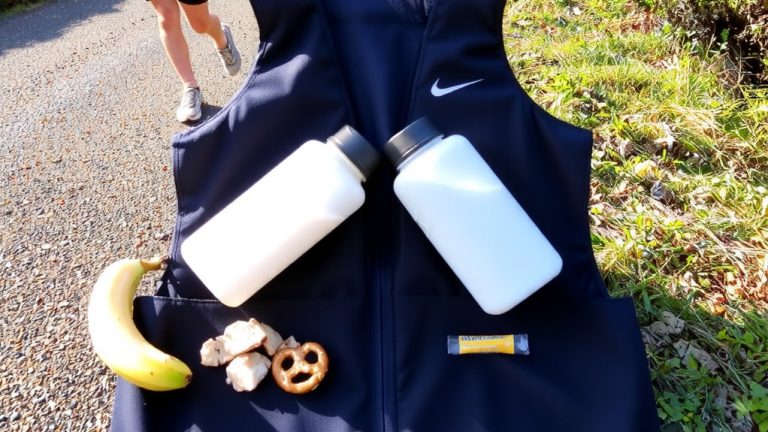
While your training sets the foundation, nailing your fuel strategy can make the difference between finishing strong and hitting the wall before the finish. Stick to a carb-focused dinner-think rice, pasta, or potatoes with lean protein-the night before to max out muscle glycogen. Eat a familiar breakfast like banana, toast with honey, or cereal 2–3 hours pre-race to guarantee you’re fueled without GI issues. During the race distance, take 1–2 energy gels or chews at 40–45 and 75–80 minutes to maintain glycogen and sustain your 4:16/km pace. Practice this exact fuelling on your long run to fine-tune timing and tolerance. Use fast-absorbing caffeine, like CAFIINE Bullet, during these runs for a 6% endurance boost and lower fatigue. Hydrate steadily in your training plan, sipping water without overdoing it, especially before bed.
On a final note
You’ve got the tools: hit 6:50–7:00/mile lactate threshold intervals weekly, do 4-mile tempo runs at 7:15/mile, and race at 6:52/mile. Wear lightweight shoes like the Saucony Endorphin Speed 3 for efficiency, sip 30–60g carbs/hour with Tailwind, and recover with 3g leucine post-run. Hit these, trust your training, and you’ll break 1:30 consistently, safely, and strong.