How to Use Interval Training to Simulate Kick-Off Speed in Road Races
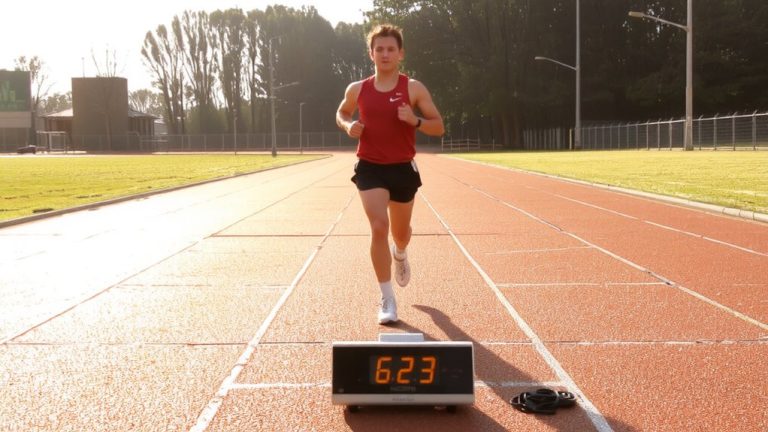
You can simulate kick-off speed by doing 3-minute intervals at 5K goal pace, then finishing with 30-second all-out sprints, using 2-minute walking rests between sets. This builds lactate tolerance, sharpens neuromuscular response, and maintains 180-cadence under fatigue. Include 10 x 400m at goal mile pace with 60s rest to boost speed-endurance, while focusing on mid/forefoot strike and strong arm drive. Perform every two weeks for best results, and see how elite-level tactics can elevate your final surge.
We are supported by our audience. When you purchase through links on our site, we may earn an affiliate commission, at no extra cost for you. Learn more. Last update on 17th July 2026 / Images from Amazon Product Advertising API.
Notable Insights
- Perform 3-minute intervals at 5K goal pace followed by 30-second all-out sprints to simulate race-end surges.
- Use a 1:1 work-to-rest ratio, such as 10 x 400m at goal mile pace with 60 seconds of active recovery.
- Train at RPE 9–10 during sprint phases to enhance lactate buffering and speed-endurance under fatigue.
- Maintain 180 cadence, mid/forefoot strike, and strong arm drive to preserve efficient form during surges.
- Repeat key sessions every two weeks with 2-minute walking rest between sets to balance fatigue and recovery.
Why Finishing Kicks Decide Road Races
Even when your legs are heavy and your breathing ragged, that final 100 meters can make or break your race-because in road racing, finishing kicks often decide who stands on the podium. You’ve trained for hours, nailed your race pace, and conserved energy, but without a strong finishing kick, you’ll get passed. Elite runners pull ahead here thanks to superior VO₂ max, lactate threshold, and anaerobic capacity. These physiology factors let them surge when others fade. Your body must handle high speeds under fatigue, which is why interval training is key-it conditions your system to push harder, longer. Practicing surges at the end of workouts builds the neural and muscular readiness needed in a road race. You’re not just running fast; you’re teaching your body to shift gears efficiently, maintain form, and increase cadence past 200 meters out, even as lactic acid builds. Train smart, and own the finish.
Train Your Body to Surge at the Finish
When you’re deep into a hard effort and your legs feel heavy, now’s the time to practice pushing through fatigue with targeted surges that mimic the final stretch of a road race, and one of the most effective ways to do it is with 3-minute intervals at your 5K goal pace followed by 30-second all-out strides. This workout trains your body to surge when tired, building race-specific speed-endurance. Do 3 to 5 reps every two weeks, with 2 minutes of walking rest between sets. During the sprint phase, maintain a 180-cadence, mid/forefoot strike, and strong arm drive to optimize running form. Use a 1:1 work-to-rest ratio, like 10 x 400m at goal mile pace with 60 seconds active rest, to boost anaerobic capacity. Hit RPE 9–10 during each surge, improving lactate buffering. Over time, this interval strategy sharpens your finishing kick, so you explode to the line with power and precision.
Warm up With a 10–15 Minute Easy Jog
You’ve just finished practicing those demanding 3-minute surges at 5K pace, so now it’s time to set the foundation right before going hard-start with a 10–15 minute easy jog to prime your body for what’s ahead. This warm up boosts blood flow, gradually raises your heart rate, and lowers injury risk by loosening muscles and connective tissues. Keep the effort light-RPE 3–4-so you preserve energy for the hard intervals. After the easy jog, jump into dynamic drills like leg swings, high knees, and butt kicks to fire up your neuromuscular system, sharpen coordination, and reinforce efficient form. These movements prime your stride mechanics for precision and power. Skip this step, and you’ll compromise performance and recovery. Done right, your body shifts smoothly into high-intensity mode, ready to replicate race-day surges with speed and control.
Run 200–400m Sprints at Goal Race Pace
A solid set of 200–400m sprints at your goal race pace sharpens your ability to push strong when fatigue hits, especially during the final dash to the finish line. In your training, these interval workouts build speed-endurance so you can keep running fast when it matters most. Hit 10 x 400 meters at goal mile pace with 60 seconds active rest, or try a 1:1 work-to-rest ratio-like 90 seconds at goal pace followed by 90 seconds easy. This mimics real race demands. Use tiered sets, like 5 x (2x200m), dropping from 90 to 80 seconds per rep, to boost stride efficiency. Include 3-minute intervals at 5K goal pace plus 30-second sprints to train neuromuscular precision. These 200–400m sprints make your body adapt to surging late in a goal race, ensuring you’re ready to kick, no matter the distance.
Use RPE 8–9 for a Strong Finishing Kick
Though you’re already deep in the grind of a hard interval session, pushing 30-second strides at RPE 8–9 trains your legs and lungs to handle the brutal surge of a race finish, just like you’d see in the final straight of a tight 5K or 10K. Use RPE 8–9 during the last 200m of 400m intervals to prepare for a strong finishing kick when fatigue sets in. In track intervals and speed work, try 10 x 400m at goal mile pace with the final 100m at RPE 9-this builds race-specific endurance. For longer efforts, 3-minute 5K pace intervals followed by 30-second sprints at RPE 8–9 condition both aerobic and anaerobic systems. Even in tempo runs and ladder workouts, hit 400m segments 15 seconds faster than goal pace at RPE 8–9 to sharpen your kick. These interval workouts teach your body to push through high lactate and still accelerate when it counts.
Focus on Sharp Running Form
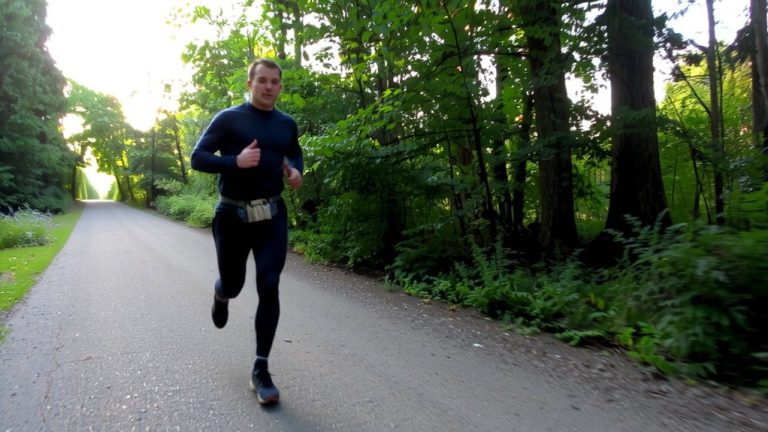
Since sharp form becomes harder to maintain as fatigue piles up during intervals, locking in efficient mechanics from the start guarantees you’re reinforcing the right patterns when it counts, not just when you’re fresh. Your training plan should include practice running with high knees and butt kicks in the 10–15-minute warm-up to activate muscles and boost aerobic capacity. During the workout, maintain ~180 steps per minute, use a mid/forefoot strike, and minimize vertical bounce. At race pace, this time under tension sharpens your kick. A key drill: the 400m interval at 5K pace, where each sprint segment refines arm drive and knee lift. This workout can be done every few days, even by high school runners, to build durable speed.
| Focus Area | Key Action | Benefit |
|---|---|---|
| Cadence | 180 steps/min | Improves efficiency |
| Foot Strike | Mid/forefoot | Reduces braking, boosts propulsion |
| Arm & Leg Action | Fluid drive, high knee lift | Reinforces form under fatigue |
Do This Workout Every Two Weeks
You’ll likely see the biggest gains by slotting this key workout into your schedule every two weeks, giving your body just enough time to recover while still building sharp, race-ready explosiveness. This workout is designed to mimic the fatigue and final kick of a road race, using time-based intervals you can do on a track or open road. Complete three to five repetitions of three minutes at 5K goal pace, then 30 seconds of slow jog followed by 30 seconds at stride/sprint speed-maintaining strong form throughout the sprint phase. Take two minutes rest between full reps, walking to simulate real race fatigue. The 30-seconds rest keeps the amount of time under tension high, priming neuromuscular coordination. Adding this session every two weeks to your training schedule guarantees consistent progress without burnout, so you’re ready to surge when it counts.
On a final note
You’ve got this-add this interval workout every two weeks to train your legs and lungs for a fast finish, even when fatigued. Hit 200–400m sprints at goal pace, using RPE 8–9, after a 10–15 minute warm-up. Focus on quick turnover and upright form, like wearing responsive kicks such as Saucony Endorphin Speed 3s, which testers praised for sharp response off the ground during surges.