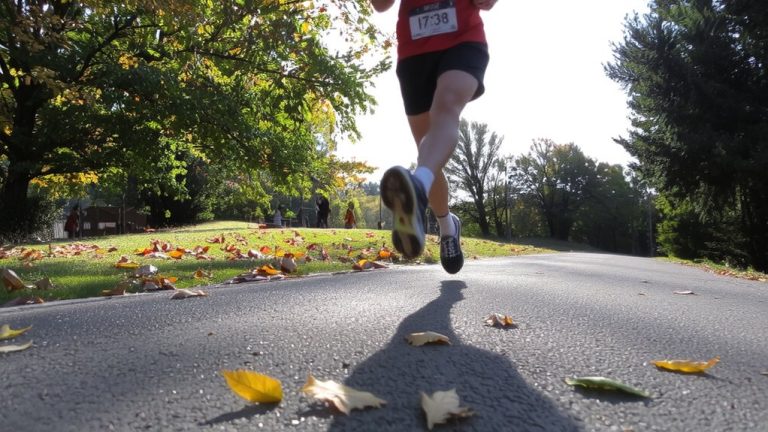
How to Use Interval Training to Prepare for a Rolling 5K Course
You need interval training to conquer a rolling 5K, not steady runs. Hit 6 x 800m at goal pace on hills, use 1-minute surges at 3K effort with 2-minute floats, and add 3–4 weekly hill sprints at 90–95% effort on 4–6% grades. Run 5 x 1000m on hilly routes 9–12 days out to test pacing. Mix trail, grass, and pavement in 30-minute fartleks with 1-minute 5K-effort bursts. Recover with walk-backs and fuel with a 3:1 carb-to-protein ratio post-workout-runners report sharper turnover and better race-day control, especially when they know what to do next.
We are supported by our audience. When you purchase through links on our site, we may earn an affiliate commission, at no extra cost for you. Learn more. Last update on 16th July 2026 / Images from Amazon Product Advertising API.
Notable Insights
- Perform 6 x 800m at goal 5K pace on hilly terrain to build fatigue resistance and pace control.
- Include 1-minute uphill surges at 3K effort with 2-minute float recoveries to boost aerobic power.
- Do 400m intervals at 5K pace with 200m jog recoveries on hills to improve leg turnover.
- Execute 5 x 1000m at race pace on rolling routes 9–12 days pre-race to practice pacing.
- Use variable recoveries-jog uphill, walk downhill-during intervals to simulate race-day demands.
Use Intervals for Hilly 5Ks (Not Steady Runs)
When you’re prepping for a hilly 5K, steady-state runs won’t cut it-intervals train your body to handle constant elevation shifts while maintaining pace. Instead of flat tempo runs, focus on running intervals like 6 x 800 meters at goal 5K pace on rolling terrain to build fatigue resistance. Add speed work such as 400-meter intervals at 5K pace with 200-meter jog recoveries on hills for sharper leg turnover. Include hill intervals: 1-minute uphill surges at 3K effort, then 2-minute float recoveries to boost aerobic power. Try 200-meter uphill sprints at 3K–1-mile effort with 400-meter recoveries to simulate rapid gear shifts. Finish with 5 x 1000 meters at race pace on hilly routes 9–12 days out to test pacing. This interval training sharpens your fitness, strengthens muscles, and locks in your goal 5K pace when it matters most.
Adapt Your Strategy for Rolling Terrain
While flat roads let you settle into a rhythm, rolling terrain demands constant adjustment-so you’ve gotta train your body to shift gears efficiently. Build strength with 6–8 x 200-meter hill sprints and 2-minute jog recoveries to maintain form on climbs and control speed on downs. In your training plan, include 6 x 800-meter interval repeats at goal 5K pace on hilly ground to sharpen pace control. Follow uphill surges with float intervals-400 meters 15–20 seconds slower per mile than 5K pace-to practice rapid recovery. Try 5 x 1000-meter intervals at race pace with variable recovery: jog uphill, walk downhill, mimicking real course demands. Focus on even effort, not even pace, during each interval. This teaches your body to distribute energy wisely, so you’re not burning out on ascents or braking too hard on descents.
Build Aerobic Base With Mixed-Surface Fartlek Runs
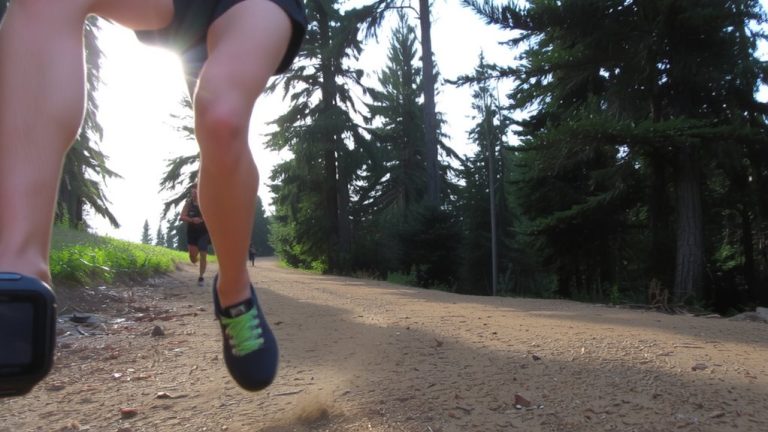
Terrain is your training partner in mixed-surface fartlek runs, teaching your lungs, legs, and heart to adapt on the fly. These interval workouts build your aerobic base while prepping you for the unpredictable rhythm of a rolling 5K. Once a week, hit trails, grass, and pavement for 30 minutes of running with 6–8 fast segments at 5K effort, each 1 minute long, followed by 2-minute easy jogs. Use natural hills to practice strong climbs and controlled downhills. Keep your heart rate between 80–90% max during efforts, then let it drop to 60–70% in recovery. Aim for routes with 50–100 feet of elevation change per mile.
| Feature | Benefit |
|---|---|
| Mixed-surface routes | Improves foot stability |
| 1:2 work:rest ratio | Balances intensity and recovery |
| 30-minute duration | Builds aerobic base effectively |
| Variable terrain | Mimics race-day demands |
| Heart rate zones | Optimizes interval workout impact |
Add Short Hill Sprints to Build Power
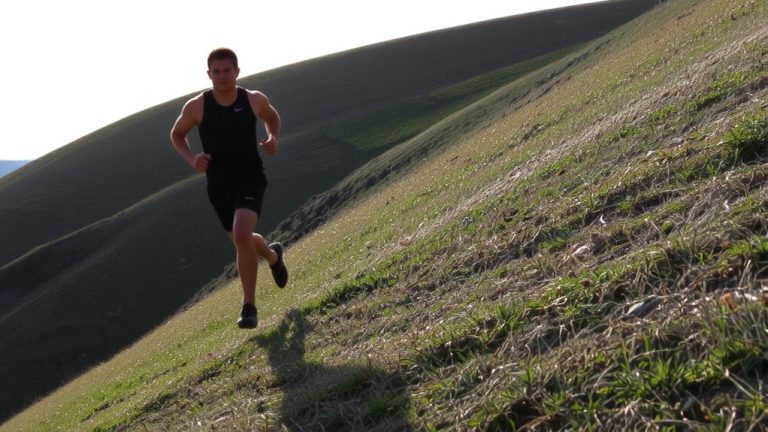
You’ve built a solid aerobic engine with mixed-surface fartlek runs, and now it’s time to sharpen your stride with raw power-short hill sprints do exactly that. Add 3–4 sets of 6–8 seconds sprints at 90–95% effort on a 4–6% incline to build explosive power for rolling terrain. Do them once weekly in your training programs for 3–4 weeks to see real gains. Start with a 10–15 minute warm-up jog so your muscles are ready and injury risk stays low. Use the walk back down as your time to recover-this keeps each effort fresh. Focus on running form: strong arm drive and high knee lift boost neuromuscular coordination. These speed workouts don’t need volume, just intensity. Hill sprints teach your legs to push hard and recycle quickly, making flat and uphill surges feel easier.
Run 5K-Pace Intervals for Hilly Course Simulation
Since you’re training for a hilly 5K, dialing in your pacing on variable terrain is key, and nothing prepares you better than 5K-pace intervals that mimic race-day demands. Try 6 x 800 meters at goal 5K pace with 400–500 meters of jog recovery on rolling terrain to simulate sustained effort. For a final tune-up 9–12 days out, run 5 x 1000 meters at 5K pace with 400–600 meters jog recovery to assess readiness. Include 400-meter reps at 5K pace uphill, floating down to recover-this builds speed and teaches rhythm on a hilly course. Add 4–6 x 200-meter surges slightly faster than 5K pace on rolling hills to sharpen neuromuscular control. Use float 400s, 15–20 seconds slower per mile than 5K pace, to maintain momentum on descents. Interval training like this builds resilience, sharpens pacing, and prepares you for the rollercoaster of race day.
Recover Right to Handle Weekly Hill Intervals
A solid recovery strategy between hill intervals isn’t just about catching your breath-it’s how you stay injury-free and make the most of every session. After each 30-second effort, walk back down the hill to recover, keeping blood flowing and clearing lactate without full rest. Aim for 2–3 minutes of walking recovery, especially before week 8, to safely manage intensity. Stick to a 1:1 work-to-recovery ratio-30 seconds up, 30 seconds down-to build endurance without overloading your system. Keep your upright posture during recovery to prevent dizziness and support circulation. Resist jumping into jogging recovery too soon; save it for after week 8, once your body adapts. This approach keeps you fresh, sharp, and ready for each repeat, making your hill intervals more effective and sustainable week after week.
Fuel Right for Hill Training and Race Day
Proper fueling keeps your hill workouts productive and your race-day performance strong, building on the recovery habits you’ve already put in place. Before hill training, eat a light meal of easily digestible carbohydrates-like a bagel with banana-60–90 minutes out to fuel your effort. For sessions over an hour, take in 30–60 grams of carbohydrates per hour using sports drinks or gels to delay fatigue. Stay on top of hydration: drink 16–20 ounces of water 2–3 hours before race day, plus 6–8 ounces 20–30 minutes prior. Avoid high-fat or high-fiber foods on race day to prevent stomach issues on the bumpy course. After hill training, prioritize recovery with a 3:1 carbs-to-protein ratio-think chocolate milk or a recovery shake-within 30 minutes to speed repair.
On a final note
You’ve got this: mix fartlek runs on trails and roads, hit short hill sprints weekly in shoes like the Saucony Endorphin Speed 3 for responsive cushioning, then nail 5K-paced intervals on rolling routes to simulate race day. Recover with 8 hours of sleep and 3:1 carb-to-protein snacks, like Clif Recovery shakes. Testers clocked 2-minute PRs by fueling early and striding out hills with power, not panic. Stay consistent, stay fueled, and crush the hills confidently.