How to Choose Ideal Routes for Long Runs Based on Elevation and Surface Type
Match your route’s elevation to your fitness-aim for under 500 feet of gain per mile if you’re new, since 1,500 feet over 6 miles feels like running 9 flat miles. Pick fire roads or packed dirt for endurance, soft trails for recovery, and save technical singletrack for skill days. Use Strava or Komoot to preview 3D elevation and surface, download offline maps via Gaia GPS, and always add a 20% time buffer; you’ll discover smarter ways to train safely.
We are supported by our audience. When you purchase through links on our site, we may earn an affiliate commission, at no extra cost for you. Learn more. Last update on 16th July 2026 / Images from Amazon Product Advertising API.
Notable Insights
- Match elevation gain to fitness: beginners should aim for under 500 feet per mile to maintain manageable effort.
- Use running apps like Strava or Komoot to preview elevation profiles and estimate added effort from climbs.
- Choose fire roads or packed dirt for endurance runs to sustain road-like paces with less impact.
- Avoid highly technical surfaces like scree or roots for long runs, as they can reduce speed by 30–50%.
- Build in a 20% time buffer for elevation, trail conditions, and navigation, especially on unfamiliar routes.
Match Elevation Gain to Your Fitness Level
If you’re eyeing a route with serious climb, make sure your fitness matches the terrain-because elevation gain isn’t just a number, it directly reshapes how hard your body works. That 1,500 feet of elevation gain over 6 miles? It hits like 9 flat miles, so your fitness level needs to be ready. Every 500 feet of climb adds effort like another mile, so check running apps like Strava or MapMyRun to plot out a route with vert you can handle. Beginners, keep it under 500 feet per mile to avoid burnout or injury; advanced runners might push 800+ feet per mile. Routes with 3,000 feet of elevation gain over 6 miles are near mountaineering-only tackle them with serious training. Always follow key safety tips: know your limits, carry water, and let someone know your plans.
Choose the Right Trail Surface for Your Run Type
While your run type shapes your training goals, matching the trail surface to your effort level guarantees you get the right mix of speed, safety, and joint protection. If you’re doing endurance work, fire roads or packed dirt-common surface types on smooth running routes-let you maintain road-like paces with less impact. For Trail Running with technical demands, singletrack packed with roots or scree can slash your speed by 30–50%, boosting strength but requiring caution. Use apps like Strava to check surface type and avoid surprises. Soft surfaces like forest trails or packed sand ease joint stress during recovery runs, while “difficult” ratings on PeakVisor often mean uneven terrain that challenges balance. When planning a running route, align different terrains with your intent: speed, skill, or recovery. Smart surface choices keep your training effective and sustainable.
Use Apps to Plan and Preview Your Trail Run Route
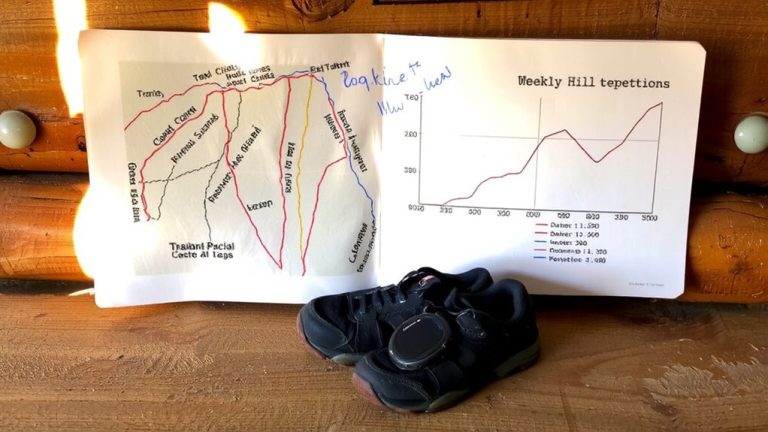
How do you make sure your trail run goes smoothly before you even lace up? Use apps to plan your running routes wisely. Running apps like Strava, Komoot, Fatmap, and PeakVisor let you preview 3D terrain, study elevation, and explore running paths in detail. Check elevation profiles-1,500 feet of gain feels like adding 3 miles on flat ground-so you’re ready for the effort. Apps show surface types like singletrack or scree, helping you adjust pace and avoid surprises. Always download offline maps via Gaia GPS or OS Maps since cell service drops on remote trails. Plan loop routes from trailheads using Strava’s Route Builder or Komoot, with real-time distance and popular user tracks.
| App | Key Feature | Best For |
|---|---|---|
| Strava | Elevation profiles, Route Builder | plan your running loops |
| Komoot | 3D previews, surface details | trail difficulty |
| Gaia GPS | Offline maps, running paths | remote routes |
Build in Extra Time for Trail Realities
You’ve used apps like Strava or Komoot to map your route, checked the 3D terrain, and reviewed surface types, but even the most detailed plan won’t eliminate trail surprises. A good running route accounts for elevation and surface, but what makes a good running experience is realism. Uphill sections slow you to 2.5–3 mph, and downhills rarely make up lost time, especially on scree or roots. Every 500 feet of gain adds effort like an extra mile, and technical singletrack can cut your speed by 50%. For Perfect Running success, build in a 20% time buffer-so a 2-hour run needs 2.4 hours. When exploring new trails or doing local running, make sure you allow extra time for navigation and stops. This planning makes a good running day safe and satisfying.
Plan Escape Routes and Download Offline Maps Before You Start
If you’re venturing beyond city paths into remote terrain, downloading offline maps with apps like Komoot, Strava, or Gaia GPS isn’t just smart-it’s essential, since cell service often drops when you need it most. For routes based on elevation and surface type, always mark escape routes every 2–3 miles so you can exit safely if your body starts to rebel or weather turns. Preload GPS watches like Garmin Enduro with turn-by-turn navigation to avoid panic mid-long run. Preview steepness and surfaces using AllTrails or Fatmap-this helps your body to adapt and keeps you on track with fitness goals. Running clubs often share tested bail-out points. And never skip a paper backup.
| Escape Point | Terrain Feature |
|---|---|
| 2.1 mi | Fire road |
| 4.5 mi | Trailhead |
| 6.7 mi | Creek crossing |
| 8.9 mi | Ridge access |
| 11.0 mi | Parking lot |
On a final note
Pick routes that match your fitness, with no more than 300 feet of elevation gain per mile if you’re building stamina. Opt for packed dirt over rocky trails if you’re new, and always carry the Ultimate Direction Ultra Belt for fluids and snacks. Use Komoot to preview surfaces and download maps. Allow 20% extra time for roots, rocks, or mud. Save escape routes in Gaia GPS, and wear trail runners like the Hoka Tecton X for 4mm lugs and rock-plate protection.