Designing a Hill Interval Plan to Prepare for Mountain Trail Races
Start with 6–8 hill sprints lasting 30–60 seconds on an 8–10% grade, jogging back down to recover-this builds trail strength fast while reducing impact. Do these after building a base of flat-ground running, where easy runs and weekly 4×20-second strides boost economy. Begin with 30-second sprints at 8/10 effort, then progress to 3-minute repeats over 4–6 weeks. No hills? Use stairs, treadmill intervals up to 30%, or post-run step-ups and squats. Six to eight weeks out, hit peak fitness with race-specific efforts like 5 x 3 minutes at 4–6%, then progress to steeper, harder sessions like Nice Legs Finish Blasted-fewer sessions, sharper focus. Taper The Hill Beast 10–20 days pre-race, keeping volume low and legs fresh. You’ll find race-day power isn’t just about miles-it’s about smart, targeted stress, the kind that teaches your muscles when to surge and when to hold back.
We are supported by our audience. When you purchase through links on our site, we may earn an affiliate commission, at no extra cost for you. Learn more. Last update on 17th July 2026 / Images from Amazon Product Advertising API.
Notable Insights
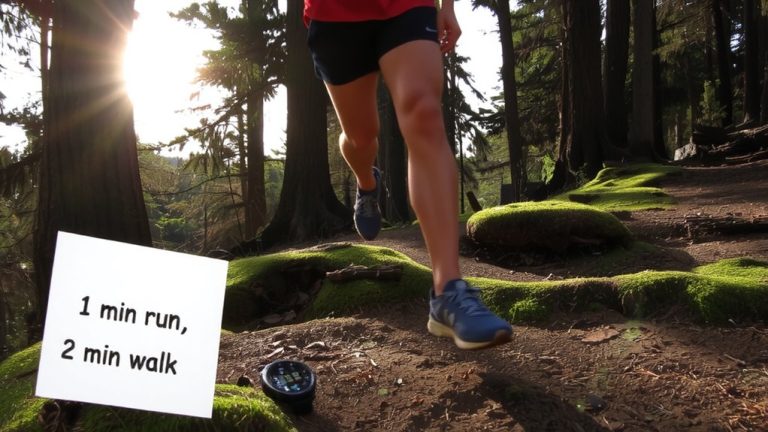
- Start with 6 x 30-second hill sprints at 8–10% grade, progressing to longer 2–3 minute repeats over 4–6 weeks.
- Use a consistent 5.8% gradient and ensure recovery time exceeds work intervals for optimal adaptation.
- Mimic race-specific terrain by adjusting hill grade to match expected race conditions, up to 8–10%.
- Substitute stair running or treadmill intervals at high inclines when natural hills are unavailable.
- Peak with race-specific workouts like Corrine’s Hills or The Hill Beast 6–8 weeks pre-race, limiting to 2–3 sessions weekly.
Start With Hill Intervals to Build Trail Strength
Hill sprints, your secret weapon for building trail-ready strength and efficiency, start with short, sharp efforts. You’ll do 6–8 hill sprints lasting 30–60 seconds on an 8–10% grade, jogging back down for recovery. These build trail strength and running economy fast, mimicking steep climbs you’ll face on race day. Unlike flat speedwork, hill sprints reduce increased impact forces, making them safer than road intervals. Progress to 6 x 2-minute hill intervals at 7–8/10 effort-the T. Rex workout-to boost muscular endurance and aerobic power. Run hard but start conservatively so your last repeat matches the first. Use a 5.8% incline for 150m high-effort hill repeats to maximize power with less strain. Limit strength training to 2–3 sessions weekly to avoid fatigue. Hill intervals aren’t just conditioning-they’re functional, race-specific prep that transforms your climbing.
Develop Running Economy on Flat Ground First
You’ve built power and strength with hill sprints, but before piling on more uphill work, your engine needs a solid base-and that starts on flat ground. Running on flat improves running economy, which transfers to uphill performance, even on 20% grades. Research in the 2019 European Journal of Applied Physiology confirms gains here boost efficiency across terrains. Your training plans should emphasize easy runs, long runs, and strides (4×20 seconds weekly) to fine-tune neuromuscular efficiency and muscular activity. Flat running builds aerobic capacity without excess fatigue, letting you absorb more intense efforts later. Even elite trail runners like Ruth Croft clock over 90% of miles on flat ground, proving its value. Don’t skip speed work or strength work-these, combined with consistent flat-ground mileage, lay the foundation. A well-rounded approach prepares your body efficiently, safely, and sustainably for what’s ahead.
Begin With Short Sprints, Then Scale Up Efforts
Once you’ve built aerobic efficiency on flat terrain, it’s time to introduce hill intervals-start with short, explosive efforts to develop power and neuromuscular coordination. Begin your uphill running training with 30–60 second sprints on an 8–10% grade, like 6 x 30 seconds at 8/10 RPE, followed by 2–3 minutes of easy jogging down for recovery. These high-intensity uphill intervals build strength and conditioning specific to trail demands. Use a consistent 5.8% grade, ~150m hill for ideal biomechanics and joint safety. Keep early hill workouts focused on form and power, not endurance. After 4–6 weeks, gradually extend efforts to 2–3 minute repeats at 7–8/10 RPE, increasing either duration or intensity weekly-but not both. Always guarantee recovery time exceeds work time, such as 3–4 minutes easy after each 3-minute uphill interval, to maintain quality and reduce injury risk.
Train Without Hills: Use Stairs, Treadmills, Strength
When outdoor hills aren’t accessible, your training doesn’t have to slow-you can build the same uphill power and endurance using stairs, treadmills, and strength work. Stair running, like 10 x 30-second intervals at 8/10 RPE, delivers increased resistance and high neuromuscular demand, mimicking steep uphill running. Bounding two or three steps at a time recruits fast-twitch muscle fiber, boosting power while reducing injury risk. Treadmill hill intervals at up to 30% grade offer controlled, repeatable efforts ideal for building muscular endurance. Pair these with strength training-single-leg step-ups, squats, and calf raises-on fatigued legs post-run to enhance resilience. Unlike downhill running, these methods minimize joint stress while maximizing performance gains.
| Method | Benefit |
|---|---|
| Stair running | Builds power and neuromuscular demand |
| Treadmill hill intervals | Enables precise grade and pace control |
| Strength training | Increases muscular endurance and stability |
| Increased resistance | Enhances muscle fiber recruitment |
| Uphill running simulation | Reduces injury risk vs. downhill running |
Peak With Hard Hill Workouts 6–8 Weeks Out
Though race day is still 6–8 weeks away, now’s the time to dial in your peak hill workouts, hitting the sweet spot between fatigue and adaptation, where real trail-running gains happen. Start this phase with Corrine’s Hills-5 x 3 minutes on 4–6% moderate inclines-to build aerobic power and muscular resilience. As you progress, shift to steeper grades of 6–8%, matching race-specific demands, and maintain target intensity by adjusting effort, not speed. Perform hard hill workouts like Nice Legs Finish Blasted-4 x 2, 1, and 0.5 minutes, progressively harder-to overwhelm the muscular systems, simulating race-day strain. Include The Hill Beast 10–20 days out for max cardiovascular and muscular adaptation. Limit these sessions to 2–3 per week for recovery, improved lactate clearance, and increased cadence. These precise stressors prepare trail runners for steep grades, turning fatigue into fuel.
On a final note
You’ll build real trail strength with hill intervals, starting with 6 x 30-second sprints at 85% effort, jogging 90 seconds between, then scaling to 3-minute repeats. Even without hills, stair climbs or a treadmill at 8–10% grade work-testers using Altra Lone Peak 7s reported better grip and reduced calf strain. Pair this with core work, hydration packs like the UltrAspire Flow 3.0, and 30g of carbs/hour during long runs to fuel hard efforts and stay injury-free.