Best Squat for Inner Thighs
You’ll activate your inner thighs up to 30% more with the sumo squat than a regular squat, thanks to its wide, 45-degree foot stance that maximizes adductor longus engagement, while keeping knees aligned over toes and driving hips back protects joints, and adding a mini band or kettlebell boosts burn-plus, doing it 2–3 times weekly at 6–12 reps builds strength and mobility, especially when timed early or late in your workout.
We are supported by our audience. When you purchase through links on our site, we may earn an affiliate commission, at no extra cost for you. Learn more. Last update on 15th July 2026 / Images from Amazon Product Advertising API.
Notable Insights
- Sumo squats are the best squat variation for targeting inner thighs due to increased adductor activation.
- A wide stance, double shoulder-width, maximizes engagement of the adductor longus muscle.
- Feet turned out 45 degrees enhance hip abduction and optimize inner thigh muscle recruitment.
- EMG studies show up to 30% greater inner thigh activation compared to standard squats.
- Using a mini band or goblet load can further intensify inner thigh engagement during sumo squats.
Why the Sumo Squat Hits Inner Thighs Best
When you’re looking to really engage your inner thighs during a squat, the sumo variation stands out because of how your stance directly cranks up adductor activation. The sumo squat uses a wide stance-about twice shoulder-width-with feet pointing out at 45 degrees, which forces your adductor muscles to work harder for stability. EMG data shows the adductor longus fires markedly more during this move than in standard squats. Because of the hip abduction and external rotation, the sumo squat targets the inner thighs across a full range of motion. This position increases muscle activation by up to 30% compared to narrow stances, reducing quad dominance. The wide stance demands more from the medial thigh compartment, making the sumo squat your best bet for sculpting and strengthening inner thighs effectively and efficiently.
Which Muscles the Sumo Squat Actually Works
The sumo squat fires up more than just your quads-it’s a powerhouse move that fully engages your adductor longus, the primary inner thigh muscle, with EMG studies showing up to 30% greater activation compared to standard squats. This variation emphasizes hip adduction, directly targeting the adductors and other inner thigh muscles through its wide stance and outward foot angle. Electromyography (EMG) data confirm the Sumo Squat boosts muscle activation in the vastus lateralis, gluteus maximus, and gluteus medius, helping build strength and stability. Your core muscles, including the transverse abdominis and erector spinae, engage to maintain balance and spinal neutrality throughout the deeper range of motion. You’ll feel the difference in your glutes and inner thighs with each rep, thanks to increased demand on hip extension and stabilization. It’s not just about looks-this enhanced activation supports injury resilience, functional power, and balanced lower-body development.
How to Do a Sumo Squat – Step by Step
While you’re setting up for maximum inner thigh engagement, start by standing with your feet 3–4 feet apart and your toes turned out about 45 degrees-this wide, angled stance is key to activating the adductors and glutes effectively. Lower yourself by pushing hips back and bending knees, keeping your torso upright and spine neutral. Make certain knees stay aligned with toes and press them outward to protect joints and target the right muscle groups. Descend until thighs are parallel to the floor, then drive up through your heels, squeezing glutes and quads.
| Phase | Key Focus |
|---|---|
| Setup | Wider stance, foot placement angles at 45° |
| Descent | Hips back, torso upright |
| Bottom | Thighs parallel, knees aligned with toes |
| Ascent | Drive through heels, engage adductors (inner thighs) |
Perform 3 sets of 8–12 reps, mastering bodyweight form before adding load. The Sumo squat’s inner focus makes it a top pick for building strength in the inner thighs and surrounding muscle groups.
Sumo vs Regular Squat: Which Targets Inner Thighs More?
You’ve already mastered the sumo squat setup for inner thigh activation, and now it’s time to see how it stacks up against the regular squat. Sumo squats win when targeting the adductor, thanks to the wider stance-about twice shoulder width-and 45-degree foot position, which increase hip adduction. EMG data show markedly higher muscle activation in the adductors (inner thighs), especially the adductor longus, compared to the narrower, forward-facing regular squat. While the regular squat emphasizes quads and glutes, the sumo variation shifts load toward the medial quads and adductors. Studies in male bodybuilders confirm this boost in inner thigh development. The wider stance and rotational alignment create more tension across the inner thighs, making Sumo Squats your best bet for building strength and definition where you want it most.
3 Sumo Squat Variations for Inner-Thigh Burn
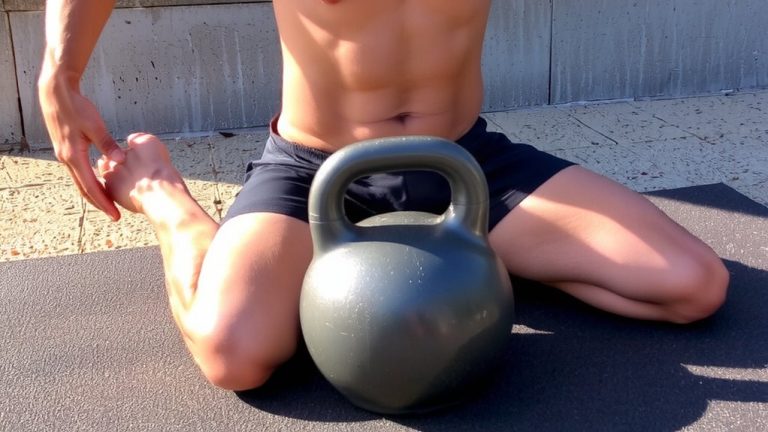
Because you’re already leveraging the sumo stance to fire up your adductors, dialing in the right variation can spike that inner-thigh burn even further. A wider stance with toes pointed about 45 degrees increases hip abduction and external rotation, boosting muscle activation in the inner thighs. The sumo squat already targets your adductors better than a regular squat, and adding resistance-like holding a kettlebell in a goblet squat position-amplifies the demand. You’ll feel a deeper contraction with each rep. Try placing a mini band above your knees to encourage active outward pressure. Elevating your feet on small plates also improves range of motion, intensifying the stretch and load on the inner thighs. These tweaks maximize both resistance and neuromuscular engagement, turning a standard sumo squat into a powerhouse move for adductor growth.
When to Do Sumo Squats for Growth & Mobility
When should you program sumo squats for real results-growth, strength, and better mobility? Do them 2–3 times weekly, using 6–12 reps at 60–80% of your one-rep max to boost hypertrophy and target the adductors. Place sumo squats early in your workout as a primary lift for lower body strength (2–6 reps) or later for hypertrophy and mobility (8–12+ reps) after heavy compounds. For improved hip mobility, use bodyweight or light loads with controlled tempo, focusing on full range of motion to open the hips. Pair them with dynamic warm-ups or superset with split squats to increase volume and adductor activation. Progressively overload over 6–8 weeks to see strength gains and better movement, especially if you’re a sedentary individual. Consistency drives results.
On a final note
You’ll feel the burn in your inner thighs with sumo squats, thanks to the wide, turned-out stance that activates adductors better than regular squats. Do them 2–3 times weekly, using proper form and a flat foot, for strength and mobility gains. Testers using Nike Metcon shoes reported better stability, and pairing squats with protein-rich post-workout meals boosts recovery. Add barbell or goblet variations to progressively overload muscles, building real lower-body power.