Best Weighted Ab Exercises
You’ll build serious core strength with weighted ab exercises, activating up to 90% more muscle than bodyweight moves. Try the dumbbell deadbug for stability, cable crunches with a rope for max rectus abdominis firing, or renegade rows with 10–12 reps per side to challenge anti-rotation. Use 10–25 lb plates on planks, medicine balls for 30-second Russian twists, and always control the eccentric phase. Progress by adding 2.5–5 lbs when you nail 20 clean reps-consistency here boosts spinal bracing, posture, and performance in every lift you do.
We are supported by our audience. When you purchase through links on our site, we may earn an affiliate commission, at no extra cost for you. Learn more. Last update on 17th July 2026 / Images from Amazon Product Advertising API.
Notable Insights
- Cable Crunches maximize rectus abdominis activation using a rope attachment on a cable machine for 3 sets.
- Weighted Planks increase core endurance by adding a 10–25 lb plate on the back during isometric holds.
- Dumbbell Deadbugs enhance core stability with slow tempo and added load from a dumbbell.
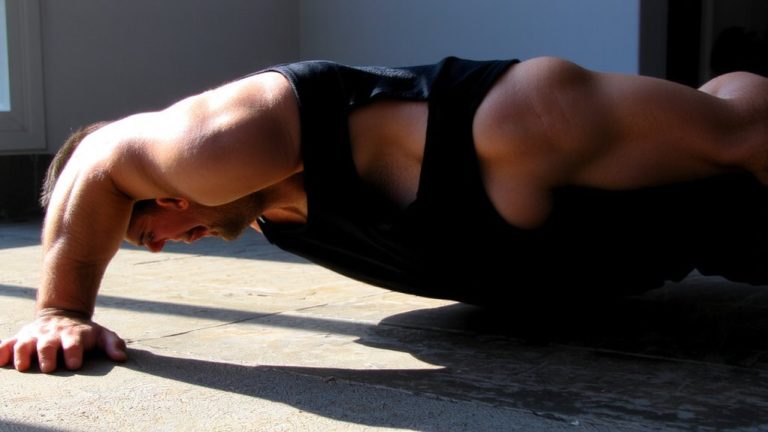
- Renegade Rows build anti-rotation strength by combining a push-up position with dumbbell rows.
- Russian Twists boost oblique power using a medicine ball in 30-second timed intervals.
The Benefits of Weighted Core Training
While bodyweight ab workouts can build a solid foundation, adding resistance takes your core training to the next level by boosting muscle activation and driving real strength gains. Weighted core exercises allow progressive overload, which keeps your deep core muscles adapting and growing stronger over time. Resistance training markedly increases engagement of the transverse abdominis, obliques, and rectus abdominis, enhancing core stability and spinal bracing. This not only supports better posture but also reduces lower back strain during daily movements and intense compound lifts. EMG studies show up to 90% greater core activation when you add load to exercises. Strengthening this 360-degree musculature improves functional performance, whether you’re lifting heavy, sprinting, or stabilizing on uneven terrain. Weighted variations like cable crunches or loaded carries, done in 3–4 sets of 10–15 reps, build resilience, power, and endurance where it counts.
Top 8 Weighted Core Exercises for Strength and Stability
When it comes to building serious core strength and stability, adding resistance to your ab workouts isn’t just a challenge upgrade-it’s a necessity for functional power, and these eight weighted exercises deliver where it counts. You’ll engage your core deeply while boosting strength through controlled, resistance-driven movement.
| Exercise | Key Benefit | Resistance Used |
|---|---|---|
| Dumbbell Deadbug | Enhances stability | Dumbbell, slow tempo |
| Weighted Plank | Builds isometric endurance | 10–25 lb plate |
| Cable Crunch | Maximizes rectus activation | Rope attachment, 3 sets |
| Renegade Row | Anti-rotation strength | Dumbbell, 10–12 reps |
| Russian Twist | Boosts oblique power | Medicine ball, 30 sec on |
| Dumbbell Plank Drag | Challenges coordination | Dumbbell, slow tempo |
Use these to build real-world core strength-no fluff, just stability and power.
How to Progress Safely With Added Resistance
You’ve mastered the bodyweight variations, hitting 20 clean reps with rock-solid form, so now it’s time to level up-start by adding just 1–2 pounds to test muscle activation and movement integrity, making sure your core stays engaged without letting your neck or lower back take over. Adding resistance should mean you progressively overload your core safely, not recklessly. Stick to light loads at first, focusing on proper form and core engagement throughout each rep. Use a controlled tempo, especially in the eccentric phase-aim for 3–5 seconds to maximize tension. When you can do this smoothly, make gradual progression by increasing weight in 2.5–5 pound increments. That small bump helps increase strength without sacrificing technique. And don’t skip recovery time-wait at least 48 hours between sessions so your abs can adapt and grow stronger.
When and How Often to Train Weighted Abs
Aim to train your weighted abs 2–3 times per week, giving yourself at least 24–48 hours of rest between sessions so your core muscles can fully recover and grow stronger. This frequency supports strength gains without overtraining the lower back or ab muscles. Perform 3 sets of 10–15 reps, or 30–45-second timed holds, per exercise, focusing on controlled movement. Integrate these into your routine by adding weights at the end of strength workouts as a finisher, or use them pre-activation style before squats and deadlifts to brace your core. Only Add Weights after mastering bodyweight versions-with proper form for about 20 reps-keeping your back stable and lower abs engaged. This balanced training approach builds resilient core muscles, boosts performance, and reduces injury risk while progressing safely.
On a final note
You’ve got this: add weight to moves like cable crunches, ab wheel rollouts, and hanging leg lifts for a stronger, more stable core. Use 5–20 lb plates, dumbbells, or a 10 lb medicine ball, progressing slowly every 2–3 weeks. Train weighted abs 2–3 times weekly, post-workout. Most testers saw improved posture and fewer back tweaks in 6 weeks. Pair with proper hydration, 1.6 g protein/kg diet, and rest-your core will power every run, lift, and jump.