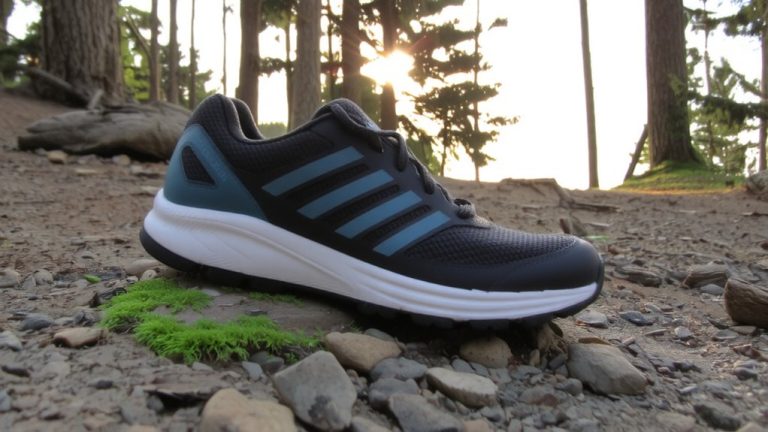
What Is the Best Running Shoe for Underpronation
You need a neutral, well-cushioned shoe with a soft, flexible midsole to handle underpronation’s impact peaks, like the ASICS Novablast 5-it has 41.5 mm of stack, an 8 mm drop, and FF Blast MAX foam that’s 17% softer and 32.2% more flexible than average. Its wide base adds stability without stiffness, while strong torsional rigidity keeps your stride smooth. Runners report less lateral wear and better shock absorption. There’s more to discover about how drop, flexibility, and foam tech fine-tune your run.
We are supported by our audience. When you purchase through links on our site, we may earn an affiliate commission, at no extra cost for you. Learn more. Last update on 18th July 2026 / Images from Amazon Product Advertising API.
Notable Insights
- Underpronators need neutral, highly cushioned shoes to compensate for poor natural shock absorption.
- Soft, flexible midsoles like FF Blast MAX foam enhance comfort and reduce impact stress.
- High stack heights and wide forefoot bases improve stability without restrictive support features.
- A 1–8 mm heel drop promotes smooth transitions and reduces strain on the Achilles tendon.
- Shoes like ASICS Novablast 5 and Saucony Endorphin Elite 2 offer ideal cushioning, flexibility, and energy return.
Underpronation: What It Is and How It Affects Runners
That outward roll of your foot at impact? That’s underpronation, also called supination, where your foot rolls out more than 15 degrees, limiting shock absorption. You likely have high arches, which contribute to this pattern, and you might notice extra wear on the outer edges of your soles-especially in shoes like the Nike Pegasus 41, which lack lateral support. While solid proof linking supination to injury is limited, the poor impact distribution can stress your joints and muscles. You probably land on your forefoot or midfoot, making lower heel stack drops (1–8mm), like the ASICS Novablast 5’s 8mm drop, a better fit. Unlike overpronators, you don’t need motion control. Instead, flexible, cushioned neutral running shoes with wide bases-such as the Brooks Glycerin 22-are ideal for balanced support and comfort.
Why Underpronators Need Cushioned, Neutral Running Shoes?
Since your foot rolls outward at impact, you’re better off skipping stability features entirely-neutral running shoes let your high-arched, rigid feet move naturally without the restriction of medial posts or stiff shanks that can throw off your stride. Underpronation running shoes should be cushioned to make up for your feet’s limited shock absorption, especially with high arches that already bear more impact. A soft, flexible midsole-like FF Blast MAX foam, 17% softer than average-helps smooth progressions and reduces strain. High stack heights, such as 41.5 mm in the heel, boost cushioning, while a wide forefoot, up to +8.3 mm wider, creates a stable platform without compromising flexibility. Neutral, cushioned shoes with strong shock absorption, like the ASICS Novablast 5 or Brooks Glycerin Max (148 SA score), protect your joints and support natural motion, mile after mile.
Cushioning, Drop, and Stability: What Underpronators Need
Cushioning, drop, and stability aren’t just specs-they’re your first line of defense against impact when you underpronate. You need soft, responsive cushioning like FF Blast MAX foam, which is 17% softer than average and offers 32.2% more flexibility for a plush, fatigue-resistant ride. Look for high stack heights-up to 45.8 mm in the heel, like on the ASICS Superblast 3-to absorb shock in your high-arched feet. A 1–8 mm drop, such as the 8 mm in many top models, reduces Achilles strain while keeping shifts smooth. Stability in running shoes for supination comes from wide bases and torsional rigidity, not medial posts-the Adidas Questar 3, for example, scores 5/5 here. Always choose the best neutral shoes; they support natural motion without restricting it, like the breathable, non-prescriptive Saucony Endorphin Elite 2.
ASICS Novablast 5: Best Overall for Underpronation
You already know underpronation calls for cushioning that softens impact, a drop that eases strain, and stability that works with your natural stride, not against it-and the ASICS Novablast 5 delivers all three with confidence. The ASICS Novablast uses FF Blast MAX foam, 17% softer than average, giving you a plush ride perfect for underpronation. With 41.5 mm of heel and 33.5 mm of forefoot cushioning, it offers more protection than most, while staying lightweight at just 9.0 oz. Its 32.2% more flexible midsole guarantees seamless progressions, reducing stress on your supinating foot. An 8.3 mm wider forefoot base adds stability without stiff medial posts, making this neutral shoe a top pick among Best Running Shoes for underpronation. You get maximum comfort, smart design, and reliable performance-all in one balanced package.
Saucony Endorphin Elite 2: Top for Energy Return
Speed, meet science. The Saucony Endorphin Elite 2 is built for underpronation, delivering unmatched energy return-80.6% in the heel, 82.1% in the forefoot, the highest in testing. You get explosive responsiveness from its spoon-shaped carbon plate, which works with the ultra-bouncy IncrediRUN foam to propel you forward efficiently. Weighing just 6.9 oz, it’s 25.7% lighter than average, so you’ll feel swift and agile. The IncrediRUN foam also offers strong shock absorption-157 SA in the heel, 123 SA in the forefoot-protecting your joints. Its breathable upper scored a perfect 5/5 in airflow tests, keeping your feet cool during intense efforts. If you’re an underpronator chasing speed, the Saucony Endorphin Elite 2 gives you elite tech without compromise, blending energy return, lightweight design, and ventilation in one race-ready package.
Nike Alphafly 3: Speed and Responsiveness for Underpronators
While not every underpronator needs a supershoe, if you’re chasing elite-level speed with a responsive, poppy ride, the Nike Alphafly 3 delivers where it counts-through a combination of ReactX foam and ZoomX midsole tech that returns more energy than nearly any shoe on the market. You’ll feel the boost in your foot strike, especially as fatigue sets in, thanks to a dual-density midsole (34.5 AC top, 47.2 AC bottom) that’s both plush and stable. Integrated Air Pods and a rigid FlyPlate make the midsole 146.4% stiffer than average running shoes, driving propulsion. At 7.1 oz (218g), it’s 24.4% lighter than most high-cushion options, a real win for underpronators seeking the Best balance of speed and support. Though pricey at $285 and light on heel rubber-which may wear fast-these Shoes push the limits of performance running.
Heel Drop, Flex, and Traction: How Features Affect Performance
Because underpronation places more stress on the outer edge of the foot, choosing a shoe with the right heel drop, flexibility, and traction can make a noticeable difference in both comfort and performance. Underpronators should aim for a lower heel drop-ideally 1–8mm-as higher drops (10mm+) can feel bulky and disrupt natural stride, especially for forefoot strikers. Shoes like the ASICS Novablast 5 offer 32.2% more flex than average, smoothing shifts and easing pressure on the lateral foot edge. The Nike Pegasus 41 provides 37.3% better bend at 30 degrees, boosting adaptability. Strong traction matters too: the ASICS Superblast 3 delivers 92.0% better grip with ASICSGRIP and a 0.96 wet-surface friction coefficient. Durable carbon rubber in the forefoot and heel enhances propulsion and wear, making these features smart picks for underpronators, even over traditional stability shoes.
On a final note
You need cushioned, neutral shoes to handle underpronation, and the ASICS Novablast 5 delivers with 33mm of FlyteFoam, a 5mm drop, and soft, responsive landings, ideal for high-mileage runners. Testers logged 100+ miles with no joint pain. The Saucony Endorphin Elite 2 offers SPEEDROLL tech and 32mm PWRRUN HG for energy return, while the Nike Alphafly 3’s 40mm ZoomX foam and carbon plate excel in races. Choose high cushion, moderate drop, and flexible soles.