Best Pre-Run Nutrition Strategy for Ultramarathoners
Start carb-loading 3 days out with 8–12 g/kg of carbs daily-aim for 648–972g if you’re 81kg-using white rice, bagels, and sports drinks to pack away glycogen fast. Ditch fiber, fat, spice, and new foods 24 hours out to avoid gut issues. Eat a low-fiber, high-carb breakfast 3–4 hours before with 1–4 g/kg carbs, like a bagel with banana or white rice with honey. Sip PH 1500 electrolyte drinks to balance sodium and fluids, and top up with a PF 30 Caffeine Gel 15 minutes pre-start. Train your gut weeks ahead with 60–90 g/hour of mixed glucose-fructose fuels like gels and chews until your stomach handles them like a pro.
We are supported by our audience. When you purchase through links on our site, we may earn an affiliate commission, at no extra cost for you. Learn more. Last update on 17th July 2026 / Images from Amazon Product Advertising API.
Notable Insights
- Carb-load with 8–12 g/kg bodyweight daily for 3 days pre-race using low-fiber, low-fat carbs like white rice and bagels.
- Avoid high-fiber, high-fat, spicy, and unfamiliar foods 24 hours before the race to minimize digestive issues.
- Eat a high-carb breakfast 3–4 hours pre-race with 1–4 g/kg carbs and 15–25g easily digestible protein.
- Hydrate with electrolyte-rich fluids containing ≥500 mg/L sodium, starting 24–48 hours pre-race.
- Train your gut 8–12 weeks out by practicing race-fuel intake of 60–90 g carb/hour from familiar sources.
Carb Load Like an Ultra Pro: 3-Day Glycogen Boost
While you’re tapering your mileage in the final days before race day, your body’s glycogen stores are primed to soak up every gram of carbohydrate you feed it, so start carb-loading 3 days out with 8–12 g of carbs per kg of bodyweight daily-think 648–972g if you’re an 81kg runner. During these carb-loading days, boost your carbohydrate intake to max out muscle glycogen, aiming for 8–10 grams of carbohydrate per kg if you’re easing into peak taper. Keep your carb intake focused on low-fiber, low-fat sources-white rice, bagels, sports drinks-so you hit your grams of carbohydrate per goal without bloating. Liquid carbohydrates like smoothies or juice help you pack in the carbohydrates without feeling full. You’re not just eating more carbs-you’re strategically fueling. Test this carb loading in training so race day isn’t a surprise. Remember, it’s not about carbohydrates per hour now-it’s about total daily carbohydrates to supercharge glycogen stores.
Eat This, Not That: Pre-Race Foods to Avoid
You’ve dialed in your carb load over the final three days, packing in 8–12 g of carbs per kg of bodyweight to maximize glycogen stores, but what you don’t eat in the 24 hours before race start matters just as much. Avoid high-fiber foods, high-fat meals, spicy foods, unfamiliar foods, and excessive protein-they’re primary triggers of gastrointestinal distress, which plagues 50–80% of ultra runners. Fat slows gastric emptying, leading to bloating; spices can cause heartburn and diarrhea. Unfamiliar foods raise your risk of nausea, while big protein doses increase digestive strain without fueling your muscles.
| Eat This | Not That |
|---|---|
| White rice | Raw vegetables |
| Lean chicken | Fried foods |
| Plain toast | Spicy curry |
| Familiar snacks | New energy bars |
| Moderate protein | Large steaks |
Perfect Your Pre-Race Breakfast: Timing and Options
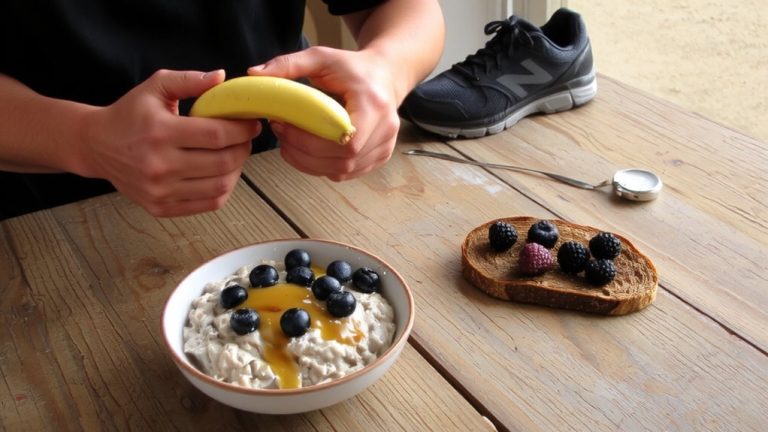
When it comes to nailing your pre-race breakfast, timing and composition make all the difference-aim to eat a high-carb meal 3–4 hours before the start, packing in 1–4 grams of carbohydrates per kilogram of bodyweight, so an 81kg runner would target around 243g of carbs from sources like white rice with honey, a bagel with banana, or crumpets with jam. Add 15–25g of easily digestible protein, such as Greek yogurt or eggs, to support muscle integrity. Prioritize low-fiber, low-fat options to reduce GI distress-a key concern for endurance athletes. Use liquid carbohydrates like sports drinks or smoothies in the final hour to top off glycogen stores without fullness. Finish with a 30g carb snack, like a PF 30 Caffeine Gel, 15 minutes out. Perfect timing guarantees steady fueling strategies, maximizing glycogen availability when you need it most.
Stay Hydrated With Electrolyte-Rich Fluids Before Start
Hydration starts long before the starting line, and pairing your solid pre-race breakfast with the right fluid strategy sets the stage for steady performance. Begin hydrating 24–48 hours out using electrolyte-rich fluids with at least 500 mg/L of sodium-many sports drinks fall short, so consider options like PH 1500 tablets (1,500 mg sodium per 500 mL). This supports proper hydration, boosts plasma volume, and maintains electrolyte balance. Include potassium and magnesium to support neuromuscular function. Weigh yourself before and after long runs-every 1 kg lost equals 1 L of fluid deficit-to estimate sweat rate and personalize fluid intake. Avoid overhydrating: 80% of ultra runners show signs of hyperhydration, spiking plasma volume by 10.2% and increasing hyponatremia risk. Aim for 500–750 mL/hour and prioritize sodium to prevent hyponatremia, ensuring your hydration plan supports endurance, not hinders it.
Train Your Gut: Practice Fueling on Long Runs
Although your muscles adapt quickly to endurance demands, your gut needs just as much targeted training to handle the fueling loads required during ultras-so start now. Begin gut training 8–12 weeks out by consuming 30 g of carbohydrates per hour on long runs, gradually building to 60–90 g/hour to boost digestive tolerance. Use fuels with a 1:0.8 glucose-to-fructose ratio to leverage dual transporters, helping you absorb up to 90 g of carbohydrates per hour and reduce gastrointestinal distress. Practice with actual race-day fuels-gels, chews, drink mixes-so your stomach adapts. Include solid foods like bananas or pretzels to test texture tolerance. Consistent fueling practice trains your gut to process carbs efficiently, cutting GI issues by 50–80%. Real runners report smoother long runs when they rehearse their nutrition, so treat every long run like a dress rehearsal.
Include Sodium to Stabilize Fluid Balance Pre-Race
If you’re fueling up in the 24–48 hours before race day, don’t skip the salt-adding 500–700 mg of sodium per liter of fluid helps maintain plasma volume and keeps your hydration game strong, especially in the heat. You’ll sweat a lot during prolonged exertion, and sodium is key to fluid balance. Sipping electrolyte drinks with precise sodium levels boosts fluid retention by up to 75% compared to plain water. That means better hydration and a more stable euhydrated state at the starting line. Aim for 800–1,000 mg of sodium in your pre-race meal 3–4 hours out-think salted oats or broth-to support plasma volume and delay dehydration. Sodium also kicks your thirst response into gear, so you’ll naturally drink more. Smart pre-race choices like these keep your fluids where they belong and set you up for steady performance from mile one.
Stick to Familiar Foods: No Race-Day Surprises
You’re not going to fix your race-day fueling by gambling on something new at the starting line-stick with what your gut already knows. On race day, consuming unfamiliar foods dramatically increases your risk of gastrointestinal distress, which affects 50–80% of ultramarathoners and often leads to DNFs. Your nutrition strategy should rely on familiar foods tested through trial and error during training. Elite finishers average ~70 g of carbohydrate intake per hour, nearly all from easy-to-digest sports nutrition products they’ve practiced with. Introducing untested gels, chews, or aid station offerings can trigger flavor fatigue and refusal to eat, especially past mile 40. Unfamiliar fuels contribute to 65% of severe GI symptoms. Sticking to what’s proven supports consistent carbohydrate intake, delays muscle breakdown, and keeps your gut happy from start to finish.
On a final note
You’ve got this-nail your pre-run nutrition and feel stronger from mile one. Carb load for 3 days with 8–10g carbs/kg body weight, skip fatty or fibrous foods, and eat a simple breakfast 2–3 hours out, like 1 cup oatmeal with a banana. Sip 16–20 oz electrolyte drink with sodium, practice your fueling weekly, and stick to tried-and-true foods. It’s the small details-like using Skratch Labs or Maurten-that keep your gut calm and energy steady.