How to Combine Caffeine and Carbs for Optimal Pre-Run Performance
Take 3–6 mg of caffeine per kilogram of your body weight with 30–60 grams of easy-to-digest carbs 45–60 minutes before your run, like a Carbs Fuel gel (100 mg caffeine + 25 g carbs) or stacked Flow Formulas, to boost alertness, spare glycogen, and cut fatigue; this combo sharpens focus, lowers perceived effort, and improves 5K/10K times by up to 2.5%, and testing it in training helps you dial in the ideal balance for race day.
We are supported by our audience. When you purchase through links on our site, we may earn an affiliate commission, at no extra cost for you. Learn more. Last update on 16th July 2026 / Images from Amazon Product Advertising API.
Notable Insights
- Combine 30–60 grams of carbs with 3–6 mg/kg of caffeine 45–60 minutes before running for peak energy and focus.
- Time intake 45–60 minutes pre-run to align peak caffeine levels with exercise onset and maximize fat oxidation.
- Use low-acid, easily digestible sources like cold brew-based gels to reduce stomach issues during runs.
- Tailor doses to body weight-for a 70 kg runner, aim for 210–420 mg caffeine with 30–60 g carbs.
- Test caffeine-carb combinations in training to assess tolerance and avoid GI distress on race day.
Pair Caffeine and Carbs for Better Running Energy
You’ll get the most out of your pre-run fuel when you pair caffeine and carbs-the combo has been tested, timed, and fine-tuned to boost energy, sharpen focus, and delay fatigue. That pre-run caffeine kick, combined with 30–60 grams of carbs, supports glycogen sparing by increasing fat oxidation, so your muscles preserve stored fuel longer. This means better carbohydrate availability during later miles and sustained energy levels when you need them most. Caffeinated gels-like those with 100 mg caffeine and 25 g carbs-deliver performance benefits, improving 5K and 10K times by up to 2.5% over carbs alone. The synergy of caffeine and carbs also stimulates the central nervous system, boosting dopamine and brain glucose uptake for sharper focus. With ideal timing, you’ll experience lower perceived exertion, smoother effort, and measurable gains in running performance.
Time Caffeine and Carbs 45–60 Minutes Before Your Run
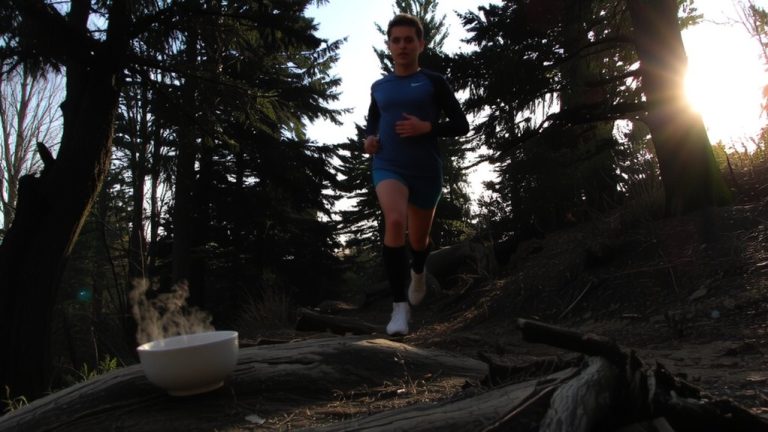
When timed right, caffeine and carbs work together to prime your body for peak performance, and hitting that 45–60 minute window before your run is key. This allows caffeine metabolism to ramp up while delivering a maximal dose of energy. At this point, peak caffeine concentration aligns with exercise onset, boosting alertness and fat oxidation. Pairing caffeine and carbohydrates 45–60 minutes before exercise enhances glycogen utilization and supports performance enhancement. Choose easily digestible options to guarantee quick carbohydrate timing and avoid gut issues.
| What to Take | Example |
|---|---|
| 3–6 mg of caffeine per kg | pre-run coffee (200–400 mg) |
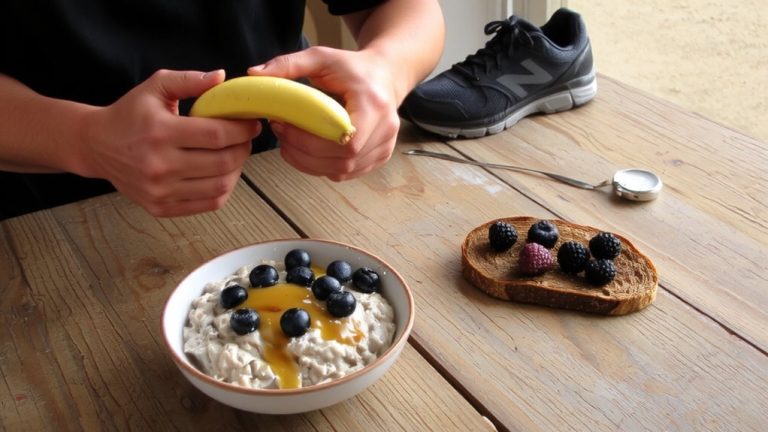
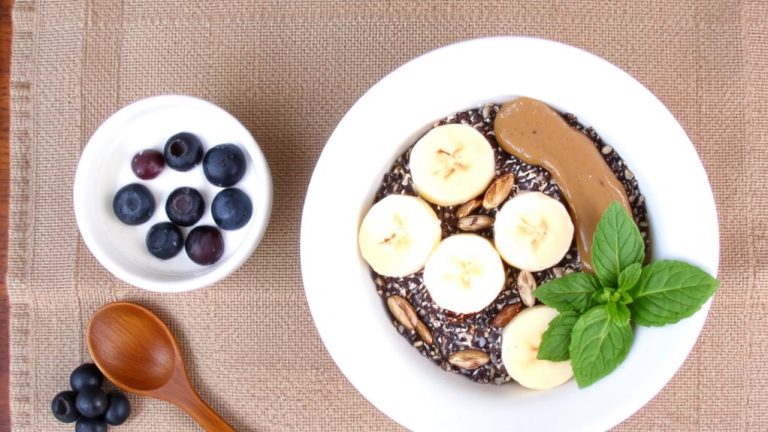
| 1–4 g carbs per kg | banana, toast, or energy gel |
This strategy maximizes energy, focus, and endurance-without unnecessary bulk or delay.
Use 3–6 Mg/Kg Caffeine to Maximize Performance
Caffeine timing goes hand in hand with the right dose-aim for 3–6 mg per kilogram of body weight about 60 minutes before your run to hit peak blood levels just as you start moving. That sweet spot of caffeine per kg is proven to improve performance, with studies showing a 2–7% boost in endurance performance. For a 70 kg runner, that’s 210–420 mg of caffeine per dose, a range that supports higher output without overdoing it. This dose of caffeine helps lower your rate of perceived exertion, so hard efforts feel easier from mile one to the finish. Peak blood concentration at this level enhances alertness and focus, helping you maintain pace. Research backs 6 mg/kg as effective for time-trial performance, but going beyond 9 mg/kg raises the risk of jitters or gut issues. Stick to 3–6 mg/kg and let caffeine work for your performance-without the crash.
Pick the Right Caffeine + Carb Combo for You
While your ideal caffeine dose is locked in at 3–6 mg per kilogram of body weight, pairing it with the right carbs guarantees you’re fueled, focused, and ready to perform-without digestive setbacks. For peak pre-run performance, aim for 30–60g of carbs per hour alongside your caffeine dose. If you weigh 68 kg (150 lbs), that’s 204–408 mg of caffeine-easily met with a serving of Flow Formulas Drink Mix (135mg caffeine + 30g carbs) or a Carbs Fuel Caffeinated Gel (100mg caffeine + 25g carbs). You can stack these to match your body weight needs. If you face gastrointestinal issues, go low-acid: cold brew–based caffeinated gels or chews digest smoother than coffee. Test combinations like alternating caffeinated gels with non-caffeinated carb gels during training to dial in your carbohydrate intake. This strategy sharpens your performance without guesswork on race day.
Prevent Stomach Issues During Your Run
You’ve already dialed in your caffeine and carb mix to match your body weight and performance goals, but even the perfect blend won’t help if your stomach rebels mid-run. To prevent stomach issues, choose low-acid caffeine like cold brew or dark roast for your pre-run cup-these reduce gastric distress caused by coffee’s natural acidity. Skip milk or cream, since high-fat additives slow digestion and worsen discomfort. Instead, pair your caffeine intake with easily digestible carbohydrates like a banana or white toast to buffer stomach acid and support steady absorption. For even gentler delivery, try fast-acting options like Run Gum or caffeinated gels, which absorb through your mouth lining. Keep your caffeine dose between 3–6 mg/kg-never exceed 9 mg/kg-to avoid diarrhea or cramps. Smart choices mean energy without the ache.
Start Low and Test Your Dose in Training
If you’re new to using caffeine before runs, begin with just 3 mg per kilogram of body weight-about 204 mg for a 150-pound runner-to see how your system responds. Start low to assess your tolerance and avoid unexpected side effects. Use training runs to test your dose with actual race-pace efforts, tracking performance, energy levels, and gastrointestinal response. Whether it’s coffee, gels, or chews, real-world use in training reveals how caffeine affects you personally. Don’t wait until race day to try it-76% of competing athletes use caffeine, but genetics and habits mean responses vary widely. Stick to doses under 6 mg/kg (like 408 mg for 150 lbs), since higher amounts don’t boost performance but do raise risks of jitters, anxiety, or GI distress. Repeated testing helps you find the sweet spot-up to 5.6% lower perceived effort without side effects.
Fuel Smart: Combine Caffeine, Carbs, and Practice
Since timing and composition play a key role in pre-run fueling, pairing 3–6 mg/kg of caffeine with 1–4 g/kg of carbohydrates about 60 minutes before your run helps maximize energy availability and stave off fatigue, especially when you choose fast-absorbing forms like Run Gum (135 mg per piece) or Flow Formulas’ drink mix alongside simple carbs such as a banana or white bread with honey. For you, that’s about 210–420 mg of caffeine and 70–280 grams of carbs if you weigh 70 kg. This combo fuels performance by spiking blood glucose and caffeine levels right when you need them. But don’t wait until race day to try it-practice during key training runs like long or tempo sessions. That way, you’ll refine what works, avoid stomach issues, and guarantee you’re truly fueled. Skip high-fat or high-fiber extras-they slow digestion and blunt your energy boost.
On a final note
Fuel smart: take 3–6 mg/kg caffeine with 30–60g carbs 45–60 minutes before your run, using a gel like GU Roctane or drink like Maurten 320 to boost energy and focus, tested by runners at 8K pace or faster, and avoid stomach issues by practicing in training, starting low, and pairing with water-consistency, timing, and real-world feedback make this combo a reliable edge for race day or tough workouts.