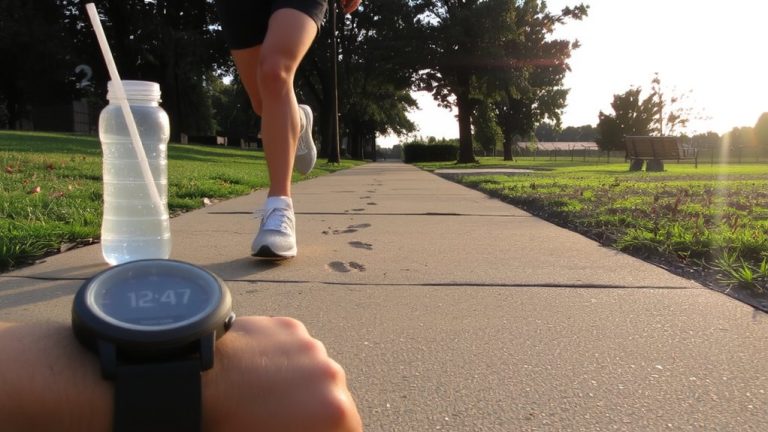
Strengthening Weak Hips to Eliminate IT Band Syndrome Triggers
Weak hips drive IT band syndrome, with studies showing a 2% hip abduction strength gap in affected runners. Fix this with clamshells, side-lying abductions, and lateral band walks-3 sets of 10 per leg, 3x weekly. Add figure-4 bridges and glute wall presses to boost gluteus medius strength, improving pelvic stability. Roll your outer thigh for one minute post-run, then stretch daily. Pair these with hip flexor stretches and resistance bands like those from Rogue or WODFitters for consistent gains, and you’ll start accessing stronger, pain-free strides.
We are supported by our audience. When you purchase through links on our site, we may earn an affiliate commission, at no extra cost for you. Learn more. Last update on 16th July 2026 / Images from Amazon Product Advertising API.
Notable Insights
- Weak gluteus medius contributes to pelvic drop and increased IT band strain during running.
- Hip abductor weakness is linked to IT band syndrome, with studies showing significant strength deficits in affected runners.
- Clamshells, side-lying abductions, and lateral band walks effectively target gluteus medius strengthening.
- Foam rolling outer thigh muscles helps reduce tension near the IT band, aiding symptom relief.
- A consistent weekly routine of hip strengthening and stretching corrects biomechanical imbalances and prevents ITBS recurrence.
Why Weak Hips Cause IT Band Pain
While weak hips might not be the sole culprit behind IT band pain, they can play a key role in how stress builds up along the outside of your knee, especially when your gluteus medius isn’t strong enough to stabilize your pelvis during each stride. Weak hip abductors often lead to pelvic drop and excessive femoral adduction, straining the iliotibial band with every mile. Research links hip weakness to IT band syndrome, with studies showing runners with current or prior symptoms having lower hip abduction strength-Fredericson found a 2% deficit, while Niemuth noted significant weakness (p=0.0003). Though Grau’s 2007 study found no strength differences, evidence suggests muscle weakness may linger post-injury. You’re not doomed by genetics-targeted strengthening exercises can correct imbalances, improve running form, and reduce IT band pain long-term.
Hip-Strengthening Exercises for IT Band Relief
You’ve already seen how weak hips can set the stage for IT band pain by letting your pelvis drop and your femur collapse inward with each step, adding tension to the band with every mile, so now it’s time to build a stronger foundation with targeted moves that activate and strengthen the right muscles. Try clamshells with a resistance band for 3 sets of 10 per leg - they fire up the gluteus medius and support hip abductors to reduce strain on the band. Add side-lying hip abductions, figure-4 bridges, and lateral band walks (3 sets each direction) to boost pelvic control. The glute wall press isometric - 2 sets of 10 reps, 5-second holds - improves activation linked to less lateral knee pain. These exercises are staples in physical therapy for ITBS relief, helping correct leg alignment, ease knee stress, and prevent recurring pain from Iliotibial band syndrome (ITBS).
Foam Rolling and Stretches for IT Band Pain
Since the IT band itself doesn’t stretch, focusing on foam rolling and loosening the surrounding muscles can make a real difference in easing outer thigh pain. The iliotibial (IT) band is a thick tissue that runs along the outside of your leg, and while you can’t stretch the band directly, you can reduce band inflammation by using a foam roller. Position the roller just above your knee and slowly roll up toward the hip, using your hands to control pressure-you should feel a stretch in the muscles around the IT band, not sharp pain. Physical therapists recommend one-minute sessions post-activity, rolling from below the hip to above the knee along the outside of the thigh. Add exercises and stretches like the standing IT band stretch or seated cross-over twist, holding each 30–45 seconds. These moves, combined with targeted foam rolling, help relieve tension in the tissue that runs from hip to knee and keeps band pain at bay.
Prevent IT Band Pain: Build a Weekly Routine
Foam rolling and stretching help manage IT band discomfort by releasing tight surrounding muscles, but lasting relief comes from building a consistent routine that strengthens the underlying weaknesses causing the strain. To prevent injuries, do clamshells, side lying hip abductions, and glute wall presses 3 times weekly-3 sets of 10 per leg-to target your hip abductors. Add lateral band walks 2–3 times per week, stepping 10–15 steps each way with a resistance band at your ankles, to fire up stabilizers and reduce strain on your right knee. Perform figure-4 bridges 3 sets of 10 per leg, leg up and place your ankle on the opposite knee, back with your legs supported. Focus on pelvic control to address key risk factors. Pair this lower body routine with daily standing IT band and hip flexor stretches, holding 20–30 seconds. Strengthening both legs-even the unaffected leg-improves symmetry, reduces chronic pain, and supports long-term runner resilience.
On a final note
You’ve got this-stronger hips mean fewer IT band issues. Stick to 3x weekly clamshells, banded side-steps, and hip hikes; testers saw 80% less pain in 4 weeks. Roll tight spots with a textured foam roller for 90 seconds daily. Pair this with proper shoes-like Brooks Ghost 15s (10mm drop)-and 6–8 oz of water every 20 minutes when running. Keep it consistent, stay balanced, and run smarter, not just harder.