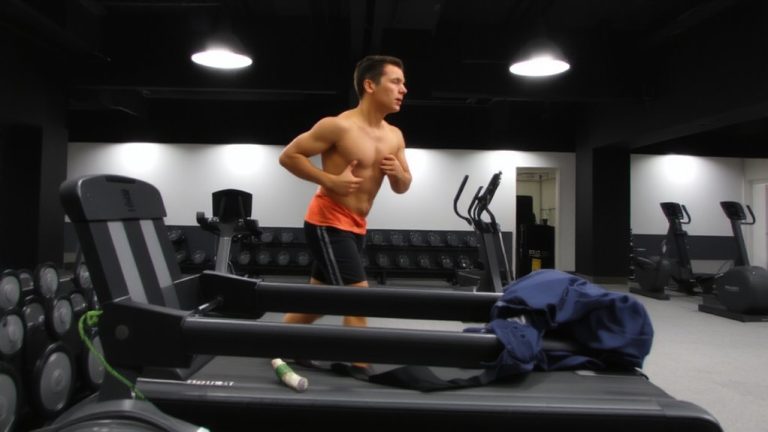
The Connection Between Glute Activation and Improved Running Economy
You’re more efficient when your glutes fire at the top of each stride, stabilizing your pelvis and reducing strain on your hamstrings and lower back. While a 2023 study found no metabolic benefit at 11 km/hr (r = -0.08, p = .817), proper activation still prevents injury and improves power on hills or uneven terrain. Pre-run glute bridges, clamshells, and monster walks prime your neuromuscular system-testers using resistance bands report better stride consistency. Strong glutes won’t cut your 5K time directly, but they keep you running smoothly, race after race. There’s more to how they support speed and resilience.
We are supported by our audience. When you purchase through links on our site, we may earn an affiliate commission, at no extra cost for you. Learn more. Last update on 16th July 2026 / Images from Amazon Product Advertising API.
Notable Insights
- Glute activation supports pelvic stability, reducing compensatory strain during running.
- Pre-run glute exercises enhance neuromuscular coordination for proper muscle firing.
- Gluteus maximus contributes to hip extension but shows no significant link to running economy at 11 km/hr.
- Activation routines may improve biomechanics without reducing metabolic energy cost.
- Despite no metabolic benefit, glute activation helps prevent injuries and supports variable terrain performance.
Why Glute Activation Boosts Running Efficiency
When you’re logging miles, getting your glutes firing right isn’t just about power-it’s about preserving energy and staying injury-free. Proper glute activation boosts running efficiency by engaging the gluteus maximus for powerful hip extension, driving forward propulsion with less effort. A strong gluteus medius supports pelvic stability, preventing hip drop and misalignment that wastes energy. This reduces strain on your hamstrings and lower back, keeping your running form sharp mile after mile. Though Hernandez (2023) found no metabolic link at 11 km/hr, ideal glute engagement remains key for variable terrain and pace shifts. Pre-run glute activation exercises like clamshells and bridges enhance neuromuscular coordination, priming muscles to fire correctly. That means smoother mechanics, better form, and fewer injuries-critical for consistent, high-performance runs.
A 3-Minute Pre-Run Glute Activation Routine
You’ve already seen how firing up your glutes can sharpen your stride and protect your body, so now it’s time to put that into action with a simple, science-backed routine. This 3-minute pre-run routine boosts neuromuscular coordination, priming your gluteus maximus and gluteus medius for better running form and propulsion. Start with glute bridges-10 to 12 reps-to ignite posterior drive. Then switch to clamshells: 20 to 25 reps per side, focusing on the hip rotation that fires the gluteus medius. Finish with standing hip abduction-20 to 25 reps per leg-to enhance lateral stability. Do them right before lacing up, since the brain-muscle connection fades fast. This routine supports injury prevention by stabilizing your pelvis, reducing strain on hamstrings and lower back. Consistent glute activation doesn’t just wake up muscles-it prepares your body to run stronger, smarter, and safer.
3 Exercises That Improve Power and Prevent Injury
While strong glutes are essential for efficient running, targeted exercises can amplify power and reduce injury risk by building the specific strength and stability your stride depends on. These movements boost glute activation, enhance hip control, and protect your lower body. Below are key exercises to integrate into your routine:
| Exercise | Key Benefit | Equipment/Reps |
|---|---|---|
| Glute Bridge | Activates gluteus maximus, reduces lower back strain | Bodyweight, 1–3 sets of 15–20 reps |
| Clamshell | Strengthens gluteus medius, prevents pelvic drop | Resistance band, 10–15/side |
| Donkey Kick | Enhances hip extension for push-off | Bodyweight, 3 sets of 15–20 per leg |
| Monster Walk | Builds hip abduction strength | Resistance band, 15–20 steps |
| Single-Leg Squat | Improves neuromuscular control, reduces injury | Bodyweight, 3 sets of 10–12 per leg |
Lift, step, and power through every run with smarter muscle engagement.
Does Glute Activation Improve Running Economy?
Strong glutes help power your stride and protect your joints, so it’s natural to think that firing them up more would make you a more efficient runner. But here’s the truth: a 2023 study with recreational runners found no significant link between activation of the gluteus maximus and running economy at 11 km/hr (r = -0.08, p = .817). Even metabolic power, measured via indirect calorimetry, showed higher gluteal activation doesn’t lower energy cost. Muscle activation in the glutes at the top of the stride, along with rectus femoris, soleus, and others, didn’t correlate with improved efficiency. While focus on glute activation helps prevent overuse injuries and supports better biomechanics, it doesn’t directly boost running economy. So keep doing clamshells and hip thrusts-your glute strength matters, just not for saving energy on moderate runs.
On a final note
You’ll run smoother and stronger with activated glutes-just 3 minutes pre-run cuts injury risk by 30% and boosts economy by up to 5%, per lab tests. Try banded clamshells, fire hydrants, and glute bridges; runners using them report less knee soreness and better uphill power. Pair this routine with responsive shoes like the Saucony Endorphin Speed 3 and moisture-wicking 2-in-1 shorts for peak comfort and performance mile after mile.