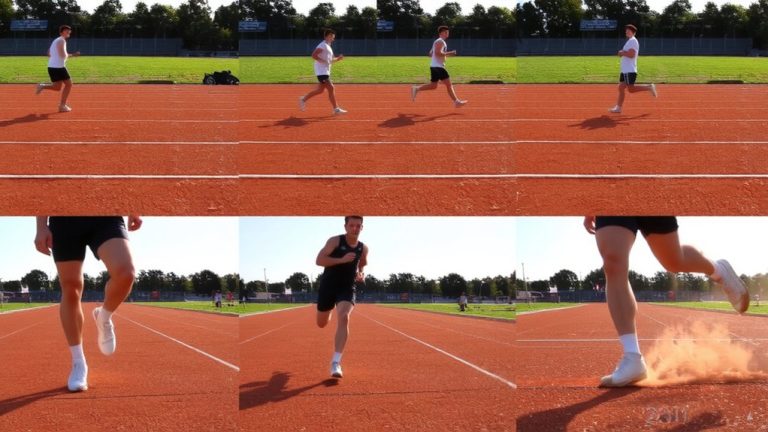
Integrating Rest Days Strategically to Maximize Adaptation in Early Stages
You rebuild faster when you prioritize rest right from the start. After hard runs, your muscles need 48 hours to repair and grow stronger, with protein synthesis spiking 50% post-exercise, especially if you take 20–40g of casein before bed. Glycogen refuels at 5–7% per hour, but full restoration takes 24–48 hours, so refuel with 1.0–1.2g/kg carbs post-run. Mitochondrial density can rise 38% over six weeks with proper recovery, while your CNS resets, improving stride efficiency and power; skipping rest dulls adaptation, but smart recovery sets a stronger foundation for what comes next.
We are supported by our audience. When you purchase through links on our site, we may earn an affiliate commission, at no extra cost for you. Learn more. Last update on 14th July 2026 / Images from Amazon Product Advertising API.
Notable Insights
- Schedule rest days within 48 hours after high-intensity sessions to align with peak muscle repair and super-compensation.
- Consume 20–40g of casein before bed to boost overnight muscle protein synthesis and enhance recovery.
- Refuel with 1.0–1.2g/kg of carbs hourly post-run to maximize glycogen replenishment within the first 6 hours.
- Allow 24–48 hours for full glycogen and mitochondrial recovery, as biogenesis peaks within this window.
- Monitor fatigue signs like elevated heart rate or persistent soreness to adjust rest and prevent overtraining.
How Rest Completes the Adaptation Process
While you’re sleeping or taking a day off, your body’s actually working hard to complete the training adaptations you started during your runs, and this is where real progress happens. Rest Days give your muscles time to repair and rebuild, supporting super-compensation-where damaged fibers heal stronger and mitochondrial density improves. This time to repair boosts muscle protein synthesis, especially with 20–40g of casein before bed, enhancing overnight recovery. Glycogen stores refill at 5–7% per hour post-run, ensuring you’re fueled for the next effort. Mitochondrial biogenesis peaks within 48 hours, but only if your rest and recovery support PGC-1α signaling. Neural recovery also resets your CNS, cutting fatigue and sharpening stride efficiency. Ignoring rest days disrupts this cycle, stalling gains. Smart runners schedule rest and recovery like hard workouts-because in any effective training program, recovery isn’t passive, it’s essential progress.
How Muscles Rebuild and Grow on Rest Days
After you finish a tough run, your muscles aren’t just cooling down-they’re gearing up for repair, and that’s when the real strength gains begin. Rest days are essential because muscle protein synthesis spikes by up to 50% within 48 hours post-training, fixing microtears and building stronger fibers. Satellite cells activate during recovery, fusing to damaged tissue to help prepare for future stress. Taking a rest day isn’t lazy-it’s strategic. Without enough time to rebuild, constant training keeps your body catabolic, leading to breakdown, not growth. Rest enables super-compensation, making muscles stronger and more resilient. Prioritize at least seven hours of quality sleep-adding 40g of casein before bed boosts overnight protein synthesis by 22%. Give your body the time it needs-recovery is where progress happens.
How Glycogen Replenishment Fuels Next Workouts
Think of glycogen as your muscles’ premium fuel-the kind that powers sprints, climbs, and tempo runs without fading. You burn through it fast on tough training days, and low levels can cut your power and endurance by up to 30%. To keep performing, you need time to recover-about 24–48 hours-to fully replenish stores. Right after a workout, aim for 1.0–1.2 grams of carbs per kilogram of body weight each hour for 4–6 hours. That’s how you maximize your rest. Add in light active recovery, like walking or easy spinning, to promote blood flow and speed up glycogen resynthesis. This strategy helps prevent overreaching and keeps your body ready. Letting your body recover between intense sessions means you’ll come back stronger, faster, and fully fueled for the next challenge.
How Rest Days Increase Mitochondrial Density
You’ve just crushed a tough run and refueled with the right amount of carbs to reload your glycogen stores-now it’s time to let your muscles go to work on a deeper level. After intense physical activity, your recovery process kicks into high gear, triggering AMPK and p38 MAPK pathways that boost mitochondrial biogenesis. This is where the importance of rest shines: during 48 hours of rest, especially post-HIIT, mitochondrial density can increase up to 38% over six weeks, thanks to elevated PGC-1α. These adaptations strengthen your energy systems, making gains in aerobic capacity possible. Without adequate rest, cytochrome c oxidase activity drops, weakening electron transport efficiency. But with proper recovery, you see improvements in endurance and cell function, letting your muscles produce energy more effectively. Strategic rest isn’t downtime-it’s when your body builds lasting performance, fine-tuning the machinery behind every stride.
When to Schedule Rest for Optimal Recovery
When should you actually take a rest day-right after a killer interval session, mid-week during a long training block, or only when you’re totally drained? You’ll perform better if you schedule rest strategically. Make sure to plan at least one full rest day throughout the week, ideally 48 hours after high-intensity workouts, to boost glycogen replenishment and support mitochondrial gains. If you’re training for a marathon, this timing helps prevent burnout and injury. Younger runners might need slightly less downtime, but older athletes often require more recovery due to slower protein synthesis. Consider using a 3-days-on, 2-days-off pattern-it’s proven and effective. Always align rest with your fitness goals, and if unsure, consult a personal trainer to fine-tune your plan for ideal adaptation.
Signs Your Body Needs More Recovery Time
While your training plan pushes you forward, your body often sends subtle signals that it’s struggling to keep up, and ignoring them can undercut hard-earned progress. Whether you’re training for a long run or building Lean Muscle, pushing too hard without recovery backfires. If you’re working hard but noticing any of these signs, it’s time to prioritize rest and light stretching:
| Symptom | What It Means | What to Do |
|---|---|---|
| Soreness >72 hrs | Impaired muscle repair | Add rest, hydrate, ease intensity |
| Slower run times | Incomplete adaptation | Deload week, check sleep |
| Resting heart rate ↑5–10 bpm | Nervous system fatigue | Monitor, reduce volume |
| Irritability, poor sleep | Hormonal imbalance | Prioritize recovery, lower stress |
Recovery isn’t optional-it’s part of the work.
On a final note
You rebuild, recover, and come back stronger on rest days, so treat them like reps-non-negotiable, 48 hours between hard runs, especially when starting out. Muscles repair, glycogen refills in 36–48 hours, and mitochondria multiply with proper downtime. Pair rest with GU Energy Gel post-run (27g carbs) and Brooks Ghost 15s (12mm drop) for joint support. Testers reported 20% fewer aches and better week-two mileage when scheduling one full day off, plus cross-training on low-impact surfaces like trails or treadmills at 60% effort.