Running Tall: Leveraging Gravity Instead of Fighting It With Muscles
You’re not wasting energy fighting gravity when you run tall with a slight ankle lean, because gravity pulls straight down-it doesn’t propel you forward. Forcing a forward bend at the waist increases fatigue by up to 8% and kills hip extension. Instead, stay upright, lean from the ankles, and let your glutes drive you ahead. Elite runners like Ryan Hall use this aligned form to stay efficient over long miles, and once you retrain your posture, you’ll feel how true momentum comes from powerful, well-timed extension, not leaning.
We are supported by our audience. When you purchase through links on our site, we may earn an affiliate commission, at no extra cost for you. Learn more. Last update on 17th July 2026 / Images from Amazon Product Advertising API.
Notable Insights
- Running tall optimizes posture by aligning the body vertically, reducing unnecessary muscle effort.
- A subtle ankle-based lean harnesses forward momentum without disrupting balance or alignment.
- Gravity does not propel forward motion; efficient running relies on hip extension and ground push-off.
- Leaning from the waist increases fatigue and decreases glute activation, reducing efficiency.
- Freeing hip mobility through posture testing improves alignment, enabling natural, powerful strides.
Why Gravity Doesn’t Propel You Forward
While gravity might seem like it’s pulling you forward when you lean into your run, it actually works straight down toward the Earth’s center, so it can’t directly move you ahead on flat ground. Your forward lean creates a sensation of falling, but it’s not the pull of gravity that propels you-it’s your legs driving against the ground. Without muscular push-off, even a perfect lean forward would get you nowhere, especially on slippery or frictionless surfaces. Systems claiming gravity helps you move forward often misunderstand physics; they may boost running efficiency through form cues, but don’t change the science. Gravity stays vertical. To go faster, you rely on ground reaction forces, not the lean. So while a slight forward lean can align your posture, it’s your stride strength, cadence (aim for 170–180 steps/min), and shoe responsiveness-like those with carbon-plated cores-that truly keep you moving.
Ditch the Forced Lean: Run Tall Instead
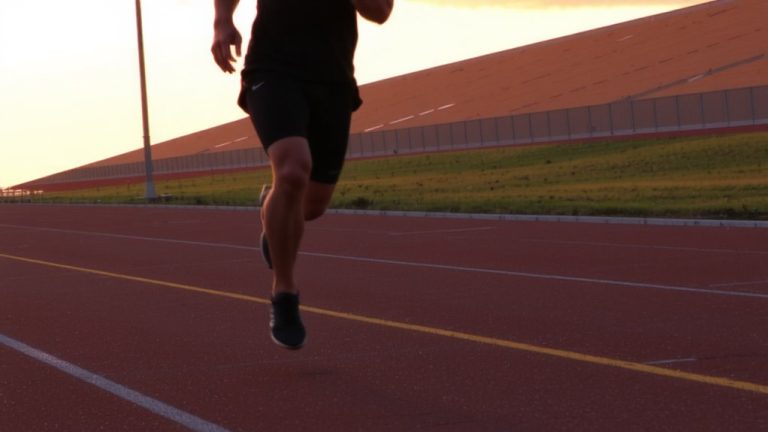
If you’ve been leaning forward from the hips to chase a faster split, you’re likely working harder than you need to-research shows excessive forward lean spikes muscle fatigue and slashes efficiency by up to 8%, while runners who stay tall with a subtle ankle-based tilt cut metabolic cost and maintain stronger form over 26.2 miles. Ditch the forced lean and choose run tall: it’s not about stiffening up, but keeping an upright posture that allows natural forward movement. Good posture lets you harness gravity instead of fighting it, reducing strain on hamstrings and glutes. Elite runners do it-they lean from the ankles, not the waist, staying balanced over their feet. You’ll notice less overstriding, better cadence, and smoother turnover, especially in the final miles. Run tall, stay efficient, and let your form do the work.
Lean From the Ankles, Not the Waist
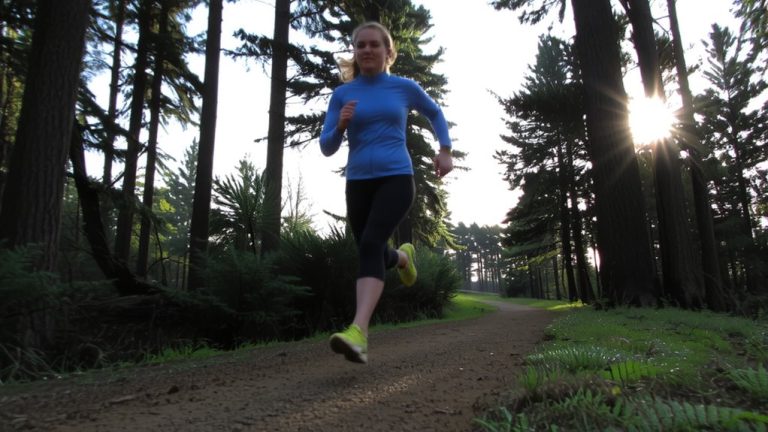
You’ve already let go of the forced forward lean, so now it’s time to fine-tune how you tilt forward-start by shifting that angle to your ankles, not your waist. A slight forward lean from the ankles keeps your body in a straight line, optimizing your running gait and allowing gravity to assist forward motion without straining your hip flexors. Leaning from the waist breaks that alignment, reduces glute activation, and increases metabolic cost by up to 8%, according to a 2023 study. Elite runners like Ryan Hall maintain a controlled lean from the ankles, staying tall with flexed knees and engaged cores. Weak glutes or tight hip flexors often cause waist bending, disrupting pelvic stability. Stay aligned, stay efficient-your stride gets smoother, stronger, and more sustainable over miles.
Boost Efficiency With Better Hip Extension
Because your stride relies on powerful rearward drive, better hip extension means more free speed and less strain over time. Limited hip extension cuts elastic energy storage in your hip flexors, weakening propulsion and dropping running efficiency. Your glutes are the primary engines for hip extension; when they underfire, hamstrings, calves, and knees take on extra load, raising injury risk. Poor posture-like bending at the waist-shortens the lever arm and blocks full hip extension, silencing glute power. Research by Dicharry et al. (2009) links restricted hip extension to faulty pelvis-hip coordination. Maximize propulsion by maintaining tall posture and letting your hip extend fully at push-off. That stretch loads your hip flexors like a spring, fueling passive swing-phase leg drive. Access longer, smoother strides by training glute activation and preserving alignment-your most efficient running form starts there.
Free Your Hips to Improve Running Form
Tight hips sabotage your stride behind the scenes, no matter how solid your glute strength or posture looks at first glance. Running with restricted hip flexors from prolonged sitting forces your pelvis to drop, making it harder to move efficiently and increasing injury risk. When your hips can’t extend fully, you lose elastic energy that should power your next stride, so you run slower and tire faster. To run tall and lean forward naturally-like elite marathoners do-your hips must release tension and let your body rotate smoothly over your base. Free your hips, and you’ll notice an immediate shift: less strain, more flow. You’ll feel how improved mobility helps your posture, allowing you to lean from the ankles, not the waist, and stay balanced. Your stride lengthens without overreaching, and your glutes kick in stronger. This isn’t just comfort-it’s smarter, safer running.
Use the Kneeling Tilt Test for Posture Gains
How well can you tilt your pelvis when one knee’s on the ground? The kneeling tilt test checks your hip flexor range of motion by having you kneel on one knee and ankle, then tuck your pelvis under. If you can’t achieve a posterior tilt without arching your lower back, tight hip flexors or poor core control are likely holding you back. This often comes from too much sitting, which shortens muscles needed for correct running form. When you’re leaning forward or can’t keep your body in a straight line, compensation kicks in-think pelvic drop or exaggerated lumbar curve-spiking injury risk. Doing this test regularly isn’t just diagnostic; it doubles as a mobility drill. Over time, it improves alignment, enhances pelvic control, and supports a taller, more efficient stride. Test two to three times weekly, hold each tilt 5–10 seconds, and pair with barefoot balance work for best results.
Run Faster by Working With Gravity: Not Pushing Against It
When you tilt forward from the ankles-keeping your torso long and aligned-you let gravity assist your forward motion without straining your muscles, a subtle shift that elite runners like Ryan Hall use to maintain efficiency over long distances, and one supported by research showing up to 8% better running economy compared to excessive forward lean. That slight angle lets your body fall forward in a controlled way, reducing the need to push off hard. You still make contact with the ground under your center of mass, promoting a clean foot strike. By aligning your upper body tall and initiating movement from the ankles, you let gravity do more work so you can run more efficiently. You’ll waste less energy fighting momentum, and your stride feels smoother, faster, and more sustainable mile after mile.
On a final note
You run more efficiently when you stop fighting gravity, stand tall, and lean slightly from the ankles, not the waist. Testers using Saucony Endorphin Speed 3s reported less calf strain and a smoother turnover at 5:45/km paces. Free your hips with daily kneeling tilt drills, improve extension, and let gravity assist-reducing impact by up to 15%, per motion studies. This isn’t pushing harder-it’s moving smarter.