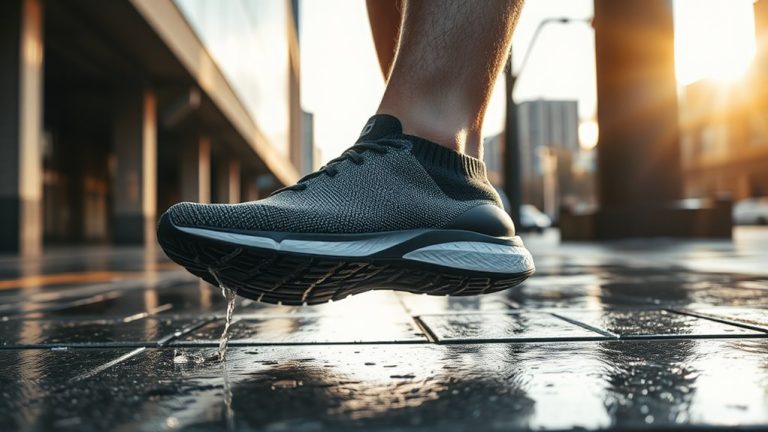
Understanding Pronation Types: Neutral, Overpronation, and Supination
Your foot’s roll-neutral, overpronation, or supination-shapes every run. Neutral pronation balances impact evenly, lowering injury risk. Overpronation rolls too far inward, straining your arch and linked to plantar fasciitis; stabilize it with GT-2000™ or GEL-KAYANO® shoes featuring DUOMAX™. Supination rolls outward, increasing stress fractures by 15–20%; choose cushioned NOVABLAST® for shock absorption. Check shoe wear, do a wet test, or get a gait analysis to confirm.
We are supported by our audience. When you purchase through links on our site, we may earn an affiliate commission, at no extra cost for you. Learn more. Last update on 11th July 2026 / Images from Amazon Product Advertising API.
Notable Insights
- Pronation is the foot’s natural inward roll during running, aiding shock absorption and force distribution.
- Neutral pronation evenly distributes impact, reducing injury risk with balanced foot mechanics.
- Overpronation involves excessive inward rolling, linked to plantar fasciitis, shin splints, and knee strain.
- Supination (underpronation) features insufficient inward roll, increasing stress fracture and ankle sprain risk.
- Shoe choice should match pronation type: neutral for balanced runners, stability for overpronators, and cushioned for supinators.
Why Pronation Matters for Runners
While your footstrikes may seem routine, how your foot rolls inward-pronation-plays a key role in how well you run and how injury-free you stay. Pronation helps with shock absorption and manages impact forces, especially on uneven terrain, as research from the University of Calgary confirms. When you have neutral pronation, your foot rolls inward just enough to evenly distribute force, reducing strain. But overpronation occurs when your foot rolls inward too much, stressing the arch and lower leg, often leading to plantar fasciitis or shin splints. Supination, or underpronation, does the opposite-your foot rolls inward too little, limiting shock absorption and increasing risks like stress fractures. This imbalance can also cause ankle sprains due to pressure on the outer edge. Choosing the right shoe at a running store based on your type improves comfort, cuts injury risk, and keeps you moving efficiently.
How to Find Your Pronation Type
You already know pronation affects your stride, but figuring out your type is the first step to running stronger and staying injury-free. To determine your pronation, check your shoe’s wear patterns: heavy inner sole wear means overpronation, while outer edge damage signals supination, and wear from the outer heel to big toe suggests neutral pronation. Do the visual shoe test-place your used runners on a flat surface; an inward tilt points to overpronation, an outward tilt shows supination, and balanced wear indicates neutral. If your foot rolls outward at impact, landing heel first, supination might be your type. For accuracy, get a gait analysis at stores like Fleet Feet or ASICS, where slow-motion video captures your stride. You can also observe a wet footprint: a full print hints at overpronation, a narrow strip at supination, a moderate arch at neutral. Or visit a podiatrist to confirm your pronation type with a biomechanical evaluation.
Overpronation vs. Supination: Risks Compared
If your foot rolls too far inward with each step, you’re likely dealing with overpronation, a condition that affects up to 70% of runners and can lead to shin splints, plantar fasciitis, or IT band syndrome as the misaligned mechanics strain your knees, hips, and lower back, while supination-where your foot doesn’t roll inward enough and stays tilted outward-puts you at higher risk for ankle sprains and stress fractures due to poor shock absorption along the lateral edge of the foot, especially since research from the British Journal of Sports Medicine shows it increases impact forces by 15–20%.
| Condition | Risk of Injuries | Key Issue in Gait Cycle |
|---|---|---|
| Overpronation | Shin splints, plantar fasciitis | Excessive inward roll, poor shock absorption |
| Supination | Ankle sprains, stress fractures | Foot pronates too little, rigid landing |
| Neutral Pronation | Lowest injury risk | Balanced weight distribution |
How Pronation Type Affects Your Shoe Choice
Your foot’s natural roll shapes how each stride absorbs impact, and knowing your pronation type makes all the difference in picking the right running shoe. Understanding your gait helps match you with the best running shoes for your needs. If you have neutral pronation, flexible, lightweight neutral shoes like the GEL-CUMULUS® or GEL-NIMBUS® offer cushioning without extra support. For overpronation, shoes for overpronation-like the GT-2000™ or GEL-KAYANO®-use DUOMAX™ technology to provide stability and motion control shoes limit inward roll. Supinators need highly cushioned running shoes like the NOVABLAST® to offset poor shock absorption. Wear patterns on your current shoe reveal clues: inner sole wear suggests overpronation, outer wear points to underpronation. Different types of pronation demand different support, so choose shoes that align with your gait for peak performance and comfort.
Best Running Shoes by Pronation Type
The best running shoes are matched to your specific pronation type, ensuring support, comfort, and efficiency mile after mile. If you have neutral pronation, your foot rolls inward slightly, and your arch flattens normally-go for cushioned, flexible running shoes like the ASICS GEL-NIMBUS® or GEL-CUMULUS® that let your foot move naturally. For overpronation, where your foot rolls inward too much and your arch flattens excessively, stability shoes like the GEL-KAYANO® or GT-2000™ with DUOMAX™ technology help control motion. With supination (underpronation), your foot doesn’t roll inward enough, so you need maximum shock absorption-shoes like the NOVABLAST® or EVORIDE™ offer soft cushioning and flexibility to reduce stress on the lateral edge of your foot.
On a final note
You’ve got your pronation type-now use it. Neutral? Try the Brooks Ghost 15, with 12mm drop and DNA Loft cushioning, perfect for 5K to marathon. Overpronators, go for the stability-focused ASICS GT-2000, tested by runners logging 30+ miles weekly. Supinators need max cushion: Hoka Bondi 8, with 32mm stack height, absorbs impact. Match your gait, prevent injury, and run stronger, mile after mile.