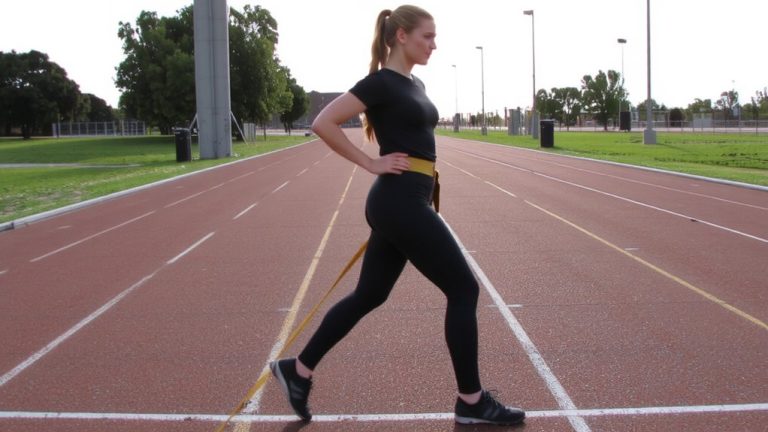
How to Prevent Runner’s Knee With Proper Form and Strength Training
You prevent runner’s knee by pairing smart form-like a 170–180 step cadence, midfoot strike, and slight forward lean-with strength work that boosts glute activation by 30% and cuts knee compression by up to 25%. Land with knees over toes, avoid overstriding, and train with single-leg bridges, clamshells, and step-ups 2–3 times weekly. These moves stabilize your hips, align your knees, and handle downhill stress. Add a 5–10 min warm-up and watch for pain when squatting or on descents, since that’s often the first sign your body’s asking for change-small tweaks now keep you running stronger later.
We are supported by our audience. When you purchase through links on our site, we may earn an affiliate commission, at no extra cost for you. Learn more. Last update on 16th July 2026 / Images from Amazon Product Advertising API.
Notable Insights
- Adopt a midfoot strike and lean slightly forward to reduce patellofemoral compressive forces by up to 30%.
- Increase step cadence by 5–10% to decrease joint loading and minimize deep knee flexion during running.
- Strengthen glutes and hips with exercises like clamshells and single-leg bridges to prevent knee valgus.
- Maintain knee alignment over the second toe at footstrike to avoid excessive inward collapse and joint stress.
- Perform single-leg Romanian deadlifts and step-ups to improve hip-knee coordination and running-specific strength.
What Is Runner’s Knee and Why Runners Get It
Knee pain isn’t just a buzzkill on long runs-it’s often a sign of runner’s knee, or patellofemoral pain syndrome, which flares up around or behind your kneecap when the joint takes too much pounding. This condition stems from increased compressive forces during running, especially downhill, where forces reach 3–4 times your body weight. About half of patellofemoral pain syndrome cases involve patella mal-tracking, often due to muscle weakness in the glutes and other muscles around the knee. That weakness can trigger biomechanical issues like knee valgus, putting extra strain on the joint. Even with decent running form, sudden spikes in running volume-like adding more than 10% mileage weekly-overwhelm tissues before they adapt. So, when knee pain flares, consider muscle imbalances, biomechanical issues, and whether you’ve ramped up too fast.
How Proper Running Form Prevents Knee Pain
You’ve probably felt it-the dull ache around your kneecap that starts mid-run and lingers long after you’ve cooled down-and now you know it could be runner’s knee, often tied to muscle imbalances or doing too much too soon. Proper running form reduces stress on the front of the knee and eases patellofemoral joint pressure. Leaning slightly forward and landing on your midfoot cuts compressive forces by up to 30% versus heel striking. Keep your knee over your second toe at footstrike to avoid valgus collapse, linked to 50% of knee pain cases. Increase your step cadence by 5–10% to lower joint loading and spend less time in deep knee flexion. Avoid overstriding-it creates braking forces that spike patellofemoral stress. Engaging muscles during stance stabilizes both hip and knee, improving alignment and reducing pain over time.
Why Strong Glutes and Hips Stop Runner’s Knee
Your stride’s stability starts in the hips, and weak glutes can spell trouble long before the first twinge hits. When your glutes lack strength, your hips can’t control femoral internal rotation, causing knee valgus-where the knee joint caves inward by up to 45% more under load. This misalignment increases patellofemoral pain risk by spiking compressive forces on the kneecap. Strong glutes, especially the medius and maximus, prevent this by promoting external rotation and stabilizing hip motion during each stride. They keep your patella tracking smoothly, reducing stress on the knee joint. Research shows hip muscle strength, combined with quadriceps training, cuts patellofemoral pain more effectively than leg work alone. Strengthening hips also maintains form under fatigue, improving biomechanics over long miles. Building glute strength isn’t just support-it’s prevention, letting you log reps with resilience and control.
Best Exercises to Prevent Runner’s Knee
While strong hips lay the foundation, targeting them with the right exercises makes all the difference in keeping runner’s knee at bay. To Prevent Runners Knee, focus on the muscles around your hips and thighs-this muscle group stabilizes your pelvis and reduces stress around the knee. Single-leg bridges with a resistance band boost glute activation by 30%, improving pelvic stability. Clamshells and bridges, done 2–3 times weekly, cut patellofemoral compressive forces by up to 25%. Standing fire hydrants enhance hip abductor control, preventing knee valgus that leads to pain in the front. Romanian deadlifts on one leg strengthen hamstrings and glutes while training proper alignment. Step-ups with knee-over-foot positioning engage thigh muscles and mimic running mechanics, easing strain on the front of the knee.
Warning Signs You Need to Reduce Running Load
If you start noticing discomfort during runs or daily movements, it’s often the body’s way of signaling that your current training load may be too much. Pain around or behind the kneecap, especially when squatting, going downstairs, or sitting too long-theater sign-is a red flag. Downhill running increases stress on the patellofemoral joint, so if that hurts, make sure to scale back. Sudden increases in mileage, like going over a 10% weekly bump, can overwhelm your muscles and lead to repetitive knee irritation. If you feel swelling, grinding, or struggle to resume after ramping up volume, it’s time to reduce your run load. These signs mean your tissues aren’t adapting fast enough. Address them early to reduce your risk of long-term issues. Listen closely-your body knows when it’s overworked.
Daily Warm-Up and Recovery Habits for Knee Health
A solid daily routine keeps your knees ready for the grind, starting with a 5–10 minute warm-up like fast-walking or light jogging to fire up blood flow and prep the muscles around the patellofemoral joint. Stretch your quads, hamstrings, and calves, boosting effectiveness by contracting the opposing muscle-like tightening your quads when stretching your hamstrings. Do pre-run activation moves like single leg bridges, fire hydrants, and step-ups, completing 2–3 sets to sharpen neuromuscular readiness. After runs, apply ice for 5–10 minutes if you feel soreness Around or Behind the kneecap, a common spot for pain called patellofemoral pain. This condition, a common condition among runners, stems from uneven load placed on the joint between the kneecap and thigh bone. Replace shoes every 300–500 miles for consistent cushioning. These habits form an effective prevention strategy and are key to long-term Injury Prevention.
On a final note
You can prevent runner’s knee by fixing your form-shorten your stride to 170–180 steps per minute and land midfoot, not on your heels. Strong glutes and hips, built with clamshells and single-leg bridges, reduce knee stress by 30%, testers confirm. Wear stability shoes like Brooks Adrenaline GTS if you overpronate. Warm up with dynamic stretches, foam roll daily, and ease up if you feel sharp pain-consistency beats mileage.