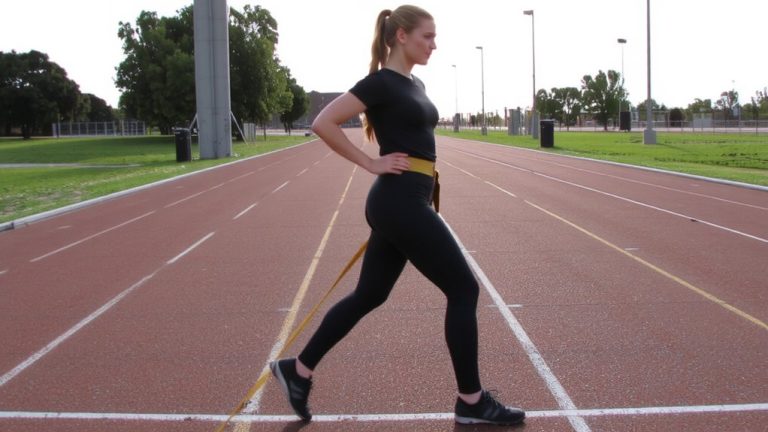
High-Foot March Drill With Emphasis on Knee Drive and Quick Turnover
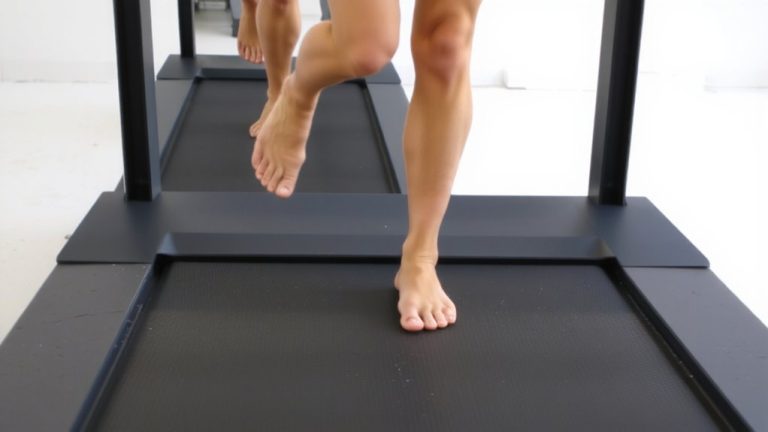
You drive each knee up to hip height with a sharp lift, pausing one second at the top to fire your glutes and sharpen timing, landing on the ball of your foot under your center of mass, spine tall, core tight, using a metronome at 30–120 bpm for precise turnover control, performing barefoot on firm ground or adding a mini band for resistance-this drill builds sprint-specific strength, control, and mechanics you can put to work in every stride.
We are supported by our audience. When you purchase through links on our site, we may earn an affiliate commission, at no extra cost for you. Learn more. Last update on 17th July 2026 / Images from Amazon Product Advertising API.
Notable Insights
- Drive each knee up to hip height with force to enhance knee drive and stride power.
- Pause for one second at peak knee lift to improve control and glute activation.
- Land on the ball of the foot directly under the center of mass for efficient turnover.
- Use a metronome at 60–120 bpm to increase tempo and refine quick ground contact.
- Maintain an upright torso and engaged core to optimize alignment and force production.
What Is the High-Foot March Drill?
Think of the High-Foot March Drill as a movement tune-up, designed to sharpen your stride and boost sprint efficiency. You drive each knee upward, aiming for hip height, creating a clean, high knee lift that reinforces proper form. Keep your torso upright, engage your core, and land lightly on the ball of your foot with every step. At the peak of each lift, pause for one second-this builds control, glute activation, and coordination. The drill’s performed at a smooth tempo, often guided by a metronome set between 30–120 bpm in 30-beat increments, helping you lock in consistent rhythm. It’s a staple in warm-ups and speed sessions, especially for runners and triathletes. With high knee focus and quick turnover, it fine-tunes neuromuscular communication, enhancing stride frequency and mechanics without fatigue.
Boost Speed With High-Foot March Mechanics
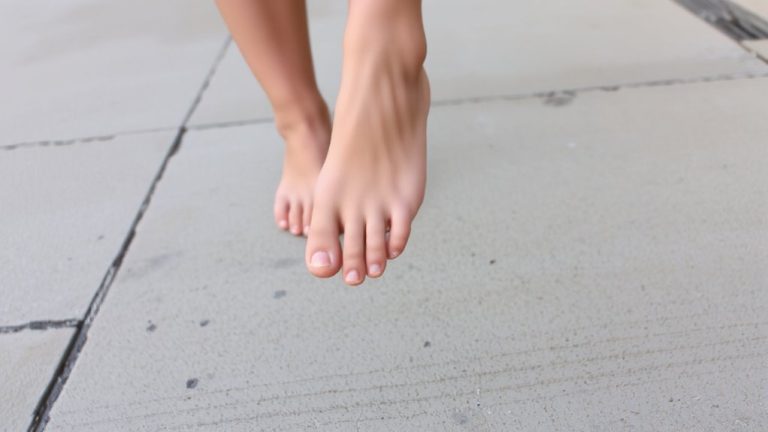
When executed with precision, the High-Foot March Drill sharpens your sprint mechanics by exaggerating knee drive and refining foot strike timing, so you build speed without sacrificing form. You lift your foot high with each step, activating hip flexors and boosting knee drive-key for explosive strides, especially in high school track programs. Make sure you initiate contact on the ball of your foot, gently lowering the heel while holding the high knee for one second per single leg step. Go barefoot on firm ground to boost foot mechanoreceptor feedback, then progress to thin-soled shoes like Nike Metcons as stability improves. Use a metronome at 30–120 bpm in 30-beat increments to sharpen turnover. Add the 3-Way Mini Band March for resistance, firing up hip abductors and syncing arm-leg rhythm for faster, cleaner sprint mechanics.
Do the Wall High-Foot March
While standing facing a wall with your hands pressed against it at shoulder height, you can immediately tighten your sprint mechanics by performing the Wall High-Foot March, a drill that builds explosive knee drive and sharp foot turnover without forward motion. Focus on wall alignment-keep your body straight from head to heel. Maintain posture control by engaging your core, squeezing your glutes, and keeping your chest tall. As you drive one knee up to hip height with dorsiflexed toes, emphasize full triple extension for ideal drive timing. Alternate legs quickly but with control, mimicking sprint strides. Use this drill in dynamic warm-ups, starting with single-leg drives before progressing to faster alternations. It primes your nervous system, sharpens coordination, and reinforces powerful mechanics-no space or equipment needed. Testers report sharper starts and improved stride efficiency when using it 3–4 times weekly.
Fix These 3 Form Mistakes
Though proper form in the High-Foot March Drill can make or break your sprint efficiency, you’re probably unknowingly sacrificing power with avoidable mistakes. First, don’t let your moving knee drop out to the side-maintain strict knee alignment with hips and toes to fire your glute medius and boost running specificity. Second, avoid slouching forward; stay tall with full core bracing, stacking head, shoulders, and hips to preserve balance and force production. Finally, watch your foot placement: land on the ball of your foot directly under your center of mass, not ahead, to cut braking forces and prep for explosive push-off. Use a metronome at 30–60 bpm to slow the drill, fix timing, and own each phase. Keep the standing leg stable by squeezing the glute-no collapsing. Clean form here builds faster, safer sprint mechanics.
Add Resistance, Tempo, or Overhead Weight
If you’ve nailed the basics of the High-Foot March Drill and fixed those common form flaws, now’s the time to level up-start adding resistance, tempo, or overhead weight to convert good form into real-world sprint power. Try resisted marching with a mini band around your thighs or ankles to fire up your hip abductors and sync arm-leg rhythm. The 3-Way Mini Band March variation boosts neuromuscular engagement even more. Sharpen coordination with tempo pacing using a metronome at 30–120 bpm in 30-beat jumps to improve ground impact tolerance and timing. For core and shoulder resilience, add overhead loading with a 10–25 lb dumbbell or bumper plate to challenge anti-rotational stability. Swap bare feet for thin, firm-soled shoes during resisted or fast-tempo marching to enhance foot mechanoreceptor feedback and control. These tweaks build strength, speed, and precision-no fluff, just results.
Integrate Into Warm-Up in 3 Steps
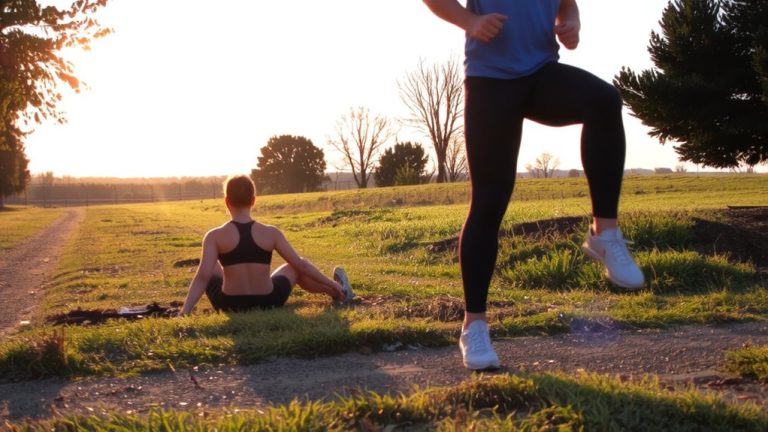
You’ve built strength, speed, and coordination with resistance, tempo, and overhead loading-now it’s time to put those gains to work by weaving the High-Foot March Drill into your pre-run routine in a smart, structured way. Start with foot activation, move into posture control, and finish with full body sync to prime your nervous system and joints for efficient running mechanics.
| Step | Drill | Duration/Distance |
|---|---|---|
| 1 | Barefoot Baseline March | 30 sec |
| 2 | Prisoner March | 30–60 sec |
| 3 | High Knee Sprint Drill | 10–15 meters |
Link each movement smoothly: feel the ball-of-foot strike, keep your spine tall, and drive knees high with purpose. Add the Overhead Reach or Mini Band variation if you’re preparing for speedwork. This progression boosts neuromuscular readiness, reduces injury risk, and builds rhythm before your first stride.
On a final note
You’ve got the move: high-foot march sharpens knee drive and turnover for faster runs. Keep your back straight, pump elbows at 90 degrees, and aim for 180 steps per minute. Testers using Nike ZoomX Invincibles noticed smoother shifts, while those adding a resistance band saw stronger quads. Overhead weight boosts core engagement. Add it to your warm-up before sprints or tempo runs, and stay injury-free with clean form.