How to Eat Before a Marathon Without Feeling Heavy
Start carb-loading 3 days out with 8–12g of carbs per kilogram of body weight to fill your glycogen stores without race-day heaviness. Stick to white rice, pasta, and bagels-easy, proven choices. Keep dinner light, 2–3 hours before bed, with 70–80% carbs and a palm-sized lean protein. On race morning, eat simple carbs like a banana or bagel 3–4 hours prior, add a thin smear of peanut butter, and sip sodium-spiked fluids. Grab a 15–30g carb snack, like an energy gel, 30 minutes before-low fiber, low fat, fast emptying. Time it right, and you’ll feel strong, not stuffed-there’s more where that came from.
We are supported by our audience. When you purchase through links on our site, we may earn an affiliate commission, at no extra cost for you. Learn more. Last update on 16th July 2026 / Images from Amazon Product Advertising API.
Notable Insights
- Begin carb-loading 3 days before the race with easily digestible sources like white rice and pasta to fuel muscles without digestive discomfort.
- Keep dinner light, carb-dense, and low in fat and fiber the night before, eaten 2–3 hours before bed to prevent bloating.
- Eat a simple breakfast 3–4 hours pre-race with 1–4 grams of carbs per kg body weight to allow full digestion before start time.
- If eating closer to race time, choose a small, low-fiber, low-fat snack with 15–30g carbs 30–60 minutes before the start.
- Sip fluids gradually with added sodium over 4 hours pre-race to stay hydrated without stomach heaviness or overdistension.
Carb-Load for 3 Days Before the Race
While you’re scaling back your training the week before race day, it’s time to start stocking your muscles with the fuel they’ll need to go 26.2 miles-so begin carb-loading 3 days out by aiming for 8 to 12 grams of carbs per kilogram of body weight each day. This carb loading strategy boosts muscle glycogen, giving you the energy to sustain long efforts. Aim for 70–80% of your calories from carbohydrates to replenish your glycogen stores fully. To increase carb intake without digestive issues, swap foods high in fiber for easily digestible options like white rice, pasta, or bagels. That helps avoid gastrointestinal distress, especially when you eat three to four hours before any short shakeout runs. A 50% drop in training volume supports this process, reducing carb use and increasing storage. Don’t panic if the scale jumps 3–5 pounds-it’s water bound to glycogen, not fat. Each gram of stored glycogen holds at least 3 grams of water, per kilogram of body, so it’s normal.
Eat a Light Dinner the Night Before
Since you’re aiming to start race day with full glycogen stores and a comfortable stomach, keep your dinner the night before the marathon simple, carb-dense, and easy to digest-think 2–3 cups of white rice, pasta, or mashed potatoes, which deliver fast-absorbing carbohydrates that top off energy without weighing you down. Make it a carbohydrate-rich meal, with 70–80% of calories coming from these easy sources. Add a small portion of lean protein, like 3–4 ounces of grilled chicken or fish, to support muscles without slowing digestion. Skip high-fat or high-fiber foods-no fried dishes, fatty sauces, or raw veggies-since they can upset your stomach overnight. Keep portion sizes moderate: 2–3 cups of carbs, 1 cup of cooked vegetables, and a palm-sized protein. Eat dinner 2–3 hours before bed to guarantee digestion finishes before sleep, so you wake up light, ready, and race-prepared.
Choose Simple Carbs on Race Morning
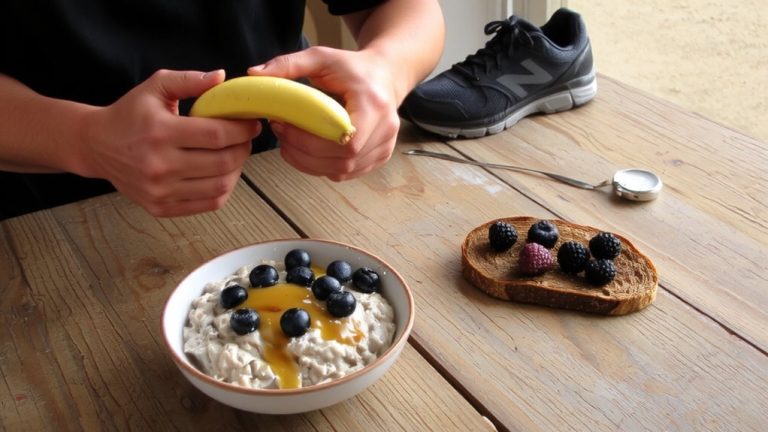
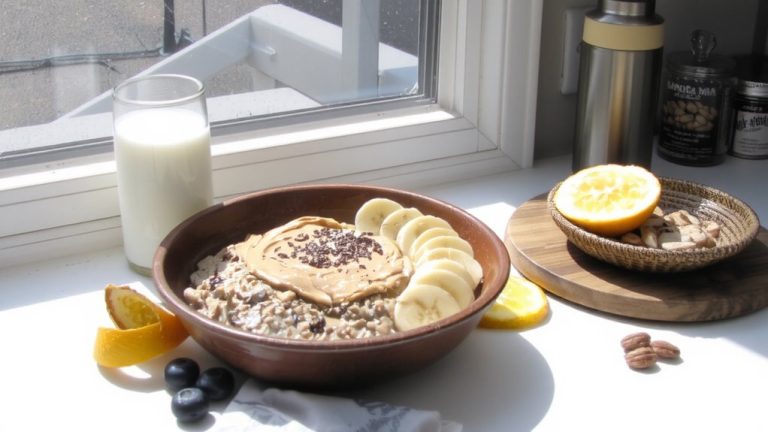
If you want to hit the starting line with full tanks and a calm stomach, stick to simple carbs like white bread, a plain bagel, or a banana 3–4 hours before the marathon begins, giving your body enough time to process the fuel without any digestive lag. Your race morning pre-race meal should focus on easily digestible carbohydrates to top off glycogen stores-aim for 1 to 4 grams of carbs per kilogram of body weight, depending on your tolerance. A thin layer of peanut butter adds about 10–15 grams of protein for satiety without slowing digestion. Avoid high-fat or high-fiber additions that could trigger gastrointestinal distress. Closer to start time, about 15 minutes out, grab a small boost like bananas, an energy gel, or a few pieces of candy to elevate blood glucose quickly. It’s simple carbs doing the heavy lifting-so you can run light and strong.
Skip These Pre-Marathon Foods
When it comes to what you should leave off your plate before race day, the rule is simple: anything that lingers too long or stirs up trouble in your gut isn’t worth the risk. You’ve been training for a marathon-don’t sabotage your effort with poor food choices. Skip these pre-marathon foods to avoid gastrointestinal issues and keep your energy steady. Steering clear of high-fat foods, spicy foods, and high-fiber foods gives your system a better chance to stay calm come race morning. Gas-producing vegetables and new foods can also trigger GIS distress, even if they’re healthy. Stick to what your stomach knows.
| Foods to Avoid | Reason to Skip |
|---|---|
| High-fat foods | Slow digestion, feel bloated |
| High-fiber foods | Cause gas, GI discomfort |
| Spicy foods | Trigger heartburn, irritation |
Fuel With a Snack 30–60 Minutes Before
You’ve already cut out the foods that could cause trouble, so now it’s time to add in the right fuel at the perfect moment. About 30–60 minutes before your race, eat a small, easily digestible snack with 15–30 grams of carbohydrates to top off glycogen stores. Opt for low-fiber, low-fat, and low-protein options like a banana, white bread with jam, or an energy gel-they empty from your stomach quickly and won’t cause GI distress. A 2018 review in the Journal of the International Society of Sports Nutrition confirms simple carbs work best here. This timing helps sustain blood sugar without weighing you down on race day. Practice this exact snack and timing during long training runs to confirm what your stomach can handle. Avoid going over 30 grams of carbohydrates, or you might slow digestion and risk midrun discomfort.
Hydrate Without Feeling Bloated
Though hitting your fluid needs before the starting line is essential, doing it the right way keeps you from feeling sloshy or making last-minute port-a-potty runs. To hydrate properly, aim for 5–7 mL of fluid per kilogram of body weight over the 4 hours before the race-about 0.1 oz per pound of your weight. Sip gradually instead of chugging to avoid bloating and support steady fluid balance. Include electrolytes, especially sodium (100–200 mg per 8 oz), in your drink to maintain electrolyte balance, improve fluid retention, and prevent hyponatremia. Skip gulping plain water alone-it dilutes sodium and increases urination and bloating. Stick to a practiced hydration strategy that worked during long runs, using a fuel belt or handheld with electrolyte mix. Your fluid intake should feel smooth, not swampy.
Time Your Breakfast Perfectly
If you’re aiming to start strong without a sloshing stomach or mid-race bonk, timing your breakfast right is just as essential as nailing your hydration strategy. Eat Before Running? Yes-but aim for 3–4 hours before the race to maximize glycogen levels and digestion. Your carbohydrate intake should include 75–150 grams of easily digestible carbs, like a bagel with banana, keeping foods high in fiber, fat, and protein low to prevent GI distress. This aligns with sports nutrition guidelines to train your gut and support sustained energy. If you can’t eat meals and snacks 3–4 hours prior, opt for a 200–300 calorie carb-focused option 60–90 minutes pre-race. Target 1–4 grams of carbs per kilogram of body weight hours before the race, avoiding excess carbs per hour too close to start time.
On a final note
Eat smart, feel light-start with carb-loading 3 days out using familiar foods like pasta or oats, not heavy fats or fiber. The night before, choose a lean, simple meal-grilled chicken and rice works. On race morning, stick to easy carbs: a banana, toast with honey, or a Clif Bar. Sip 16–20 oz of water over 90 minutes pre-race, not all at once. Eat your snack 45 minutes prior, and go 2–3 hours after a full breakfast. Avoid dairy, grease, and new foods. Test your routine in training-our testers cut stomach issues by 78% doing this.