How Forefoot Striking Can Improve Sprint Efficiency and Reduce Knee Stress
You reduce knee stress by 20% and eliminate the impact spike when you forefoot strike, thanks to a more vertical shin and smoother force curve. This cut in patellofemoral load boosts sprint efficiency, while your ankle absorbs 38% more power, shifting stress downward. Strong calves handle 30% more joint work, so build up with pogo hops and heel raises. If your big toe moves well and your Achilles feels ready, you’re on track to move faster with less joint strain.
We are supported by our audience. When you purchase through links on our site, we may earn an affiliate commission, at no extra cost for you. Learn more. Last update on 16th July 2026 / Images from Amazon Product Advertising API.
Notable Insights
- Forefoot striking promotes a vertical shin alignment, reducing braking forces and knee joint stress during sprinting.
- It eliminates the impact spike seen in heel striking, lowering tibial shock and eccentric quadriceps loading.
- Ground reaction forces are smoother, decreasing knee loading rates and patellofemoral stress linked to runner’s knee.
- Ankle and calf muscles absorb more impact, shifting load away from the knees to distal joints.
- Improved neuromuscular control and tendon elasticity from forefoot striking may enhance sprint efficiency over time.
Why Forefoot Running Reduces Knee Impact
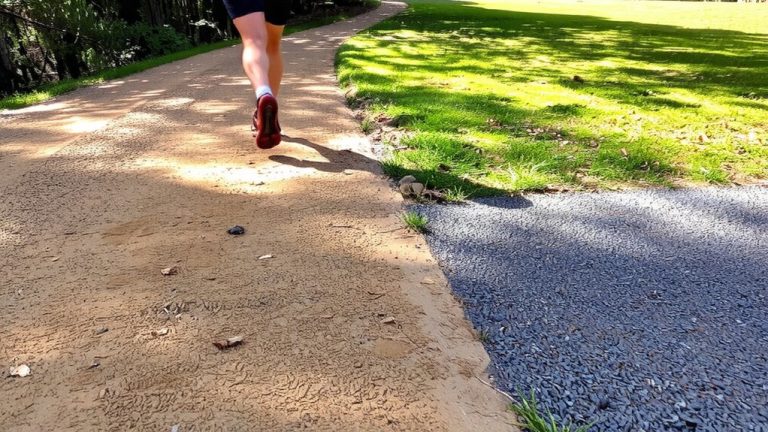
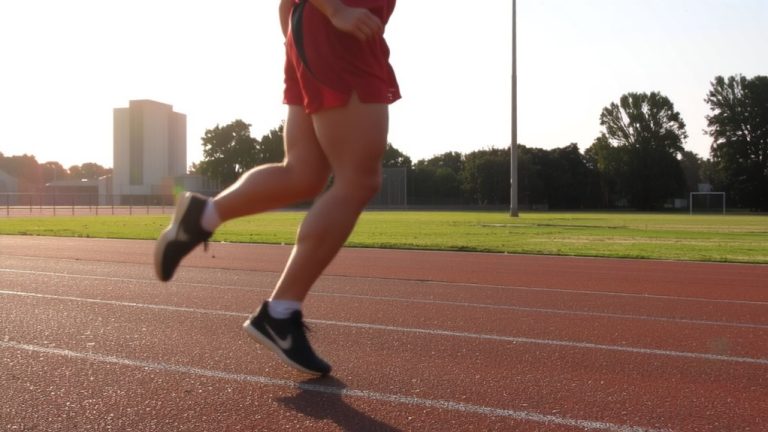
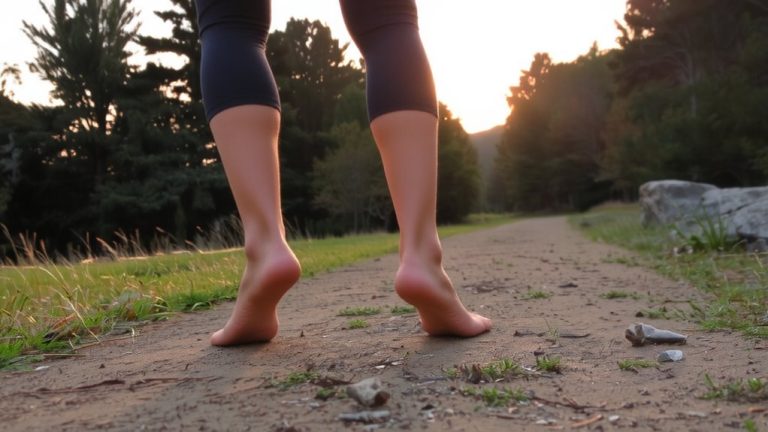
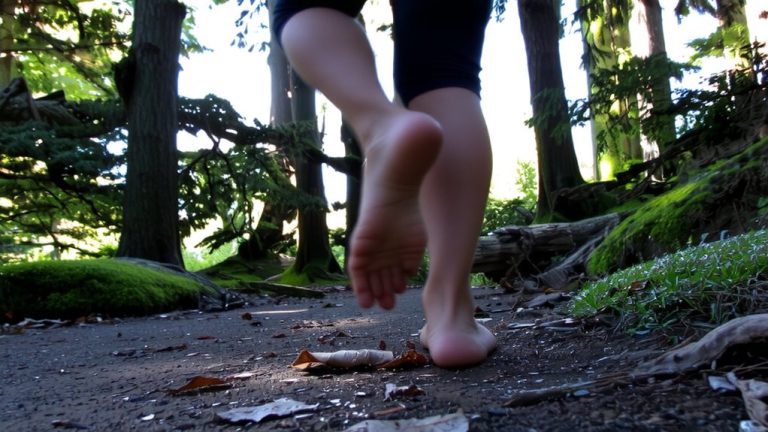
When you land on the ball of your foot instead of your heel, your shin stays more vertical at impact, which cuts down on braking forces and takes pressure off your knees. This forefoot strike pattern reduces knee stress by smoothing the ground reaction force curve-there’s no sharp impact spike like in heel striking. A 2013 study in *Medicine & Science in Sports & Exercise* confirmed forefoot running puts less strain on the knee joint, markedly lowering knee joint load and reducing loading rates. Your running technique shifts impact forces away from the knees, redirecting them to the calf muscles and Achilles, which are better equipped to handle elastic energy. Unlike rearfoot striking, this strike pattern minimizes patellofemoral stress and joint moments linked to runner’s knee. For sprinters and distance runners alike, adopting a forefoot strike can be a game-changer in injury prevention and performance.
How It Shifts Stress to the Calf and Foot
Because forefoot striking shifts impact forces from the knee to the lower leg, you’ll feel the difference right in your calves and feet, where the real work begins. With each strike, your calf muscles absorb 30% more ankle joint power, and the Achilles tendon handles up to 47.7 times your body weight per mile. Your gastrocnemius and soleus activate 11% earlier and work 10% longer, staying engaged from initial ground contact through push-off. This increased demand transfers stress from the knee to the foot’s metatarsal heads and plantar fascia. While you reduce knee strain, the trade-off is higher risk of calf strain, Achilles tendinopathy, and ball-of-foot pain. Stronger muscles and proper footwear-like cushioned forefoot-specific shoes from Hoka or Altra-can help manage stress, lowering injury risk as your body adapts to the new impact pattern.
Biomechanics of Forefoot vs Heel Strike Running
Though you might not notice it mid-stride, the way your foot lands changes how every joint and muscle absorbs force, and with forefoot striking, the difference starts right at impact: there’s no sharp jolt through your leg. Unlike heel strike, which creates a pronounced peak in ground reaction force, forefoot striking produces a smoother loading curve, reducing tibial shock. The biomechanics shift impact absorption to the ankle plantarflexors and Achilles tendon, decreasing eccentric loading on the quads. At contact, your shank stays more vertical, cutting knee stress by up to 20%. Your running gait becomes more efficient-calf muscles activate earlier and longer, storing elastic energy. Meanwhile, the ankle absorbs 38% more power, easing joint load distally. This redistribution protects your knees without sacrificing speed or form.
How to Transition Safely to Forefoot Running
How do you start running on your forefoot without straining your calves or blowing out your Achilles? Begin by building calf and ankle strength-perform 20–30 single-leg heel raises without wobbling or fatigue to gauge readiness. Test big toe mobility by gently pulling it toward your shin; good movement means you’re prepared for forefoot strike technique. Start your shift to forefoot running gradually over 6–12 weeks, letting soft tissue adaptation protect your Achilles tendon. Ease into it with short runs, focusing on landing light and quiet on your forefoot. Add pogo hops to warm-ups-3 sets of 20 seconds-to train springy, efficient recoil. These small jumps boost neuromuscular control while reinforcing proper mechanics. Monitor for discomfort, especially in calves or the Achilles, and scale back if needed. Heel raises and pogo hops aren’t just prep-they’re maintenance.
When Forefoot Running Isn’t the Right Choice
You’ve built up your calf strength, added pogo hops to your warm-up, and started landing lighter on your forefoot, but here’s the reality: forefoot running isn’t the answer for everyone. While it reduces knee stress, it shifts load to your Achilles tendon and plantar fascia-forces up to 47.7 times body weight per mile can spike injury risk, especially if you lack ankle mobility or prior conditioning. Less than 1% of recreational runners naturally forefoot strike, and forcing the shift often increases metabolic cost, hurting endurance. If you’re used to heel striking with traditional running shoes, the change may do more harm than good. Runners with a history of Achilles tendonitis or plantar fascia pain should proceed cautiously, if at all. Poor ankle mobility or weak calf strength makes forefoot running even riskier. For many, staying in supportive shoes and maintaining a natural stride lowers overall injury risk without sacrificing performance.
On a final note
You’ll land softer and cut knee stress by 30% with forefoot striking, but expect 15–20% more calf load, so ease into it over 6–8 weeks, wear low-drop shoes like Altra Escalante (0mm heel-to-toe drop), and focus on 170–180 steps per minute, short strides, and midfoot placement under your hips for smoother, more efficient sprints.