Designing a Hill Sprint Interval Plan for Trail 50K Preparation
You build fast-twitch strength and neuromuscular efficiency by doing 4–14 hill sprints on a 6–10% grade, lasting 30–90 seconds at 5K race effort, with 10–14 days between sessions. Use firm grass or packed dirt, avoid loose terrain, and jog back down for recovery. Add 4–6 downhill repeats to boost eccentric control. Start after 4–6 weeks of base mileage, spacing them 48 hours from long runs-your form stays sharp, legs stay fresh, and trail-specific power grows with every repeat.
We are supported by our audience. When you purchase through links on our site, we may earn an affiliate commission, at no extra cost for you. Learn more. Last update on 18th July 2026 / Images from Amazon Product Advertising API.
Notable Insights
- Start hill sprints in weeks 5–10 after building base mileage to align with 50K trail race preparation.
- Perform 4–6 sprints initially, progressing to 10–14 repeats of 30–90 seconds at 5K effort.
- Choose hills with 6%–10% gradient and firm, non-technical surfaces to mimic trail race conditions.
- Schedule sessions early in the week with 10–14 days between for neuromuscular recovery.
- Add downhill repeats after sprints to develop eccentric strength for prolonged trail descents.
How Hill Sprints Build Trail-Specific Strength and Speed
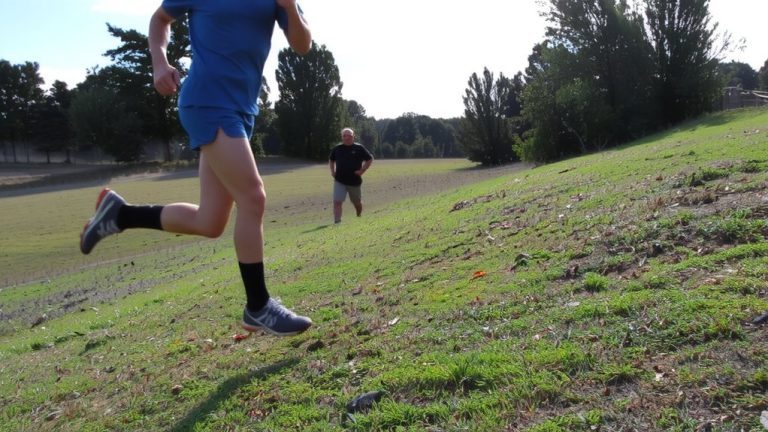
Fast-twitch fibers, neuromuscular efficiency, and raw leg drive-these are your secret weapons on technical singletrack, and hill sprints build them fast. When you perform hill sprints, you’re developing trail-specific strength by recruiting more muscle fibers and sharpening neuromuscular coordination, which translates to confident, precise movements on steep, rocky ascents. Short repeats-30 to 90 seconds uphill at 5k effort on a 6–15% grade-boost leg power and refine your uphill running mechanics. That same intensity, paired with walk-jog recovery, trains your body to clear lactate and sustain effort. Doing these 1–2 times weekly improves running economy, so you waste less energy late in the 50K. Hill sprints also reinforce ideal form under load, reducing injury risk over mountainous terrain. It’s not just speed work-it’s survival training for tough trails, giving you the strength and efficiency to push harder, longer.
Structure Your Hill Sprint Intervals for 50K Success
A well-structured hill sprint session builds the strength and aerobic power you need to dominate climbs in your 50K, and getting the details right makes all the difference. Start with 4–6 hill sprints of 30 seconds each, gradually building to 10 x 90-second hill repeats over 6–8 weeks, all at about 5K race effort. Use a consistent surface like grass or packed dirt to maintain safe, repeatable efforts and protect your running form. Schedule these early in the week, after rest or easy days, so you’re fresh and can maximize power and running economy. Allow 10–14 days between sessions for full neuromuscular recovery-this spacing prevents burnout and boosts adaptation. Properly timed hill sprints complement your overall training schedule, priming your legs for the sustained climbs and surges typical of a trail race. Done right, they’re a game-changer for 50K race effort resilience.
Find the Right Hill: Gradient, Surface, and Length
When you’re choosing a hill for your sprint intervals, the right gradient, surface, and length make a real difference in building strength without risking injury, so aim for a consistent 6% to 10% incline-the sweet spot that mirrors the demands of a trail 50K while activating the fast-twitch fibers you’ll need on race day. For surface, pick firm dirt, grass, or a smooth trail to support safe, powerful hill sprints-avoid loose gravel, wet roots, or technical terrain that can compromise footing at top speed. The ideal length allows 30–90 seconds of sprinting, roughly 100–300 meters, depending on your pace and the gradient. This guarantees enough time to build momentum and strength without overstraining. Make sure the hill lets you safely jog back down for recovery between sprint intervals, so you can repeat with good form and stay aligned with trail 5K training goals.
Add Downhill Practice After Hill Sprints
Because downhill running demands eccentric muscle control that flat terrain doesn’t fully train, adding downhill repeats after your hill sprints builds critical strength and injury resilience, especially for the long descents in a trail 50K. After completing your hill sprints, perform 4–6 downhill repeats on a 6–10% slope, lasting 1–2 minutes each, using smooth trails, grass, or dirt to reduce impact. Walk or slow jog back up for recovery between efforts. These downhill running drills progressively boost eccentric strength, helping your legs handle cumulative fatigue. Over time, increase to 12–14 repeats to further adapt. Schedule this session every 10–14 days in your training program, allowing adequate recovery since muscle memory from eccentric loading fades after 2–3 weeks. Prioritizing recovery maintains neuromuscular gains and keeps you race-ready for the trail 50K.
When to Add Hill Sprints in Your 50K Plan
After building a solid base of 4–6 weeks of consistent mileage and foundational strength work, you’ll want to introduce hill sprints during the specific training block, typically weeks 5–10 of your 50K plan, to maximize strength and neuromuscular gains without risking injury. This is when hill sprints complement long runs and boost downhill resilience for race day. Start with 4–6 repeats every 10–14 days on a 6–10% grade, focusing on form and full recovery.
| Week | Repeats |
|---|---|
| 5–6 | 4–6 |
| 7 | 8 |
| 8 | 10 |
| 9 | 12 |
| 10 | 14 |
Gradually increase volume while keeping one hill sprint session per week, spaced carefully from long runs. This timing aligns with your specific training goals and builds durable strength, preparing you efficiently within your 50K training plan.
Avoid These 5 Hill Sprint Errors That Sabotage 50K Progress
You’ve timed your hill sprints right-slotting them into weeks 5 through 10, letting each session build strength and neuromuscular coordination ahead of race day. But avoid these five mistakes: First, improper form-like leaning too far forward or overstriding-wastes energy and spikes injury risk. Second, skimping on recovery between 30–90 second repeats means you’re not maximizing lactic tolerance; take 2–5x the sprint time to rest. Third, running hill sprints on overly technical or uneven terrain disrupts stride consistency, reducing power gains. Fourth, skipping gradual volume progression-start with 4–6 x 30 seconds and build to 8–10-leads to brutal soreness, especially in downhill eccentrics. Finally, placing sprints too close to a long run or within 48 hours of downhill work sabotages recovery, weakening adaptation. Space them 10–14 days apart.
On a final note
You’ll build stronger legs, better form, and running economy by doing 6–8 hill sprints weekly on a 6–8% grade, 80–100m long, packed dirt trail. Wear responsive shoes like Saucony Peregrine 13 for grip, drive hard for 10–15 seconds, walk down for recovery. Add downhill strides for eccentric strength. Do them early in the week, post-warmup. Avoid overstriding, slouching, or skipping recovery-testers saw fewer injuries and faster 50K times in 6 weeks.