The Complete Guide to Running Form Self-Assessment
You cut injury risk by up to 20% and boost efficiency when you fix overstriding, the most common flaw caught through self-assessment. Check your cadence-aim for 170–185 steps per minute with a metronome app-and keep ground contact under 250 milliseconds. Use Coach’s Eye or Hudl Technique for slow-motion video, side and rear views to assess foot strike and posture. Wearables like Garmin or Stryd track vertical oscillation, step balance, and leg spring stiffness. If pain persists or form stalls, subtle issues like a 3-degree pelvic drop might need advanced detection.
We are supported by our audience. When you purchase through links on our site, we may earn an affiliate commission, at no extra cost for you. Learn more. Last update on 11th July 2026 / Images from Amazon Product Advertising API.
Notable Insights
- Check running form regularly to catch issues early and reduce injury risk.
- Aim for a cadence of 170–185 steps per minute to prevent overstriding and lower joint stress.
- Use smartphone apps like Coach’s Eye for slow-motion video analysis of foot strike and alignment.
- Measure ground contact time and vertical oscillation with wearables to assess running efficiency.
- Seek professional gait analysis if pain persists or self-assessment tools fail to improve form.
How Self-Assessing Your Running Form Prevents Injuries
While it might seem like a small detail, checking your running form on your own can make a big difference in staying injury-free, especially when overstriding increases knee and hip stress by up to 20%. Running with poor form raises your injury risk, but self-assessment helps catch issues early. Use a metronome app to boost cadence by 5–10%, cutting ground reaction forces and improving efficiency. Film yourself to analyze foot strike and ground contact time-look for asymmetries or harsh impacts. Check your arm swing and torso alignment; excessive sway wastes energy and stresses joints. Apps like Coach’s Eye let you track vertical oscillation, aiming for 1–2 cm less to reduce load. Regular self-assessment isn’t just about speed-it’s about smarter, safer running. You’ll move better, recover faster, and stay consistent, mile after mile.
The Big 4 Running Form Metrics to Analyze
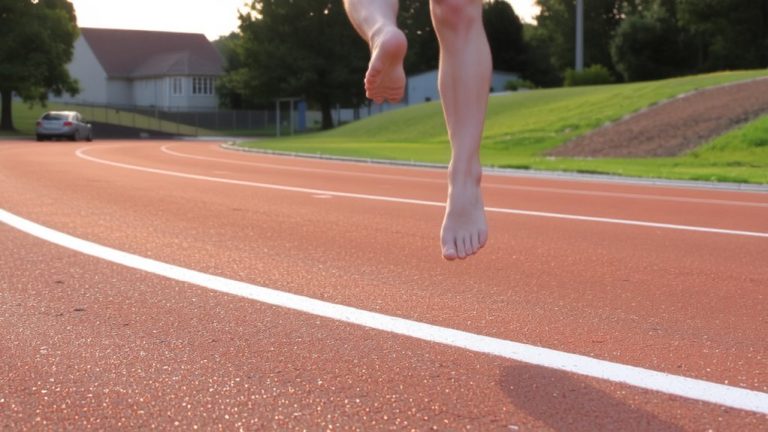
You’ve got four key metrics to focus on if you want to run smoother and stay injury-free: cadence, ground contact time, vertical oscillation, and foot strike in relation to stride length and joint alignment. Aim for 170–185 steps per minute-increasing your cadence by 5–10% can cut overstriding and lower injury risk. Efficient runners clock 200–250 milliseconds in ground contact time; going over 300 ms hurts running efficiency. Minimize vertical oscillation-excess bounce wastes energy-elites stay low to boost forward motion. Your foot strike matters less than landing with your foot under your center of mass; overstriding creates braking forces, no matter if you heel, midfoot, or forefoot strike. Focus on proper joint alignment and shorter stride length to improve form, boost running efficiency, and reduce impact-related injury.
Best Tools for DIY Running Form Analysis
How do you spot flaws in your running form without a coach’s eye? Use tools that bring lab-level gait analysis home. Smartphone apps like Coach’s Eye and Hudl Technique offer frame-by-frame playback for evaluating foot strikes, arm swing, and hip drop. Record high-speed video from the side and behind, using fixed reference points to judge alignment and efficient arm movement. Wearables like Garmin and Polar watches use accelerometers and gyroscopes to measure Step Rate, vertical movement, and ground contact time. MyRunAnalysis estimates cadence within 2–3% of gold-standard devices. Stryd power meters go further, tracking leg spring stiffness and ground contact balance. For deeper insight, some apps simulate motion capture, detecting overstriding and pelvic tilt. Use a metronome to fine-tune cadence. These tools turn subjective effort into objective data, making your running form more efficient, repeatable, and injury-resistant.
Step-by-Step: How to Test Your Running Form at Home
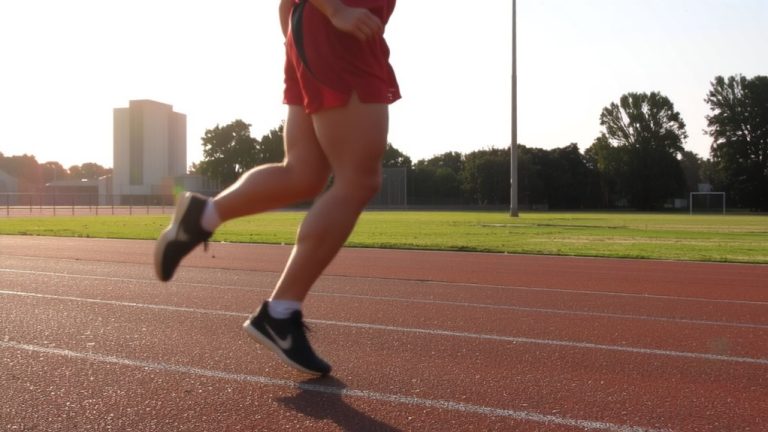
What does it take to spot the subtle flaws in your running form from the comfort of home? Start by using a smartphone app like Coach’s Eye or Hudl Technique to record slow-motion video of your run, checking how your foot lands and if your movement flows smoothly front to back. Aim for a cadence of 170–185 steps per minute-count your right foot strikes for 30 seconds, then multiply by four. Watch for excessive vertical oscillation; keep bounce under 6–8 cm with a “ceiling touch” drill. Check ground contact time: under 250 milliseconds is efficient. Stand tall with a slight forward lean, ears over shoulders, ribs over hips, and shoulders relaxed. These form cues help you run with less strain, improved alignment, and smarter movement mechanics-all from your driveway.
When to See a Pro for Gait Analysis
Why keep guessing when your running form might be setting you up for setbacks? If you’ve tried self-corrections but still face overuse injuries or persistent pain, it’s time to seek professional help. Recurrent asymmetries or one-sided discomfort signal underlying issues a pro can pinpoint using advanced tools. Professional analysis provides personalized insights no app can match. Clinical gait analysis uses 3D motion capture and force plate analysis to detect biomechanical flaws-like a three-degree pelvic drop-that increase injury risk 17-fold. For stubborn inefficiencies like overstriding, this level of detail is key.
| What You Notice | Why You Should Seek Professional |
|---|---|
| Limping or uneven stride | Force plate analysis reveals imbalanced loads |
| Chronic IT band or foot pain | Clinical gait analysis targets root causes |
| No improvement with apps | 3D motion capture delivers precise, personalized insights |
On a final note
You’ve got the tools to spot form flaws and fix them, cutting injury risk fast, using slow-mo video, a phone app, or a RunScribe sensor, checking cadence (aim for 160–180 steps/minute), foot strike, bounce (under 5 cm), and posture, real runners shaved 45 seconds off mile pace just by tweaking stride, and added 3 weekly miles pain-free-small fixes, big gains, stay consistent, listen to your body, and upgrade your shoes every 300–500 miles with trusted models like Brooks Ghost 15 or Hoka Clifton 9.