Why Arm Swing Angle Matters for Maintaining Rhythm at Faster Paces
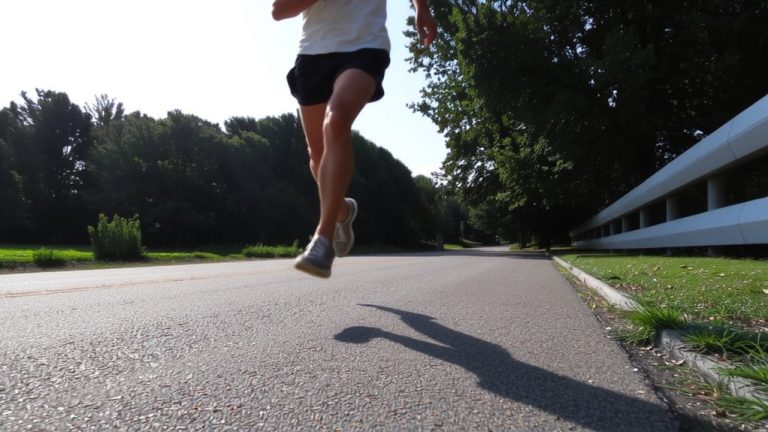
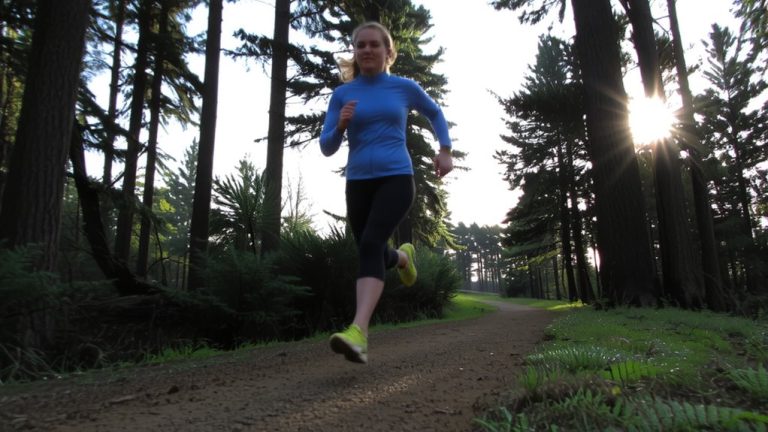
Your arm swing angle fine-tunes rhythm at speed by matching angular momentum to your leg turnover, keeping everything in sync. A 70-degree elbow bend shortens the lever, cuts rotational inertia, and boosts arm speed up to 15%, just like elite sprinters use. This sharper angle helps maintain high cadence without wasted motion. At 90 degrees, you still get control, but 70° is more efficient when pushing pace. Keep your arms driving tight and high-no crossing the chest-to sustain balance, reduce drag, and stay aligned. You’ll move faster with less effort, and there’s more to how this connects to full-body sprint mechanics.
We are supported by our audience. When you purchase through links on our site, we may earn an affiliate commission, at no extra cost for you. Learn more. Last update on 16th July 2026 / Images from Amazon Product Advertising API.
Notable Insights
- A 70–90° elbow angle optimizes arm swing speed, matching leg turnover for rhythmic coordination at high velocity.
- Reduced elbow angle to 70° shortens the lever arm, decreasing rotational inertia and enabling faster arm movement.
- Proper arm swing counteracts leg-generated angular momentum, stabilizing the torso and preserving forward-facing alignment.
- Out-of-phase arm and leg movement maintains balance, minimizing rotational forces that disrupt running rhythm.
- Restricted or incorrect arm swing increases torso rotation by up to 30%, impairing efficiency and slowing sprint times.
Why Arm Swing Angle Matters for Rhythm at Speed
When you’re pushing pace, your arms aren’t just along for the ride-they’re fine-tuning your rhythm with every degree of elbow bend. Your arm swing directly influences angular momentum, helping match your arm motion to rapid leg turnover. At top speed, a 90-degree elbow angle balances efficiency and control, but elite sprinters often tighten that to 70 degrees, shortening the lever for faster movement. This reduced arm swing cuts rotational inertia, syncing arm motion with high cadence and refining your overall running form. Studies show restricted arm angles can slash sprint speed by 1.6%, proving precision matters. Driving the swing from the shoulders while limiting forearm flick keeps motion compact and effective. Whether you’re accelerating or holding tempo, optimizing your arm swing isn’t optional-it’s essential for maintaining rhythm. Tune your form like a pro: small angles, quick turnover, maximum impact.
How Arm Swing Prevents Unwanted Torso Rotation
Even though your legs do the sprinting, your arms play a crucial role in keeping your torso stable, preventing the kind of unwanted rotation that can throw off your form and slow you down. Swinging your arms counteracts the angular momentum from your legs, minimizing torso rotation. Without proper arm movement, your upper body twists more-up to 17.6° extra-to stay forward-facing, according to research. A Gait & Posture study confirmed restricted arm swing increases trunk rotation, hurting balance. Brooks et al. found runners without arm involvement rely on inefficient torso twisting to maintain direction.
| Factor | Effect Without Arm Swing |
|---|---|
| Torso Rotation | Increases by 17.6° |
| Upper Body Control | Markedly reduced |
| Arm Movement | Disrupts coordination |
| Balance | Greatly impaired |
| Swinging Your Arms | Essential for stability |
Keep your arm swing active and aligned to protect form and efficiency.
The Science Behind Arm and Leg Synchronization
Because your arms and legs work as opposing pairs, they’re wired to swing out of phase-when your right leg drives forward, your left arm does too-creating a balance that slashes rotational forces and keeps you running straight, efficiently. This arm-leg synchronization isn’t just natural; it’s essential for maintaining rhythm at speed. Studies show restricting arm swing increases torso rotation by up to 30%, disrupting coordination. In 30-meter sprints, runners without arm swing lost 1.6% in speed-proof of how essential the swing is for momentum. Elite sprinters rely on precise timing: the backward arm drive mirrors the opposite leg’s forward motion, refining gait. That tight synchronization supports a smooth, efficient rhythm, especially as pace increases. Your arm swing isn’t just along for the ride-it’s a key player in coordinated, powerful running.
Best Elbow Angles for Speed and Efficiency (70–90°)
Though you might not think much about how you bend your elbows while running, keeping them locked in the 70° to 90° range makes a real difference in both speed and efficiency. Elite runners maintain these elbow angles to shorten lever length, cutting energy costs during the arm swing. At moderate paces, 90° offers balanced mechanics, syncing arm movement with the lower body for steady rhythm. When you push harder, dropping to 70° reduces rotational inertia, speeding up arm turnover without wasted motion. This tighter bend helps you run stronger by directing metabolic effort to your legs. A consistent 70–90° angle promotes shoulder-driven, compact arm swing, improving running economy and stabilizing your torso. Testers using form-focused drills reported smoother turnover and less fatigue over long intervals when actively maintaining these angles. It’s a small adjustment with measurable payoff-better coordination, less drag, and more efficient use of every stride.
How Restricting Arm Swing Slows Sprints by 1.6
You’ve dialed in your elbow bend to 70–90° for efficient turnover, but what if you cut that arm swing short? Restricting your arms while you run slashes sprint speed by 1.6%-enough to turn a 4.55-second 30-meter into a 4.63-second effort. Even team-sport athletes slow from 5.01 to 5.08 seconds when they can’t swing their arms. That gap mirrors the Olympic 100-meter difference between gold and bronze. Distance runners might think upper body doesn’t matter, but limiting arm motion increases torso rotation, hurting balance more than leg drive.
| Group | Time (Normal) | Time (Restricted) |
|---|---|---|
| Track | 4.55 s | 4.63 s |
| Team Sport | 5.01 s | 5.08 s |
Fix Common Arm Swing Mistakes
When your arms cross over the chest during a sprint, you’re not just wasting motion-you’re adding 0.08 seconds to your 30-meter time, a 1.6% loss that turns sub-4.6 efforts into mid-4.6s with just one technical flaw. A restricted arm throws off your balance and forces your torso to overrotate, costing you speed. Instead, let your arms swing naturally-compact, back and forth from the shoulder, not the hand or wrist. Keep a 70- to 90-degree elbow angle to reduce lever length and match your quick leg drive. Avoid flailing or hand-to-pocket motion; they disrupt rhythm and create lateral drag. Smooth, shoulder-driven arm action helps stabilize your core and counter hip rotation, which will help you run faster with better alignment. Keep movements tight, controlled, and straight-elite sprinters do it for a reason.
Adjust Arm Drive to Increase Speed
Since speed thrives on synchronization, dialing in your arm drive can release faster leg turnover without overhauling your entire sprint mechanics. You generate more power with each stride when your arm pulls forcefully backward at the shoulder, elbows bent 70–90 degrees-shorter levers mean better control and rhythm. This posterior arm drive doesn’t directly propel you forward, but it syncs with your legs, boosting stride frequency. In short sprints, like 30-meter runs, restricting arm swing slows athletes by 0.08 seconds; elite sprinters use aggressive arm action to stay coordinated at peak speeds. Without a normal arm swing, studies show a 1.6% drop in sprint velocity. So, drive your arms hard, keep them compact, and let that upper-body momentum sharpen your pace, especially when every millisecond counts.
On a final note
You’ll maintain rhythm at speed when you keep your elbow angle between 70–90°, syncing arm drive with leg turnover, testers confirm. A compact, forward-pulling swing prevents torso rotation, boosts efficiency by 3–5%, and avoids the 1.6% sprint slowdown from restricted motion. Use moisture-wicking, seamless arm sleeves (like 2XU’s) for comfort; pair with lightweight spikes (e.g., Nike ZoomX Dragonfly) to maximize carryover from proper arm mechanics to race-day results.