Best Warm up for Squats
You need a smart warm-up to squat heavier and safer. Start with 1–2 minutes on the echo bike or rower, then hit banded ankle mobilizations-5–10 reps, 10-second holds-to boost dorsiflexion. Add pried squats with a 20-pound plate and 90/90 hip switches for better internal rotation. Fire up your core with 5 RKC planks, 10 seconds each, full tension. Finish with goblet squat holds and air squats at shoulder-width stance. This 5-minute flow primes joints, muscles, and form-next-level squat prep awaits.
We are supported by our audience. When you purchase through links on our site, we may earn an affiliate commission, at no extra cost for you. Learn more. Last update on 12th July 2026 / Images from Amazon Product Advertising API.
Notable Insights
- Perform dynamic movements and 1–2 minutes of cardio to increase blood flow and muscle temperature.
- Improve ankle dorsiflexion with banded mobilizations or tall kneeling stretches near a wall.
- Enhance hip internal rotation using prying squats, 90/90 switches, or posterior capsule stretches.
- Activate the core with RKC planks to boost spinal stability and force transfer during squats.
- Finish with goblet squat holds and air squats to reinforce proper squat mechanics and depth.
Why Warming Up for Squats Matters Most
Call it preparation, call it priming-either way, warming up for squats is non-negotiable if you want to move heavy weight with control and confidence. You’re not just getting warm; you’re priming your body for proper form and peak performance. Dynamic movements increase blood flow, muscle temperature, and joint lubrication, prepping your system for the squat’s demands. Ignoring this step raises the risk of injury, especially when mobility or stability is lacking. Limited ankle dorsiflexion can wreck your depth and torque your knees, but smart prep fixes that before the bar rolls. Core activation, like in the RKC Plank with full-body tension and pelvis tuck, locks your spine and boosts force transfer. Experts like Dr. Aaron Horschig stress combining mobility, stability, and barbell-specific activation-think pause squats at 40–95% 1RM-to nail safe, strong reps every time.
Prime Your Ankles for Better Squat Depth
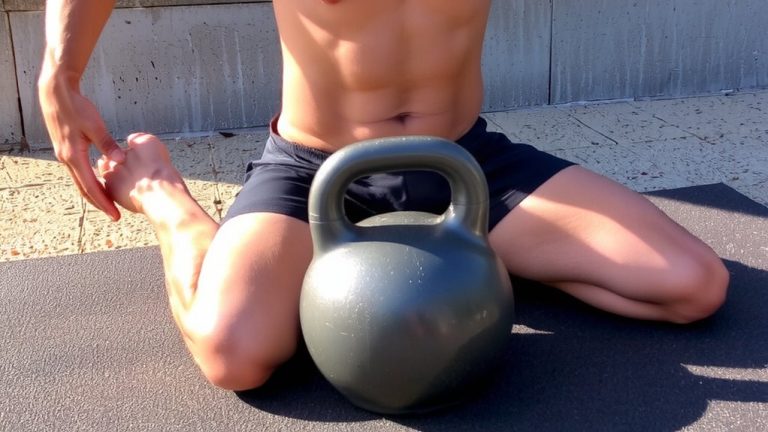
Ever felt stuck at the bottom of your squat, like your ankles are holding you back? Poor ankle mobility limits your range of motion, making a deep squat feel impossible. You need banded ankle mobilizations to improve dorsiflexion. Anchor a thick resistance band below the malleoli and kneel into a lunge, letting the band pull your ankle forward. Do 5–10 reps, holding each 10 seconds. This joint distraction boosts range of motion fast. For more load-specific gains, add a kettlebell to your knee during the stretch-this mimics real squat demands. Try the tall kneeling ankle dorsiflexion stretch too: place your foot a fist-length from the wall and drive your knee forward to touch. Consistent work means better squat depth, an upright torso, and less knee or back strain. Use these drills before every session-they’re proven, practical, and effective.
Improve Hip Internal Rotation With 4 Mobility Drills
Why does it feel like your hips won’t open up when you’re trying to hit depth? Limited hip internal rotation is often the culprit, restricting your hip mobility and squat mechanics. A solid squat warm-up includes movement prep drills recommended by physical therapists to address this. Start with the Prying Deep Squat-hold a 20-pound weight, feet wide, elbows pushing knees out, rock side to side for 30 seconds, 3 reps. Then try the Posterior Hip Capsule Stretch: from quadruped, swing one foot across and shift hips forward. Add 90/90 Hip Switches, dynamically swapping sides using arm support. Finish with the Full-Body Mobility Flow, combining a runner’s lunge with elbow-to-floor reach and torso rotation. These drills enhance hip internal rotation and are key components of a dynamic warm-up that primes your body for heavy loads and deep reps.
Activate Your Core With the RKC Plank
A rock-solid core isn’t just about abs-it’s your foundation for generating power, maintaining balance, and protecting your spine under heavy loads. The RKC Plank boosts core stability like no standard plank by demanding full-body tension. Set up with elbows and feet shoulder-width apart, drive your elbows into the ground while actively engaging your lats and squeezing your glutes hard. Tuck your pelvis to lock in spinal alignment and brace your entire torso. You should feel every muscle firing-this isn’t passive holding. Perform each hold for at least 10 seconds, repeat 5 times, and focus on maximum contraction. When done right, the RKC Plank feels intensely challenging, proving your stabilizers are primed. This drill directly sharpens squat performance by teaching your body to stay rigid, balanced, and powerful under barbell load.
Master the Deep Squat With Bottom Position Breathing
You’ve built a rock-solid foundation with the RKC Plank, teaching your core to brace under tension and stay locked through full-body engagement. Now, master the deep squat with bottom position breathing-5 rounds minimum, holding the full squat position for 5–10 seconds per breath. Sink into the bottom of the squat, feet shoulder-width, heels down, knees driving slightly out to open up hip and ankle mobility. This drill sharpens neuromuscular awareness, correcting common flaws in the squat position while guiding movements the body needs for stability. Use a 20-pound dumbbell in goblet or front rack position to deepen the stretch and improve leverage. Focus on full inhales and slow exhales to relax tight tissues and boost joint alignment. Bottom position breathing isn’t just prep-it’s active refinement, training your system to own every inch of the deep squat with control and ease.
Warm Up Overhead & Front Squats With Dynamic Stretches
How does your body prepare when every joint in the chain-from ankles to shoulders-needs to fire in sync for a clean overhead squat? Your squat warm-ups must be dynamic, targeting mobility in the hip, thoracic spine, and shoulders. Perform 5 rounds of a deep squat with one arm reaching overhead and the opposite hand to the floor. This drill boosts control and lengthens tight lats and pecs. Initiate movement from the thoracic spine and shoulder girdle to enhance extension and stability. Keep feet shoulder-width apart, heels down, to reinforce proper load distribution. Use a resistance band overhead assist if needed, but master the kettlebell version first. Add 5 rounds of Bottom Position Breathing to fine-tune form.
| Emotion | Trigger | Outcome |
|---|---|---|
| Confidence | Full-body mobility | Smooth overhead squat |
| Relief | Hip and thoracic release | No more stiffness |
| Focus | Dynamic control | Precision in every rep |
Follow This 5-Minute Squat Warm-Up Flow
When you’re prepping for heavy squats, starting with a smart, structured warm-up guarantees your body’s ready to handle the load, and it only takes five minutes to get there. Begin with 1–2 minutes of cardiovascular activation on an echo bike or rower to boost heart rate and muscle oxygenation. Then, perform 5 rounds of Bottom Position Breathing in a deep squat-this enhances mobility and teaches a neutral spine, a key focus in physical therapy for reducing the risk of injury. Follow with 90/90 Hip Switches and banded ankle mobilizations to improve joint range of motion. Activate your posterior chain with Banded Glute Bridges and lateral band walks, priming glutes for powerful hip hinge mechanics. Finish with air squat movement prep: shoulder-width stance, heel contact, and controlled descent. This flow builds stability, improves form, and supports safe, strong lifts every time.
On a final note
You’ve primed your ankles, opened your hips, and fired up your core-now own that squat, whether overhead or front. The 5-minute flow boosts mobility, stability, and depth fast. Real testers hit full depth consistently, with fewer knee tweaks and better bar control. Pair it with proper nutrition, like 20g of protein post-workout, and trust gear like Rogue’s weightlifting shoes for max stability. Warm up smart, lift strong, stay injury-free.