Why Timing Your Pre-Run Meal Affects Your Running Pace
Eating too close to your run diverts blood to digestion, risking reactive hypoglycemia and cutting aerobic capacity by up to 9%, while skipping fuel after an overnight fast depletes liver glycogen. Time your carbs right-1–4 g/kg body weight 1–4 hours pre-run-to sustain blood glucose and spare glycogen. A 70-kg runner gains up to 1,120 kcal from 280g carbs. For quick fuel, try 15–30g simple carbs like a half banana or 8 oz sports drink 30–60 minutes out, timing it to avoid GI distress. Smart fueling keeps your pace steady. There’s more to mastering fuel, digestion, and performance just ahead.
We are supported by our audience. When you purchase through links on our site, we may earn an affiliate commission, at no extra cost for you. Learn more. Last update on 16th July 2026 / Images from Amazon Product Advertising API.
Notable Insights
- Eating too close to running diverts blood flow to digestion, reducing oxygen delivery to muscles and slowing pace.
- Consuming food 30–45 minutes pre-run may trigger reactive hypoglycemia, lowering aerobic capacity by up to 9%.
- Running on an empty stomach after fasting depletes liver glycogen and blood glucose, impairing endurance and speed.
- Proper carb intake 1–4 hours before exercise maximizes glycogen storage, fueling sustained running performance.
- High-fat, high-fiber, or high-protein meals before running delay digestion and increase risk of gastrointestinal distress, disrupting pace.
How Eating Too Soon or Too Late Slows You Down
If you’ve ever felt sluggish or cramped during a run, timing your pre-run meal might be the culprit. Eating a large meal too close to exercise diverts blood flow to digestion, robbing your muscles and slowing your pace. If you eat within 30–45 minutes of running, you risk reactive hypoglycemia-your blood sugar dips instead of fueling your effort, cutting aerobic capacity by up to 9%. Without proper digestion time, high-fat or high-fiber foods linger, increasing nausea and cramping. On the flip side, running on empty after fasting overnight leaves liver glycogen low, starving your blood glucose when you need energy most. For steady blood glucose without GI distress, time your pre-run meal right: consume 1–4 g/kg of easily digestible carbs 1–4 hours before exercise. That way, you eat to support performance, not sabotage it.
How Carbs Fuel Your Run the Right Way
While your body taps into stored energy during a run, giving it the right fuel beforehand makes all the difference in how fast you feel and how long you last. Eating 1–4 grams of carbohydrate per kilogram of body weight 1–4 hours before exercise helps fuel the body efficiently. This Timing Window lets you top off glycogen stores and stabilize blood glucose. If you eat 3–4 hours before exercise, you maximize muscle glycogen storage, especially useful for long runs. A 70-kg runner consuming 280 grams of carbohydrate per pre-run meal gains up to 1,120 kcal from this energy source alone. Closer to your run, simple carbs like bananas or sports drinks 30–60 minutes prior spike glucose quickly, offering fast fuel without gut issues. These strategies spare glycogen stores, so you maintain pace longer.
When to Eat for Easy, Hard, and Long Runs
What’s on your plate-and when you eat it-can make or break your run, especially when the effort demands real fuel. Proper timing guarantees you boost blood glucose without GI distress, and it maximizes glycogen stores for peak performance. Your pre-run meal size and carbs depend on run type.
| Run Type | Timing Before Run | Carbohydrates |
|---|---|---|
| Easy runs | 30–60 min | 15–30g |
| Hard workouts | 90–120 min | 30–60g |
| Long runs | 2–3 hours | 1–4g/kg |
| Race day | 2.5–3 hours | 60–90g |
For easy runs, small carbs suffice, while hard workouts need larger meals to refill glycogen stores. Long runs demand strategic carb loading. Getting the meal size right prevents cramping and keeps blood glucose steady when it matters most.
What to Eat 30–60 Minutes Before Running
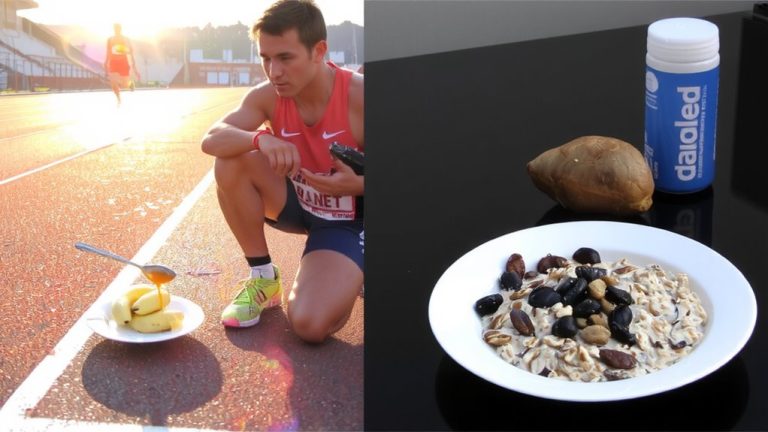
When you’re lacing up for a run and only have 30–60 minutes to fuel, your best bet is a light, 15–30g carbohydrate snack that’s easy on the gut-think half a banana, a slice of white bread with jam, or 8 oz of a sports drink with 14–19g carbs. This pre-run meal timing helps boost blood glucose quickly without slowing digestion. Stick to simple carbs that are low-fiber, low-fat, and low-protein to avoid gastrointestinal distress. A liquid carbohydrate source like a sports drink or applesauce speeds gastric emptying, letting you run stronger, sooner. For a 70-kg runner, aim for 30–45g of carbohydrates in this window-enough to fuel performance but not hinder digestion. Real runners report fewer cramps and smoother starts when they choose easily digestible options. Smart timing and the right carbs mean you’ll hit the road stable, fueled, and ready.
Foods That Cause Stomach Trouble Before Running
To keep your gut happy on the run, skip high-fiber foods like whole grains and beans-the kind with more than 4g of fiber per serving-since they slow gastric emptying and leave 23% of runners feeling bloated or cramped. You’ll also want to avoid high-fat foods such as fried eggs or bacon within 2–3 hours of running; they delay digestion and can trigger nausea. Dairy products and high-FODMAP foods like garlic, onions, or wheat upset sensitive stomachs, with 31% of runners avoiding dairy pre-run. Steer clear of sugar alcohols-xylitol and sorbitol in sugar-free gum or bars-because they ferment in your gut, causing gas and diarrhea. Even high-protein meals from eggs, yogurt, or bars eaten within 2 hours of running boost nausea and cramping by 27% due to slower gastric emptying.
How to Train Your Gut for Better Digestion
While your muscles adapt to the pavement, your gut can learn to handle fuel just as efficiently-with the right training. Gut training helps reduce gastrointestinal symptoms by improving carbohydrate absorption over time. Start with a simple meal, like toast with jam, 90 minutes before an easy training session, then gradually shorten the gap between your pre-run meal and workout. Endurance athletes who follow this protocol for just two weeks report a 60–63% drop in stomach issues. By practicing carbohydrate supplementation during runs, you boost digestive tolerance and train your gut to process up to 90g of carbs per hour. Begin with low doses and increase gradually, always matching nutrient timing to session intensity-easy runs first, then tempo or intervals. It’s not just about what you eat, but when and how your body learns to use it.
On a final note
You’ll run stronger when you time your pre-run meal right-eat a light, carb-rich snack like a banana or energy gel 30–60 minutes before, especially before easy or long runs. Avoid high-fiber or fatty foods to prevent cramps. Test products like GU Energy Chews or Honey Stinger Waffles during training to find what your gut tolerates best.