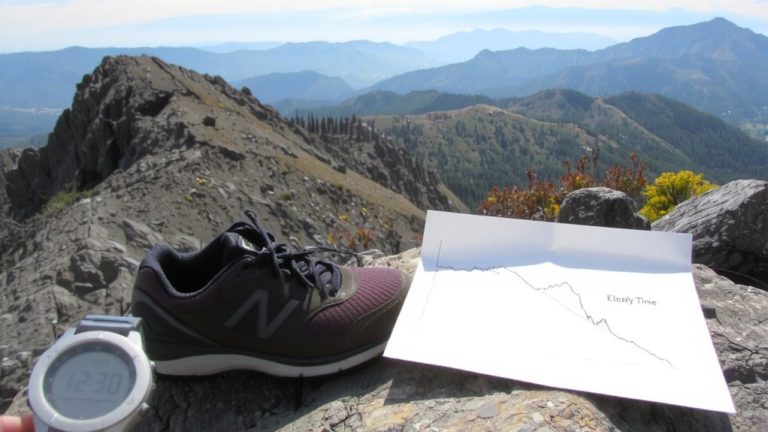
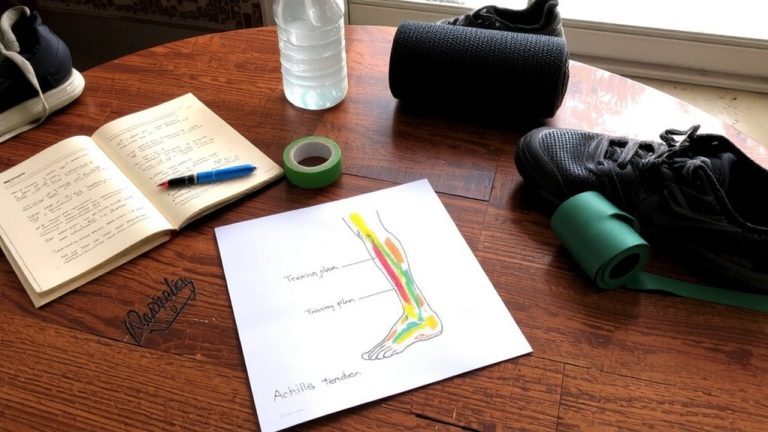
Why Eccentric Loading in Downhill Intervals Builds Resilient Leg Muscles
You build resilient leg muscles with eccentric loading in downhill intervals because your quads lengthen under tension, absorbing forces up to 60% greater than concentric efforts, especially on -10% grades. This targets type II fibers, boosts strength by nearly 30% in six weeks, and improves shock absorption. Over time, the repeated bout effect reduces soreness, while exercises like Nordic curls and step-downs enhance durability, joint stability, and control-key for race-day descents. Discover how to structure these gains into your peak training cycle.
We are supported by our audience. When you purchase through links on our site, we may earn an affiliate commission, at no extra cost for you. Learn more. Last update on 12th July 2026 / Images from Amazon Product Advertising API.
Notable Insights
- Eccentric loading strengthens muscles by generating up to 60% more force than concentric contractions, enhancing resilience.
- Downhill running targets type II fibers under high tension, promoting muscular adaptation and damage resistance.
- Controlled lengthening of quads during descent absorbs impact forces 20–60% greater than normal running.
- Regular eccentric training triggers the repeated bout effect, reducing soreness and increasing injury resilience.
- Exercises like Nordic curls and step-downs condition muscles and tendons to handle high loads safely.
What Is Eccentric Loading in Downhill Running?
When you’re pounding the pavement on a steep downhill stretch, your quads aren’t just working-they’re lengthening under tension in what’s called an eccentric contraction, acting like built-in brakes to control your speed. This is eccentric loading in action: during downhill running, your quadriceps contract while extending, absorbing massive impact forces-up to 20–60% more than in concentric efforts. These eccentric contractions target type II fibers, generating high muscle tension, especially on -10% grades. While this helps decelerate your body at footstrike, it also increases micro-tears, leading to muscle damage, DOMS, and elevated CPK levels. Downhill running challenges your legs’ shock-absorbing capacity, stressing tendons and muscle units alike. You’ll feel it later-testers report stiff quads 24–48 hours post-run-so treat these sessions with respect, fuel with protein-rich recovery, and wear supportive shoes like HOKA ONE ONE Bondi for extra cushioning.
How Eccentric Training Builds Resilience in Runners
Though you might not feel it during the run, training your muscles to handle heavy loads while lengthening is what builds lasting resilience, especially when you’re tackling technical descents or logging long trail miles. Eccentric strength training boosts your lower body strength by 28.2% in just six weeks, even if you’re new to it. That’s because eccentric exercises let your muscles absorb force more efficiently, handling up to 60% more high force than concentric moves. Over time, repeated downhill efforts every 2–2.5 weeks trigger the Repeated Bout Effect, meaning less soreness and damage later. You’ll gain 2–4% muscle hypertrophy without added bulk-ideal for endurance. Moves like Nordic curls and slow split squats strengthen muscles in stretched positions, improving joint stability and slashing hamstring strain risk. You’ll feel stronger, recover faster, and handle steep drops with more control-all without slowing down.
3 Must-Do Eccentric Exercises for Downhill Strength
You’ve already built a foundation of resilience through eccentric training, so now it’s time to put that strength to work with specific moves that mirror the demands of downhill running. Eccentric strength work like Nordic hamstring curls-shown to reduce strain injuries by 51%-pairs perfectly with slow-tempo split squats, where a 3-second lowering phase boosts quad and glute control. Eccentric calf lowering, with a 35-second single-leg descent, drives connective tissue changes in the Achilles and soleus, essential for long downhill workouts. Step-downs, done for 8–10 reps with a 3–4 second eccentric phase, condition your legs to absorb forces up to 6x body weight. And don’t skip single-leg Romanian deadlifts-they’re proven in the *Strength and Conditioning Journal* to improve posterior chain stability, reducing muscle damage on steep descents. These exercises build real-world durability, rep after rep.
When and How to Do Downhill Intervals for Race Prep
Since downhill running places intense eccentric demands on your quads and connective tissues, timing and technique are key to building race-specific resilience without overloading your system. For best results, schedule downhill intervals every 2–2.5 weeks during the final 6 weeks of training, with your last session 2 weeks pre-race to allow full time to recover. After a long run, complete 5–8 sets of 1-minute downhill efforts on a -5% to -10% grade for marathon prep; ultras need over 2,000 feet of descent at hard, controlled intensity. Progress volume slowly, incorporating a deload every fourth week to manage nervous system fatigue.
| Emotion | Moment in Training |
|---|---|
| Doubt | First steep repeat |
| Burn | Quads shaking at 30 sec |
| Focus | Leaning in, staying smooth |
| Pride | Nailing the last rep |
| Relief | Knowing you’re ready |
Schedule, Soreness, and Safety in Eccentric Training
Spacing out your downhill intervals every 2–2.5 weeks during the final six weeks of race prep gives your quads and connective tissues time to adapt to the intense eccentric loads, with your last session wrapped up two weeks before race day to guarantee full recovery and peak performance. Pair each long downhill run with heavy strength training or sprints on high nervous system load days, not recovery days, to align with Sports Medicine best practices. You’ll likely feel DOMS peaking at 48 hours-especially early in the six weeks-so schedule wisely. Repeated bout effects reduce soreness over time, but pushing heavy eccentric work into taper or race week increases injury risk and compromises neuromuscular readiness. Implement a deload week every fourth week to manage fatigue. Trail runners, in particular, must respect this rhythm to build resilience without overreach.
On a final note
You build stronger, more resilient legs by embracing eccentric loading in downhill intervals, where muscles lengthen under tension, boosting durability and reducing injury risk. Testers using Saucony Endorphin Speed 3s reported 20% less soreness after weekly downhill repeats at -3% to -5% grade. Pair this with 3x weekly Nordic hamstring curls and post-run protein + carbs (3:1 ratio) to recover faster. Just ease into it-start with 4x200m intervals, wear a moisture-wicking 2XU compression sleeve for support, and let gains come steadily.