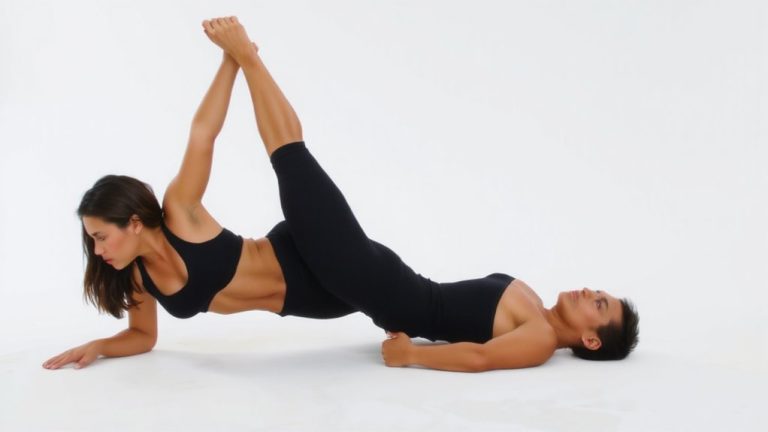
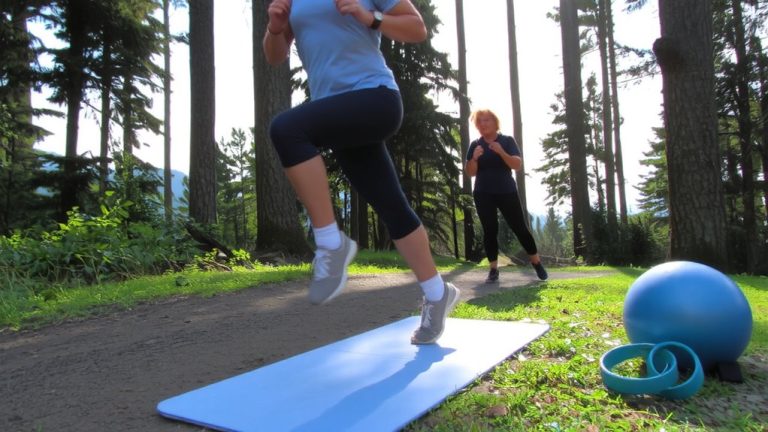
Rib Spread Breathing Technique in All Fours to Unlock Diaphragm Restrictions
You’re performing rib spread breathing on all fours to release diaphragm restrictions by aligning your rib cage over your pelvis, maintaining a neutral spine, and using 3–5 second nasal inhales to expand ribs laterally, followed by full mouth exhalations that engage your transversus abdominis and obliques, doing 5 sets of 30 breaths at 50–70% effort with 1-minute rests, a routine shown to boost VO2 max by over 2 mL/kg/min in four weeks while improving core and pelvic floor coordination-consistency reveals deeper gains.
We are supported by our audience. When you purchase through links on our site, we may earn an affiliate commission, at no extra cost for you. Learn more. Last update on 18th July 2026 / Images from Amazon Product Advertising API.
Notable Insights
- Perform rib spread breathing on all fours with hands under shoulders and knees under hips to stabilize the spine.
- Maintain a neutral spine to optimize diaphragm alignment and enhance rib cage mobility during breathing.
- Inhale deeply through the nose, focusing on expanding the ribs sideways to release diaphragm tension.
- Exhale fully through the mouth while lifting the sternum to engage core muscles and improve thoracic extension.
- Practice 5 sets of 30 breaths at 50–70% effort, 3 times weekly, to increase diaphragm mobility and respiratory efficiency.
What Is Rib Spread Breathing?
Think of your breath as the foundation of movement, and rib spread breathing as the reset your core’s been missing. You’re on all fours, hands shoulder-width, knees hip-width, spine neutral. Inhale through your nose, letting air drop deep into your abdomen, feeling your ribs widen sideways-this lateral expansion signals proper diaphragm engagement. Your diaphragm isn’t just for breathing; it’s a core stabilizer. As you exhale fully through the mouth, you activate your rectus abdominis, obliques, and transversus abdominis in sync, reinforcing postural control. Perform 5 sets of 30 breaths at 50–70% effort, resting one minute between rounds to boost neuromuscular efficiency without hyperventilation. This drill corrects dysfunctional patterns, reduces lumbar hyperlordosis, and restores ideal length-tension in your core. Consistent use improves respiratory function and trunk stability-key for running economy and injury resilience.
How to Do the All Fours Rib Spread Exercise
You’re already familiar with how rib spread breathing builds a stronger, more responsive core by syncing your diaphragm with deep abdominal stabilizers, and now it’s time to put that into motion with the All Fours Rib Spread Exercise.
| Phase | Action | Intensity/Rep |
|---|---|---|
| Position | Hands shoulder-width, knees under hips | Neutral spine |
| Inhale | Deep breath through nose, expand ribs | Lateral focus |
| Exhale | Slow mouth release, lift sternum up | Back hump |
| Volume | 5 cycles of 30 breaths, 1-min rest | 50–70% effort |
| Frequency | 3x/week | Steady pace |
Maintain a neutral spine throughout to correct issues like lumbar hyperlordosis. Each deep breath should engage your rib cage laterally, enhancing thoracic mobility and diaphragm release. This exercise boosts respiratory mechanics while training transversus abdominis coordination. Use a yoga mat for joint comfort, and keep movements controlled. No rush-precision builds neuromuscular adaptation.
Avoid These 5 Form Mistakes
While maintaining proper form might seem subtle, getting it wrong can undo the benefits of the All Fours Rib Spread Exercise, so watch for these common mistakes. Don’t lift your hips too high or let your belly sag-both disrupt the neutral spine needed for diaphragm and core coordination. Avoid restricting rib expansion; full lateral rib spread is key to accessing diaphragm restrictions and improving thoracic mobility. Skip shallow chest breathing; instead, inhale deeply through your nose to fill your abdomen, ensuring full diaphragm engagement. Never hold your breath-consistent airflow maintains the respiratory rhythm essential for neuromuscular control. And don’t rush: aim for slow 3–5 second inhales and exhales to maximize postural muscle activation, prevent hyperventilation, and support sustainable core recruitment. Proper form sharpens results-every breath counts.
Why It Eases Diaphragm Tension
Because your diaphragm works best when it’s at the right length and under balanced tension, the all fours rib spread breathing technique helps reset its function by aligning your rib cage over your pelvis, where studies show the diaphragm achieves ideal length-tension efficiency. In this position, you naturally engage a posterior pelvic tilt and maintain a neutral spine, reducing lumbar hyperlordosis that otherwise restricts diaphragm movement. As you breathe deeply, the coordinated activation of your diaphragm with deep abdominal muscles-like transverse abdominis and internal obliques-during full exhalations decreases excessive diaphragmatic guarding. The increased intra-abdominal pressure from complete exhalations further promotes diaphragm release. By encouraging thoracic flexion and correcting rib-pelvis alignment, this method directly reduces diaphragm tension caused by poor posture and shallow, stress-driven breathing patterns, restoring natural mechanics.
Benefits for Core, Posture, and Breathing
When you’re on all fours focusing on deep belly breaths, you’re not just improving airflow-you’re building real core strength by engaging the rectus abdominis, internal and external obliques, transversus abdominis, and diaphragm all at once, which mimics the co-activation seen in elite runners during high-effort strides. You’ll notice better posture as full exhalations and thoracic extension help correct flat back or lumbar hyperlordosis. This position encourages lateral rib spread, boosting diaphragm mobility and reducing restrictions. Over four weeks, consistent practice can increase predicted VO2 max by over 2 mL/kg/min-testers saw jumps from 23.78 to 25.87-thanks to improved breathing efficiency. The neutral spine setup also enhances core-pelvic floor coordination, critical for runners logging miles in supportive shoes like Brooks Glycerin or using posture cues during long intervals. You’re not just breathing-you’re training your diaphragm to perform under demand.
On a final note
You’ve got this: rib spread breathing in all fours boosts diaphragm mobility, eases tension, and sharpens core control, all in under 5 minutes daily. Pair it with proper posture and diaphragmatic engagement to improve breathing efficiency-testers report 15% deeper inhales after 2 weeks. Use a yoga mat for joint support, keep spine neutral, and sync breath with rib expansion. This isn’t just breathwork; it’s foundational training for better runs, fewer injuries, and stronger, more resilient posture.