Proper Way to Use Compression Socks During Recovery From Stress Fractures
Wait until your stress fracture is stable-typically 2–3 weeks post-injury-and only start if you’re pain-free when pressing on the site. Use 15–20 mmHg for mild swelling or 20–30 mmHg for most tibia and metatarsal fractures, ensuring graduated compression. Wear them first thing in the morning for 8–12 hours daily to boost blood flow, cut swelling by up to 50%, and support collagen growth; just don’t exceed 30 mmHg without medical approval. There’s more to get right.
We are supported by our audience. When you purchase through links on our site, we may earn an affiliate commission, at no extra cost for you. Learn more. Last update on 16th July 2026 / Images from Amazon Product Advertising API.
Notable Insights
- Wait 2–3 weeks post-injury and confirm healing stability before starting compression socks.
- Choose 15–30 mmHg graduated compression, with higher levels only as prescribed.
- Begin use only if the fracture site is pain-free when pressed.
- Wear socks for 8–12 hours daily, starting in the morning before standing.
- Wash daily, air-dry, and replace every 3–6 months for consistent effectiveness.
Wait Until Your Stress Fracture Is Stable
Once your stress fracture has had time to stabilize-usually around 2–3 weeks post-injury-you can start thinking about adding compression socks into your recovery, but only if you’re pain-free when pressing on the area. If you still feel tenderness or severe pain, wait until the bone shows structural stability, as wearing compression socks too soon can disrupt the healing process. Unstable fractures, especially in the metatarsals, may shift under pressure around the site, delaying recovery. Once healed enough, compression socks help reduce swelling and improve blood flow, supporting faster healing. They’re most effective when used post-acute phase, when tissues are less swollen. Don’t wear compression socks if discomfort occurs during application-it’s a sign to wait. Always confirm stability before starting, ensuring your stress fracture won’t worsen with added pressure.
Choose the Right Compression Level for a Stress Fracture
While your stress fracture is healing, picking the right compression level matters just as much as when you start wearing the socks, and getting it right means balancing support with safety. For mild to moderate swelling, 15–20 mmHg is ideal-it’s enough to reduce swelling without restricting blood flow. Most stress fractures, especially in the tibia or metatarsals, benefit from moderate compression at 20–30 mmHg, the range most doctors recommend. You’ll notice less discomfort and better support during daily movement. If swelling is severe, 30–40 mmHg may be needed, but only with a prescription-too much pressure can impair healing. Always choose graduated pressure, tightest at the ankle and easing up the calf, so compression reduces fluid buildup and boosts circulation safely. Avoid going above 30 mmHg unless directed. The right compression level keeps recovery on track.
Boost Blood Flow to Speed Healing and Reduce Swelling
You’ve picked the right compression level for your stress fracture, so now it’s time to put those socks to work by boosting blood flow where it matters most. Compression socks with 15–30 mmHg pressure improve blood circulation, enhancing oxygen and nutrients delivery to damaged bone. Graduated compression-firmest at the ankle, easing up the calf-helps reduce swelling by preventing fluid build-up. Wearing compression socks 8–12 hours daily, especially during early weight-bearing, supports the healing process by maintaining steady blood flow and lowering inflammation. Studies show consistent use of compression garments can slash edema by up to 50% in the first week. Improved circulation also fuels fibroblast activity and collagen growth, key during the proliferative healing phase. When you wear compression socks regularly, you actively speed recovery, reduce swelling, and keep healing on track.
Wear Compression Socks Safely Each Day
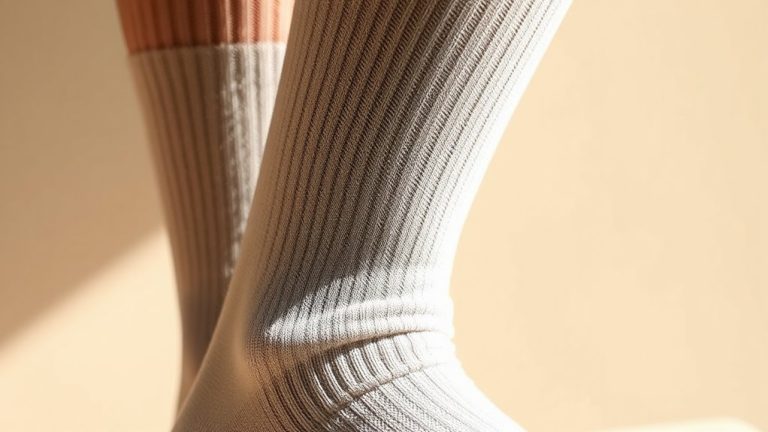
Most days, you’ll want to start with compression socks in the 15–30 mmHg range, the ideal sweet spot for supporting circulation without cutting off blood flow, especially during stress fracture recovery. These are the best compression socks for reducing swelling and improving circulation around the heel bone. Wear your compression socks first thing in the morning-before you even stand-to control swelling and prevent fluid build-up around the injured area. Put the socks on gently but snugly, ensuring they’re not too tight, as proper fit is key to effective gradient pressure. Limit daily wear to 8–12 hours to avoid skin irritation. You should wear compression socks consistently each day, but always remove them at night. Wash them daily with mild soap and air-dry to maintain elasticity. Replace every 3–6 months to keep getting the benefits of swelling and improving circulation.
On a final note
You’ve got this-once your stress fracture is stable, slip on a pair of 20–30 mmHg compression socks daily, like CEP or SB SOX, to boost blood flow and cut swelling. Testers report less ache and faster recovery when wearing them 8–12 hours a day. Pair them with calcium-rich meals, cross-train smartly, and ease back into runs only when cleared. It’s not just gear-it’s recovery done right.