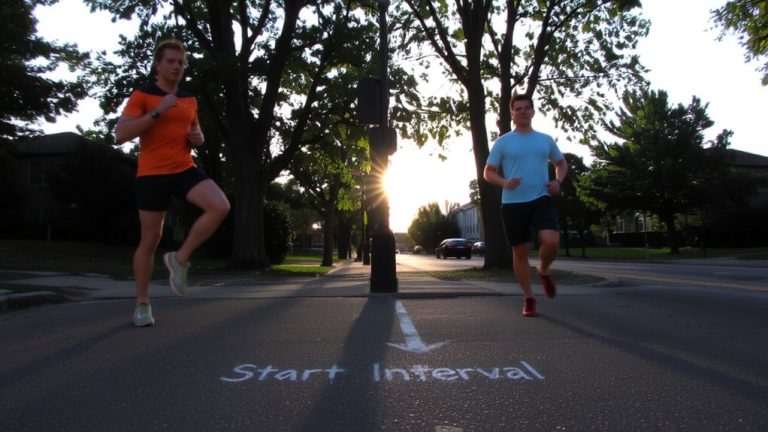
How to Use Interval Training to Improve Running Form in Headwinds
You build strength and sharpen form by doing 10 x 30-second sprints at 100% MAS on a 2% incline into headwinds, with 30-second jog recoveries, twice weekly. Add 3 x 1,200m repeats at 90% MAS into the wind, focusing on forward lean and cadence, then recover with 400m jogs to clear lactate. Use active recoveries to lock in posture, core engagement, and compact arm drive. Stick to RPE 8–9, progress weekly, and train during peak afternoon winds-there’s more to mastering resistance where it counts.
We are supported by our audience. When you purchase through links on our site, we may earn an affiliate commission, at no extra cost for you. Learn more. Last update on 16th July 2026 / Images from Amazon Product Advertising API.
Notable Insights
- Perform 30-second sprints at 100% MAS with 30-second jog recoveries to boost strength and neuromuscular control in headwinds.
- Run 1,200m repeats at 90% MAS directly into headwinds to build form endurance and maintain efficient mechanics under resistance.
- Use active recoveries to reinforce posture, cadence, and breathing, simulating wind resistance with mindful, compact running.
- Schedule interval sessions during peak afternoon winds to progressively adapt form and strength to real-world headwind conditions.
- Increase sprint volume weekly from 4 to 10 reps at 100% MAS to steadily enhance power and stability against wind resistance.
Use Short Intervals to Build Strength Against Headwinds
When you’re battling a headwind, your body needs more than just endurance-it demands strength, coordination, and the power to stay efficient under resistance, and that’s where short intervals at 100% of your MAS (maximal aerobic speed) come in. These 30-second high-intensity intervals, followed by 30 seconds of jogging, build muscular strength and fast-twitch fiber recruitment, boosting leg drive and upper body stability. Doing 10 reps twice weekly-with an easy day between-progressively strengthens your running form. Short intervals enhance neuromuscular coordination, so you maintain posture and stride under strain. For best results, perform them on a slight incline into a headwind, which increases anterior muscle activation and mimics race conditions. This targeted training doesn’t just boost power-it reinforces resilient, efficient running form when resistance peaks, making every stride count.
Maintain Form With Long 1,200m Repeats in Wind Conditions
Three 1,200-meter repeats at 90% of your MAS, run straight into a headwind, build the form endurance you need to stay strong when the wind’s against you. These long intervals train your body to maintain efficient mechanics under race conditions, reinforcing a slight forward lean, high cadence, and steady breathing. Running into the wind forces real-time adaptation, so your form stays sharp when fatigue sets in. After each repeat, jog 400 meters to clear lactate and stay aware of your posture.
| Interval | Recovery | Focus |
|---|---|---|
| 1,200m @ 90% MAS | 400m jog | Drive arms, lean forward |
| Into headwind | Active recovery | Maintain cadence |
| 3 rounds | 2–3 min rest | Controlled breathing |
Do this once weekly, then rest-this balance boosts form endurance while preventing overuse. You’ll handle gusts with confidence and control.
Pace Intervals at 90–100% of Your Max Aerobic Speed
Speed isn’t just about raw effort-it’s about precision under pressure, especially when the wind’s fighting you. Pace intervals at 90–100% of your max aerobic speed train your body to maintain clean running form when fatigue spikes. Try 3 sets of 1,200-meter repeats at 90% MAS with 400-meter jog recoveries to build speed endurance against resistance. Then add 10 sets of 30-second sprints at 100% MAS, followed by 30-second jogs, to sharpen leg turnover and neuromuscular control. These efforts boost cardiovascular responsiveness and running economy, helping you stay efficient despite headwind drag. Training at this intensity locks in stride consistency, reducing form breakdown when effort climbs. Testers using pace intervals reported smoother mechanics and less wasted motion in blustery conditions. Whether you’re pushing tempo on exposed trails or racing into a gust, dialing in max aerobic speed work keeps your form tight, your cadence crisp, and your effort focused.
Reinforce Efficient Mechanics With Active Recovery
While pushing through tough intervals, don’t overlook what happens in the recovery-those moments of active recovery are your chance to rebuild better form, not just catch your breath. In your interval training, use these pauses to lock in efficient running form. After a 30-second max effort, jog easy and focus on posture, cadence, and breathing. That 400-meter jog at 90% MAS recovery? Shorten your stride, boost cadence. Use the downtime to engage your core, relax shoulders, and maintain arm drive. Even during fartlek recoveries, stay mindful-adjust mechanics to simulate headwind resistance. These seconds add up, reinforcing economy and resilience.
| Focus Area | Active Recovery Benefit | Running Form Impact |
|---|---|---|
| Posture | Upright alignment | Reduces wind resistance |
| Cadence | Increases stride turnover | Counters headwind drag |
| Arm Drive | Maintains momentum | Improves balance and efficiency |
Structure Weekly Interval Sessions for Wind Adaptation
How do you turn a blustery day into a secret weapon? You schedule a weekly wind adaptation session. Do your interval sessions in the afternoon when winds peak, choosing a consistent out-and-back route with headwinds on the return. Hit 8–10 x 30-second sprints at 100% MAS with 30-second jog recoveries to build form resilience. For long intervals, aim for 3–5 x 1,200 meters at 90% MAS directly into the wind, focusing on forward lean, quick cadence, and compact arm drive. Follow each with a 400-meter jog. These interval sessions train your neuromuscular system without overkill. Limit volume to avoid fatigue, but repeat weekly for adaptation. You’ll learn to stay relaxed under resistance, just like elite runners using Nike ZoomX vaporflys in windy marathons. Consistent long intervals condition both body and form, making race-day gusts feel manageable, not intimidating.
Progressively Increase Resistance to Simulate Real Headwinds
You’ll get the most out of your training when you treat the wind not as an obstacle but as resistance you can dial up over time, just like adding weight in the gym. Use high-intensity interval training to progressively increase resistance by starting with 30-second sprints at 100% MAS into a headwind, followed by 30-second jogs, beginning with 4 intervals and adding 1–2 weekly until you hit 10. Maintain a perceived exertion (RPE) of 8–9 to guarantee effort stays high without form breakdown. For longer efforts, run 1,200-meter repeats at 90% MAS into consistent winds, with 400-meter recoveries. Choose routes with prevailing winds to guarantee real-world exposure. This gradual buildup builds specific strength, improves form resilience, and simulates true race conditions, making wind a predictable, manageable force in your performance.
On a final note
You’ll build strength and form by doing short, hard intervals against headwinds, using wind resistance to engage core and glutes. Aim for 90–100% max aerobic speed on 1,200m repeats, with active recovery at 50–60% effort. Testers wearing Nike ZoomX Invincibles noted better posture and turnover, even at fatigue. Pair workouts with 3–4 weekly sessions, progressive wind exposure, and 20g protein post-run for recovery.