How to Use Interval Training to Improve Running Economy at Threshold Pace
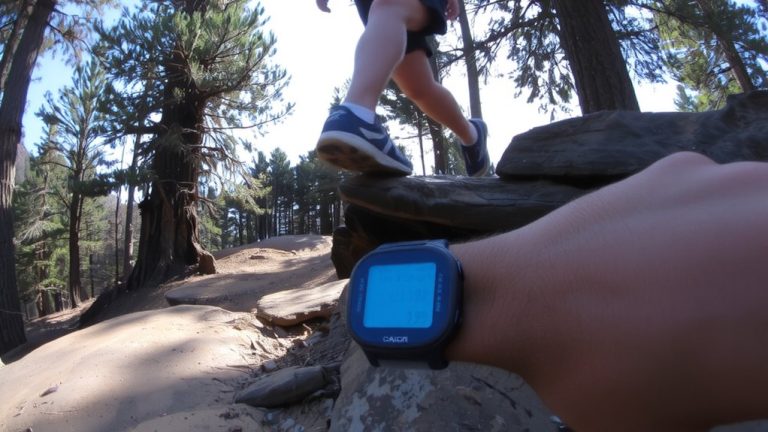
You boost running economy by doing intervals at 10K to half-marathon pace, just below your lactate threshold-around a 7–8 on the RPE scale, where talking’s limited to a few words. Use a GPS watch to pace accurately or rely on RPE on hilly terrain. Try 5 x 1K with 90-second jog recoveries to build mitochondrial density and lactate clearance. Keep recoveries short to maintain metabolic stress, and pair workouts with easy runs for adaptation-there’s more to fine-tune in your threshold approach.
We are supported by our audience. When you purchase through links on our site, we may earn an affiliate commission, at no extra cost for you. Learn more. Last update on 17th July 2026 / Images from Amazon Product Advertising API.
Notable Insights
- Perform intervals at lactate threshold pace, approximately 10K to half-marathon effort, to enhance running economy.
- Use 3–5 minute intervals with 60–90 seconds of active recovery to sustain metabolic stress in Zone 4.
- Determine threshold pace via a 30-minute time trial, using the average pace from the final 20 minutes.
- Maintain effort at RPE 7–8, where speaking is limited to 3–4 words, to ensure correct intensity.
- Incorporate short recoveries to limit lactate clearance, promoting mitochondrial density and fatigue resistance.
What Is Threshold Pace and Why It Matters
While you might think pushing all-out sprints is the key to getting faster, training at threshold pace actually builds the sustainable speed that matters most in races, and it’s something you’ve probably already tapped into whether you realize it or not. Threshold pace is your max steady effort-about 10K to half-marathon pace-where you hit lactate threshold, and lactate accumulation starts outpacing clearance. It feels like a 7–8 on the RPE scale: hard but holdable. This intensity boosts aerobic capacity, sharpens running economy, and delays fatigue. A 30-minute time trial, using the average pace from the final 20 minutes, reliably estimates your threshold. Regular threshold training fine-tunes your body’s efficiency, a tactic even elites like Jakob Ingebrigtsen use, often doing double sessions to maximize metabolic gains.
How Threshold Intervals Improve Running Economy
Because your body adapts most efficiently when challenged at the edge of comfort, hitting Zone 4 with structured threshold intervals-like 4 to 6-minute reps at 10K to half-marathon pace-trains your muscles to use oxygen more efficiently and clear lactate faster, so you can sustain quicker paces with less effort over time. These intervals boost aerobic capacity and running economy by increasing mitochondrial density and maintaining metabolic stress through short recoveries. Over weeks, you’ll run smoother, sharper, and with better neuromuscular coordination.
| Adaptation | Effect on Running Economy |
|---|---|
| Lactate clearance | Reduces fatigue at threshold pace |
| Mitochondrial density | Improves energy efficiency |
| Short recoveries | Sustains metabolic stress, boosts gains |
Elite runners stack threshold intervals with brief rests to refine form and efficiency, letting them handle more volume at race-specific intensity without breaking stride.
Find Your Threshold Pace Without Lab Testing
You can nail down your threshold pace without stepping into a lab by doing a simple 30-minute time trial, where the average pace from the final 20 minutes gives you a reliable estimate of your lactate threshold. Start with a 10-minute warm-up, then run at your maximum sustainable effort for 30 minutes. Use a GPS watch or running app to track pace accurately, avoiding windy conditions that skew results. Your threshold pace should feel tough but manageable-around a 7–8 on the RPE scale. For a field-based estimation without testing, the COROS Running Fitness Test analyzes recent runs and fitness trends to predict your pace. This data helps refine training intensity, boosting running performance over time. Consistent monitoring guarantees your threshold pace adjusts as your fitness improves, keeping your intervals effective and goals on track.
Use RPE to Maintain Threshold Effort
Once you’ve pinpointed your threshold pace using the 30-minute time trial or a fitness tracker like the COROS Pace 3, the next step is holding that effort consistently during intervals-and that’s where Rate of Perceived Exertion (RPE) becomes your go-to tool. Aim for an RPE of 7–8 out of 10, which matches lactate threshold intensity and feels comfortably hard. At this running intensity, your speaking ability should be limited to 3–4 words at a time; if you’re chatting easily, you’re below threshold effort. On hills or windy stretches, pace fluctuates, so rely on perceived exertion to maintain metabolic stress in Zone 4. Elite runners like Jakob Ingebrigtsen use RPE to stay precise during double-threshold sessions, ensuring consistency without overreaching. During recovery intervals, expect RPE 3–4, enough to reset but retain fatigue-this sharpens the contrast for the next high-quality Zone 4 effort.
Keep Recoveries Short in Threshold Workouts
While pushing the pace in Zone 4, keeping recoveries short-just 60 to 90 seconds of easy jogging or standing rest-guarantees your body stays under metabolic stress, which is key for boosting lactate buffering and improving running economy. In threshold workouts, short recoveries limit full lactate clearance, forcing your system to adapt and clear lactate more efficiently. This sustained challenge keeps your heart rate elevated above 70% of max, enhancing cardiovascular response. Active recovery like slow jogging maintains intensity without full rest, priming you for the next interval. Unlike long breaks, brief pauses guarantee repeated exposure to lactate threshold pace, a staple in elite interval training. Think Jakob Ingebrigtsen’s double-threshold days-short recoveries allow 20–30 minutes of quality time in Zone 4, sharpening efficiency. Skip the long rests; they disrupt flow and reduce effectiveness. Stay sharp, stay stressed, and let short recoveries boost your running economy where it matters.
Do These 5 Threshold Interval Workouts
A solid threshold interval routine sharpens running economy by dialing in precise Zone 4 efforts, and these five workouts deliver exactly that-measurable gains in lactate clearance, aerobic power, and speed endurance. Try 6 × 5 minutes at Zone 4 with 60–90 seconds recovery jog for 30 minutes of threshold effort, boosting lactate clearance. Or run 4 × 2 km at threshold pace, 3-minute jog rests, to build aerobic capacity and speed endurance. For neuromuscular precision, do 18 × 400 meters at Zone 4 with 1-minute standing rest. Elite runners can tackle Jakob Ingebrigtsen’s double-threshold day-5 × 6 minutes separated by 6 hours. Always anchor your pace to a 30-minute time trial, using the final 20 minutes’ average for accurate interval training.
| Workout | Benefit |
|---|---|
| 6 × 5 min, short recovery jog | Improved lactate clearance, running economy |
| 4 × 2 km at threshold pace | Enhanced aerobic capacity, speed endurance |
| 18 × 400 m, 1-min stand | Metabolic efficiency, precise threshold intervals |
Balance Hard Intervals With Easy Runs
When you push hard with threshold intervals like 5 × 1 mile at Zone 4 pace and 2:30 jog rests, your body needs time to recover-and that’s where easy runs come in to keep your training balanced and effective. After hard intervals, schedule 2–3 days of easy runs at low intensity (60–75% max heart rate) to support aerobic recovery and boost running economy. Follow the 80/20 rule: 80% of weekly mileage should be low intensity, so your 20% at threshold pace feels stronger. Insert easy runs between sessions-like after 4 × 6 minutes at Zone 4 with 2-minute jog recovery periods-to enhance blood flow and clear lactate without added stress. Never stack hard days; allow 48 hours between threshold workouts. If your heart rate’s still high at the start of a run, swap the hard session for a recovery run to avoid overtraining and keep gains on track.
On a final note
You’ve got this: threshold intervals boost running economy by teaching your body to clear lactate efficiently, so you race stronger, longer. Stick to 85–90% max heart rate or RPE 7–8, use short 60–90-second recoveries, and aim for 20–40 minutes total at pace. Pair workouts with easy runs in breathable Nike Aeroshorts (3-inch inseam) and moisture-wicking Balega socks to stay cool, and recover with 3:1 carb-to-protein snacks within 30 minutes.