How to Use Interval Training to Improve Downhill Running Efficiency
You need downhill intervals to handle 54% higher impact and 73% more braking force on steep slopes. Start with 4–8 x 20-second repeats at -3% to -6%, progressing to 120 seconds every 1–2 weeks. Use quiet, short strides to reduce damage, boost control, and maintain form on smooth trails. Pair with eccentric strength work to cut soreness by up to 50% and preserve quad strength. Recovery takes 48+ hours-timing matters. There’s more to mastering speed with safety.
We are supported by our audience. When you purchase through links on our site, we may earn an affiliate commission, at no extra cost for you. Learn more. Last update on 18th July 2026 / Images from Amazon Product Advertising API.
Notable Insights
- Perform 20- to 120-second downhill repeats at -3% to -6% gradient to build eccentric strength and neuromuscular control.
- Use 4–8 repeats per session with walking uphill recovery to safely adapt to increased impact and braking forces.
- Schedule downhill intervals every 1–2 weeks to allow recovery from up to 21% post-run strength loss.
- Focus on quiet, short strides to reduce impact by 54% and braking forces by 73% on steep slopes.
- Combine strength and plyometric training twice weekly to cut muscle damage and improve tendon resilience.
Why Downhill Running Needs Interval Training
While downhill running might feel easier on your lungs, it actually slams your legs with 54% higher impact forces and 73% more braking stress on a -9° slope compared to flat ground, so skipping specific training for it is a fast track to soreness, poor performance, and injury. That impact force triggers intense eccentric quadriceps loading, causing muscle damage and up to 21% strength loss. But with smart downhill running training-like interval training using short downhill intervals-you build neuromuscular tolerance and activate the repeated bout effect, reducing soreness over time. Trained runners see less strength decline (–16.4% vs –23.5%) thanks to better adaptation. Doing downhill intervals every two to three weeks boosts running economy and protects performance, especially before races with steep descents. It’s not about running farther; it’s about training smarter, letting your legs adapt to the stress so you stay strong, late in the race, on tired legs.
Use Short Downhill Repeats to Build Eccentric Strength
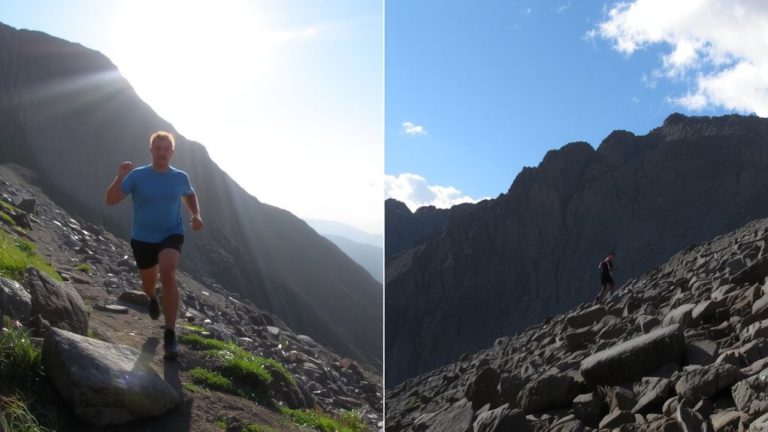
Downhill repeats are your best tool for building resilient quads without the brutal soreness. Start with 20-second downhill repeats at a -3% to -6% gradient to safely develop eccentric strength, then progressively increase to 120 seconds to boost neuromuscular adaptations. Limit yourself to 4–8 repeats per session, using walking back uphill as active recovery periods to reduce fatigue and maintain proper form. Stick to smooth, hard-packed trails for consistent running form and lower injury risk during downhill training. These repeats simulate real trail running demands while helping you build leg strength like targeted strength training. Schedule sessions just once every 1–2 weeks-eccentric exercise can reduce knee extensor strength by up to 21% post-run, so ample recovery is key. Stay consistent, and you’ll develop durable quads ready for steep descents.
Practice Quiet Strides for Better Downhill Control
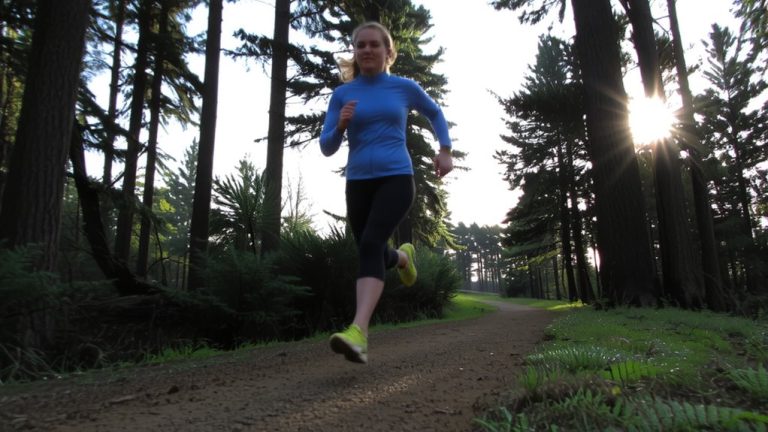
When you focus on landing quietly during downhill runs, you’re not just being stealthy-you’re cutting impact forces by up to 54% on steep -9° slopes. This reduction helps reduce muscle damage and supports better running economy values by minimizing braking forces-up to 73% lower than heavy heel striking. Quiet strides encourage mid-to-forefoot contact, improving form and promoting beneficial biomechanical adaptations like increased cadence and reduced stride length. On technical trail sections, this controlled speed boosts balance and coordination, enhancing overall downhill efficiency. By practicing soft landings, you refine neuromuscular control, allowing smoother shifts and greater confidence at pace. Focus on short, light steps instead of long, pounding strides to maintain momentum without sacrificing control. Proper downhill technique isn’t just about speed-it’s about smart, sustainable running where every quiet footfall builds resilience, precision, and trail-smart form.
Plan Weekly Downhill Training for Resilience
If you want to build real resilience for steep descents, start by scheduling downhill intervals just 1–2 times per week, using short 20-second efforts at first on a 3–6% gradient to let your muscles adapt gradually to the high eccentric loads, and remember, those forces can spike by 54% on a -9° slope-so ease in. This type of training helps you run downhill with better strength and control while improving your speed, compared to running on flats or uphill running. Perform 8x50m repeats, progressing to 4x100m with 2+ minutes of easy recovery to boost neuromuscular efficiency. Always listen to your body-eccentric loading can reduce running economy for days, so give your body time to recover with at least 48 hours between sessions. Limit intense downhill training to once every two to three weeks during peak conditioning to maximize gains without excessive damage.
Combine Strength Work With Downhill Running Drills
A solid strength foundation can seriously boost your downhill performance and keep your legs fresh over long descents. Your body handles downhill running best when primed with strength training that emphasizes eccentric contractions-like those in squats and lunges, which manage the 73% spike in braking force on a -9 degree slope. Do the 3-Minute Mountain Legs routine before drills to sharpen neuromuscular control, then pair 8-Minute Speed Legs sessions with intervals to build tendon strength and cut muscle damage. Plyometric exercises boost ankle and knee stability, key on rocky, technical terrain. Together, these methods reduce delayed onset soreness by up to 50%. Consistency with these drills and strength moves twice weekly means you’ll stay resilient, efficient, and in control-every descent feeling smoother than the last.
On a final note
You’ll run stronger downhill by pairing short, fast repeats on a 6–8% grade with eccentric strength work, like Nordic curls, twice weekly, testers saw less quad soreness in just three weeks, use a lightweight trail shoe with a firm midsole-like the Saucony Peregrine-for grip and feedback, stay quiet on your feet, control stride length, and combine drills with core work to stay balanced, efficient, and injury-free.