Designing a Hill Sprint Routine to Boost Acceleration and Power
Sprint 30–40 meters up a 6–10% hill, hitting 90–95% effort in 6–10 seconds to maximize acceleration and power. The incline increases glute and hamstring activation, sharpens knee drive, and reduces braking forces. Rest 60–90 seconds between 6–8 reps to maintain top-end output and support phosphocreatine recovery. Use a GPS watch or stopwatch to track sprint consistency. Keep form tight: forward lean, aggressive arms, powerful pawback. You’ll see how small tweaks amplify results.
We are supported by our audience. When you purchase through links on our site, we may earn an affiliate commission, at no extra cost for you. Learn more. Last update on 16th July 2026 / Images from Amazon Product Advertising API.
Notable Insights
- Perform 6–8 hill sprints of 6–10 seconds each at 90–95% effort to maximize acceleration and power development.
- Choose a 6–10% incline to enhance horizontal force production while maintaining proper sprint mechanics.
- Focus on aggressive knee drive and forward trunk lean to reinforce explosive acceleration mechanics.
- Rest 60–90 seconds between reps to ensure full recovery and sustain high neuromuscular output.
- Avoid gradients above 10% or below 5% to prevent technical flaws and ensure effective power adaptation.
Leverage Hill Sprints to Boost Acceleration and Power
While flat-ground sprints build speed, hill sprints are your best bet for boosting raw acceleration and power, thanks to the added resistance that forces your muscles to produce more horizontal force. Short Hill Sprints of 10–20 seconds on a 6% to 10% incline, run at 90–95% effort, sharpen acceleration by reinforcing aggressive knee drive and forward trunk lean. You’ll mimic early sprint mechanics, boosting glute and hamstring activation with each stiff-footed strike. Gradients between 8.8% and 17.6% reduce stride length but ramp up mechanical load, building explosive strength in hip and knee extensors. Running uphill at these angles cuts sprint velocity by 8% to 25%, letting you train across the force-velocity curve for peak power output. For best results, do 6–8 reps of 30–40m sprints on a 10–15% incline, fully recovering between bouts to maximize fast-twitch fiber recruitment.
Sprint Hard for 6–10 Seconds at Max Effort
You’ve already seen how hill sprints amplify acceleration by increasing horizontal force production and reinforcing aggressive sprint mechanics, and now it’s time to zero in on the most powerful window of those efforts-sprinting hard for 6–10 seconds at near-maximal intensity. These short, intense sprints should be run at 90–95% max effort, pushing your neuromuscular system to generate peak power with each stride. Cover 30–40 meters to maintain explosive turnover and preserve early-phase sprint mechanics. Each rep must feel sharp-tension in the glutes, hamstrings, and calves firing in sync to drive force into the ground. Allow 2–3 minutes of full recovery between sprints so you can repeat 6–8 reps with consistent power output. This workload maximizes acceleration-specific adaptations without stacking fatigue that degrades form. Stick to this protocol, and you’ll build raw, usable power that translates to faster starts on any terrain.
Use a 6–10% Incline to Target Acceleration
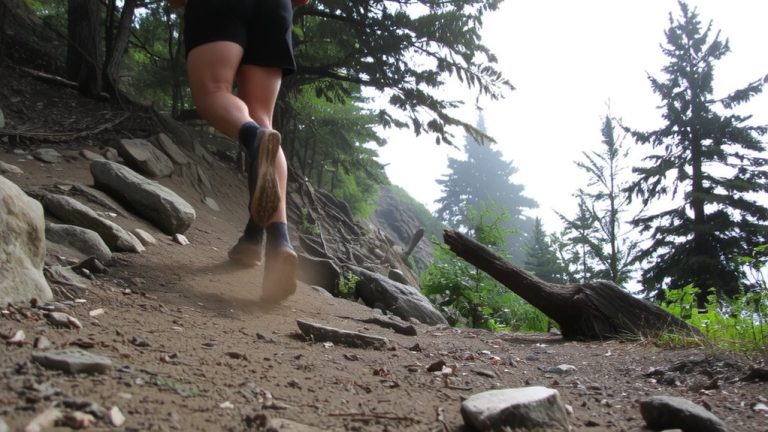
A 6–10% hill isn’t just a incline-it’s your best tool for building explosive acceleration, and you’ll feel the difference from the first stride. Hill sprints on a 6–10% incline slash your top speed by 8–13%, adding natural resistance that boosts horizontal force without extra gear. This gradient reinforces a forward lean and strong knee drive, mirroring the mechanics of flat-ground acceleration. Your glutes, hamstrings, and quads fire harder with each step, sharpening the muscle recruitment you need for powerful starts. Unlike steeper slopes, a 6–10% incline keeps your form crisp while reducing braking forces, so you train quality sprint mechanics under load. Short bursts of 10–20 seconds on this incline target the force-velocity sweet spot for acceleration. Whether you’re using trail runners or track spikes, these hill sprints build real-world power safely and effectively.
Rest 60–90 Seconds Between Reps for Full Recovery
After each burst up that 6–10% incline, where your quads burn and your drive phase feels sharper than on flat ground, how you recover matters just as much as the sprint itself. To maximize power and strength gains, rest 60–90 seconds between hill sprints. This allows near-complete phosphocreatine recovery, so you maintain high force output and sprint quality across all reps. Shorter rests increase metabolic fatigue, slashing velocity and mechanical power. Studies show 90 seconds of passive rest or walk-back recovery preserves neuromuscular performance over 6–8 reps. Elite sprinters may take 2 minutes during resisted work, but 60–90 seconds is enough for hill sprints due to lower overall strain. Skimping below 60 seconds shifts the training effect from neural power development to conditioning, undermining acceleration gains. For real results, time your recovery with a simple stopwatch, stay upright, and walk lightly to reset. Consistent rest means consistent power.
Master Sprint Form: Lean, Drive, and Strike Powerfully
That forward lean you feel on a 6–10% hill isn’t just gravity pulling you in-it’s your secret weapon for mastering acceleration mechanics, locking in a 5° to 10° torso angle that mirrors elite flat-ground sprinters during their first explosive strides. This forward lean boosts drive and alignment, helping you drive your knees higher with explosive hip flexion-up to 15% more than on flat ground. Pair that with a powerful foot strike under your hips, staying stiff and springy to return energy fast. Engage glutes and hamstrings hard on push-off, where muscle activation jumps 20–30%, and keep arms driving decisively from hip to chin.
| Focus Area | Key Action | Performance Gain |
|---|---|---|
| Forward Lean | Maintain 5°–10° angle | Mimics elite acceleration |
| Drive Your Knees | Lift high, flex hips | +15% stride efficiency |
| Powerful Foot Strike | Land midfoot, stiff | Reduces ground contact time |
Progress Weekly: Increase Effort or Incline
You’ve nailed the forward lean, powered through high knee drives, and struck the ground with stiffness and purpose-now it’s time to make those mechanics even stronger by scaling your hill sprint workouts the smart way. To boost power safely, you should progressively increase effort or incline gradient every 7–10 days. Add 1–2% grade or just one rep weekly to progressively overload force without wrecking form. Ideal hill sprints use a 5.2% to 8.8% incline gradient, slowing you just 8–13% to keep acceleration mechanics sharp. Pushing from 30-second sprints at 5% to 10% over weeks mimics resisted sprint training with ~25% velocity loss. Keep each run at ≥90% max speed to maintain neuromuscular specificity. Use load-velocity profiling to track reduced velocity drop per 1% grade, proving real week-to-week gains.
Avoid These Common Hill Sprint Mistakes
While steeper isn’t always better, tackling hills above a 10% gradient without the strength preparation can wreck your sprint mechanics-excessive forward lean creeps in, stride length collapses, and you lose the punchy triple extension at the ankle, knee, and hip that drives acceleration. On the flip side, gradients below 5% won’t overload force production enough to boost horizontal power. Keep your hill sprints sharp by sticking to 6–10% inclines. You also need full recovery between repeats-aim for at least 2 minutes to maintain maximal neuromuscular output. Running too many reps, like over 10–12, or cutting rest short shifts focus from power to endurance, killing sprint quality. Always hit 90–95% effort; going softer dulls fast-twitch recruitment. Prioritize form, power, and recovery between repeats-don’t let fatigue hijack your gains.
On a final note
You’re building explosive power with every stride, so stick to a 6–10% incline and sprint hard for 6–10 seconds, max. Rest 60–90 seconds between reps to fully recharge. Keep your form tight-lean forward, drive those knees, and strike quick. Upgrade weekly by pushing effort or incline. Avoid overstriding or slouching. Wear responsive shoes like the Nike ZoomX Vaporfly for better push-off, and stay fueled with balanced carbs and protein post-workout.