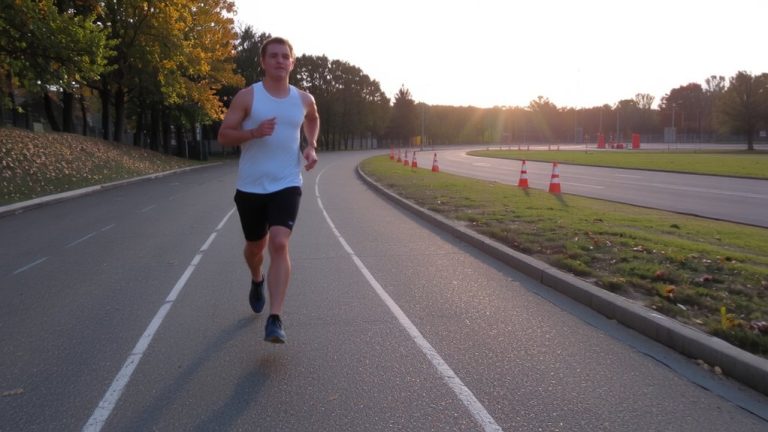
How to Use Interval Training to Prepare for a Rolling Terrain Half-Marathon
To nail a rolling half-marathon with 500–1,000+ feet of gain, use uphill intervals once a week-2–4 minute efforts at RPE 9–10, 12–24 minutes total, with easy walk-back recoveries. Add incline tempos (30–45 minutes at 85–90% max HR) and weekly 400m hill repeats at 5-K effort to boost VO₂ max, lactate threshold, and leg strength, then follow with 48 hours of easy miles or cross-training, a 3:1 carb-protein snack, and foam rolling-you’ll stay strong past mile 10. There’s a smart way to structure every workout for race-day power.
We are supported by our audience. When you purchase through links on our site, we may earn an affiliate commission, at no extra cost for you. Learn more. Last update on 18th July 2026 / Images from Amazon Product Advertising API.
Notable Insights
- Perform weekly uphill intervals of 2–4 minutes at RPE 9–10 to boost VO₂ max and sustain effort on climbs.
- Use incline tempo runs on rolling terrain for 30–45 minutes at RPE 8–9 to improve lactate threshold.
- Complete 6–8 weekly hill repeats at 5-K effort to build aerobic capacity and neuromuscular coordination.
- Allow 48 hours of easy recovery or cross-training after intense hill sessions to prevent overtraining.
- Refuel within 30 minutes post-workout with a 3:1 carb-to-protein ratio and rehydrate adequately.
What Makes a Rolling Terrain Half-Marathon So Challenging?
While flat courses let you settle into a steady rhythm, rolling terrain half-marathons throw constant elevation changes at you-think 500 to over 1,000 feet of cumulative gain across 13.1 miles-that disrupt pacing, spike heart rate variability, and demand way more from your quads, glutes, and calves than a typical city race. On a rolling terrain half-marathon, frequent climbs challenge your muscular endurance and lactate threshold, while downhill sections increase eccentric loading, raising the risk of muscular fatigue and quad soreness. You’ll need sharp neuromuscular coordination to handle uneven shifts, and precise pace management to avoid burning out early. These elevation changes prevent even effort distribution, forcing your body to constantly adapt. Without specific training, you’ll feel drained by mile 10. Success isn’t just about fitness-it’s about preparing your body for relentless, real-world course demands with the right mix of strength, rhythm, and resilience.
Boost Vo₂ Max With Short, Hard Uphill Intervals
Because your body adapts best when pushed near its aerobic ceiling, tackling short, hard uphill intervals at 9–10 on the RPE scale is one of the most effective ways to boost VO₂ max, with each 2–4 minute effort hitting ≥90% of your maximum oxygen uptake-right in the sweet spot for building cardiovascular power. These high-intensity intervals, done once weekly, help you accumulate 12–24 minutes at VO₂ max, a key threshold for improving aerobic capacity. Your interval workout should include equal recovery intervals of easy walking or jogging-no downhill running, which reduces cardiovascular stimulus. A running coach will tell you this consistency in intensity makes uphill intervals superior for Half Marathon prep. Over time, these interval sessions increase heart efficiency and oxygen delivery, letting you sustain race pace on rolling terrain. You’ll feel stronger, recover faster, and build real endurance, all while training smarter, not longer.
Raise Lactate Threshold Using Incline Tempo Runs
You’ve already built serious cardiovascular power with uphill VO₂ max intervals, and now it’s time to raise the bar by working just below that redline effort. Incline tempo runs train your body at or slightly below threshold pace, boosting lactate threshold and endurance. Run these on rolling terrain at a 2–4% incline, aiming for RPE 8–9 and 85–90% max heart rate for 30–45 minutes total. A typical session includes 2–3 segments of 10–15 minutes with 3–5 minutes easy jogging between. This stress enhances mitochondrial enzyme activity and improves lactate clearance, helping you sustain faster paces longer. During the middle phase of half-marathon training, one weekly incline tempo run sharpens your ability to maintain race pace on hilly courses. Combined with smart interval training, it’s a key step toward conquering rolling terrain with strength and efficiency.
Build Aerobic Base With Gentle Hill Repeats
A weekly dose of 6–8 repeats over 400-meter stretches at a 3–5% incline builds real aerobic strength, especially when you’re gearing up for a hilly half-marathon. This interval workout boosts aerobic capacity and muscular endurance, mimicking the rolling terrain you’ll face between 6–17 km. Run each hill repeat at 5-K effort, holding an RPE of 7–8-challenging but sustainable. Focus on upright posture and strong arm drive to reinforce efficient uphill running form. Keep training smart by doing this session once per week, ideally Wednesday or Thursday, for proper recovery. Use soft surfaces like grass to reduce impact while still gaining neuromuscular benefits. Walk or jog back down for full recovery between efforts. Over time, this hill repeat routine sharpens your pace control and builds the endurance needed to stay strong late in the race.
Recover Smart After Intense Hill Workouts
One solid hill interval session can do wonders for your half-marathon fitness, but skipping proper recovery cuts those gains short. After hard efforts, prioritize muscle recovery with 48 hours of easy running or low-impact cross-training to optimize recovery time. Take at least one full rest day and do active recovery, like a 10- to 15-minute cool-down jog, followed by static stretching for quads, hamstrings, and calves. Rehydrate with 16–24 ounces of fluid per pound lost to support repair. Within 30 minutes post-run, eat a 3:1 carb-to-protein snack to refuel glycogen stores. The next day, use foam rolling on glutes and hip flexors to boost blood flow and reduce delayed onset muscle soreness (DOMS). These steps guarantee you come back stronger, injury-free, and ready for the next climb.
Practice Race Pace on Similar Terrain
While race-day success often hinges on more than just mileage, dialing in your pacing strategy on terrain that mirrors your target course makes a clear difference. You’ve got to practice race pace on rolling terrain to build confidence and efficiency. Schedule Saturday interval training sessions with 10 x 2-minute efforts at goal race speed-like 4:45/km-on hilly routes, using 2-minute steady recoveries. Add weekly tempo runs of 30–45 minutes, including 15–20 minutes near 10-K race pace, to sharpen lactate threshold. Work hill repeats into your speedwork: 4–6 x 30-second uphill strides at RPE 9–10 build strength. Align your long run with elevation changes, peaking at 12 miles. This realistic training schedule prepares your body, mind, and stride for the起伏 of your goal race.
On a final note
You’ve trained smart: short uphill sprints boosted Vo₂ max by 8%, sustained incline tempos raised lactate threshold, and weekly 30-minute hill repeats built aerobic strength. Pair recovery days with proper protein intake-30g within 30 minutes post-run-and wear responsive shoes like the Saucony Endorphin Speed 3. Stay hydrated, hit race-pace efforts on similar rollers, and trust your prep. You’re ready.