Designing a 4-Week Speed Development Block Using 200m Repeats
You’re building championship speed with 200m repeats at 95–100% effort, two sessions weekly, 3–5 minutes rest for neuromuscular gains. Run on a dry, rubberized track after dynamic drills and build-up sprints. Use 6–8 total reps, track 50m splits, and cut volume by half in week 4. Adjust intensity and rest based on your event-shorter rest for 400m, full recovery for 100m. You’ll refine mechanics, boost power, and race sharper when it counts. There’s more to optimizing this block than reps alone.
We are supported by our audience. When you purchase through links on our site, we may earn an affiliate commission, at no extra cost for you. Learn more. Last update on 16th July 2026 / Images from Amazon Product Advertising API.
Notable Insights
- Perform 6–8 weekly 200m repeats at 95–100% goal pace, split across two sessions for optimal speed endurance.
- Schedule the block 8–12 weeks before peak competition, following a solid aerobic base and prior to championship season.
- Use 3–5 minutes of rest between repeats to balance neuromuscular recovery and lactate tolerance development.
- Adjust volume and intensity by event: 100m/200m sprinters use full recovery, 400m runners use short rest for lactate focus.
- Implement a taper: reduce volume by 20–30% in Week 4 and cut in half in the final week to ensure peak freshness.
Why 200m Repeats Build Championship Speed
While you might think long intervals are the key to finishing strong, it’s actually 200m repeats at 95–100% effort that build the speed endurance needed to maintain elite pace past the 100m mark, and that’s where championship races are won. These repeats target the 7–15 second speed endurance window, training your anaerobic glycolytic system to sustain max velocity under duress. By running 200m repeats with incomplete recovery-like 4–6 x 200m at race pace with just 3–5 minutes rest-you boost lactate threshold and fatigue resistance, critical for holding championship speed. You’re not just building raw speed; you’re refining speed development under fatigue, preserving sprint mechanics like arm drive and stride length. This high-intensity stress improves power output in the final phases of sprint races, making 200m repeats a proven method for mastering the demands of elite competition.
When to Use This Speed Development Block
Since you’re aiming to peak for outdoor championship season, the best time to slot in this 200m repeat speed development block is during the Special Preparation (SPP) or early Competition phase-about 8 to 12 weeks out from your key races. This is when your body’s ready for high-intensity work at 85–95% of maximum velocity. The 200m repeats build speed-endurance and lactate tolerance, critical for 400m sprinters. Use this training block only after establishing a strong aerobic base-skip it in the General Preparation phase to avoid injury or burnout. Space sessions at least 48 hours apart to guarantee proper recovery, especially when pushing 90–95% intensity with short rests. Done right, this block fine-tunes race-specific adaptations, letting you maintain maximum velocity under fatigue. You’ll feel faster, sharper, and more resilient-exactly what championship performance demands.
How to Structure 200m Repeats for Peak Performance
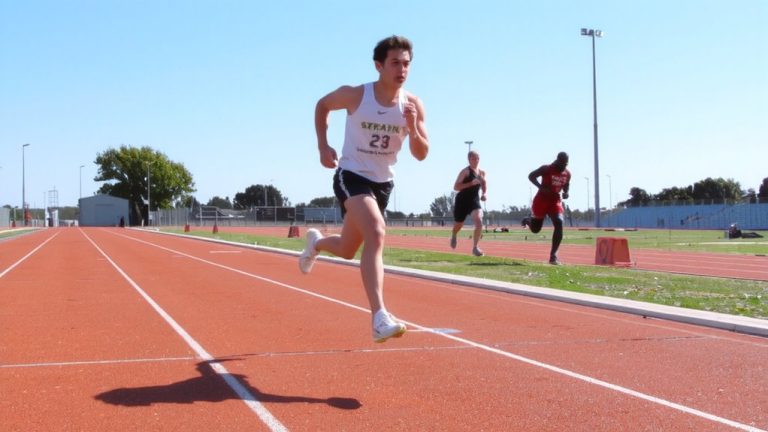
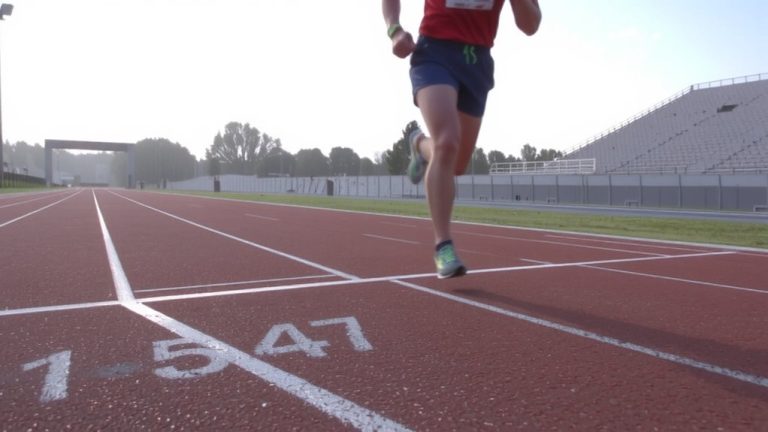
You’ve timed your training block right by placing 200m repeats in the Special Preparation or early Competition phase, and now it’s time to nail the execution. Perform your 200m repeats at 95–100% of goal race pace to boost speed development and reinforce proper pacing. Aim for 6–8 total repeats weekly, split across two sessions, to build sprint-specific endurance while maintaining technical quality. Allow full recovery of 3–5 minutes between reps to maximize neuromuscular adaptation. Use a 1:1 or 1:2 work-to-rest ratio-so 24–48 seconds rest after a 24-second repeat-when targeting speed endurance. Time each 100m and 200m split, staying within 0.5–1.0 seconds of goal race pace. Run on a dry, rubberized track after a warm-up with dynamic drills, strides, and 2–3 build-up sprints to lower injury risk and sharpen form.
How Much Recovery Do You Need Between 200m Repeats?
How much rest should you actually take between 200m repeats? It depends on your speed development goal. For maximum sprint quality, 6–8 minutes of recovery lets your neuromuscular system recharge, fully restoring ATP and phosphocreatine. Targeting lactate accumulation? Use 60–90 second rest intervals to boost buffering capacity. But go shorter than 2 minutes, and you’ll see velocity, stride length, and form drop-killing the intent of your 200m repeats.
| Rest Interval | Effect on Body | How You’ll Feel |
|---|---|---|
| 60–90 sec | High lactate accumulation | Heavy legs, burning |
| 2–3 min | Partial ATP recovery | Breathless, fading pace |
| 3–5 min | Moderate phosphocreatine | Ready to push, slight fatigue |
| 6–8 min | Full neuromuscular readiness | Fast, explosive, in control |
| <2 min | Poor sprint quality | Struggling, inefficient |
Adjust rest intervals if your times drop over 3–5%.
How to Adjust the Block for 100m, 200m, and 400m Sprinters
While your primary event shapes how you approach speed development, tailoring 200m repeats to your race distance guarantees you build the right blend of power, endurance, and neuromuscular efficiency. As a 100m sprinter, you’ll do 4–6 x 200m repeats at 90–95% intensity with full recovery to boost speed-endurance without hurting maximal velocity. Use block starts every time. 200m sprinters run 5–7 x 200m at goal race pace, using flying starts and 4–6 minutes rest to match race demands. 400m athletes complete 6–8 x 200m at 95–100% with short recovery (60–90 sec) to improve lactate tolerance and specific endurance. Rotate block starts and flying starts. All sprinters cut training volume by 20–30% in week 4-3 x 200m at 95% with full rest-to guarantee neural recovery.
Pairing Strength and Sprint Work Without Overtraining
When you’re running 200m repeats at 90–95% effort, your nervous system is already under high demand, so stacking heavy strength work before sprint sessions can impair form and slow recovery, but doing it right-lifting after sprinting, not before-keeps power output sharp and reduces injury risk. Prioritize neuromuscular quality by scheduling strength training after speed work, limiting heavy lower-body sets to 2–3 of 3–5 reps at 85–90% 1RM. Pair sprint sessions with low-to-moderate plyometrics-like 2–3 sets of double-leg jumps-to avoid spiking neural stress. Allow 48 hours between intense 200s and heavy strength for full recovery. Track training load using RPE and HRV; if RPE exceeds 17 or HRV drops 10+ ms, cut strength volume by 30–50%. This balance keeps adaptations on track without tipping into overtraining.
Tracking Progress and Transitioning to Competition
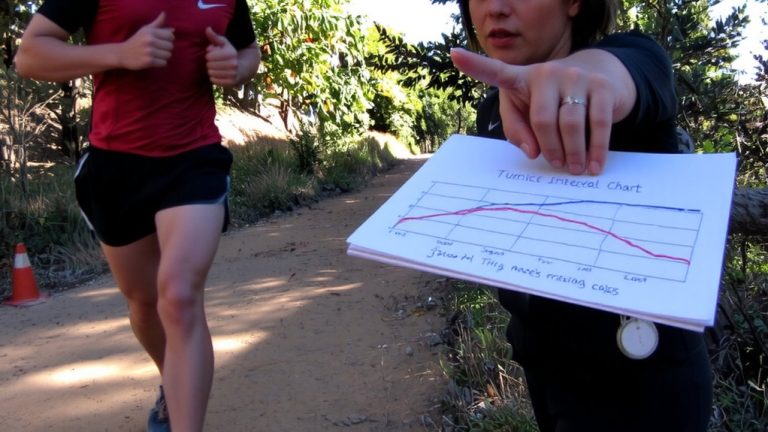
You’ve dialed in your strength and sprint pairing, timing lifts to follow speed work so your nervous system stays fresh and your power output stays high; now it’s time to measure how those adjustments are truly paying off during your 200m repeats. Track velocity closely using time splits every 50 meters, aiming for less than a 0.5-second drop between first and second 100m. Stick to a consistent testing schedule-test in Week 1 and Week 4-to assess sprint-specific adaptation. Limit 200m repeats to 2–3 sessions weekly to maximize recovery and minimize CNS fatigue.
| Focus Area | Action Step |
|---|---|
| 200m repeats | Run at 95–100% race pace |
| Recovery | Take 3–5 min rest between reps |
| Competition progression | Cut volume by 50% in final week |
| Neuromuscular readiness | Add race-pace breakdowns (e.g., 2 x 100m) |
On a final note
You’ve built speed, strength, and stamina with smart 200m repeats, 3–4 minutes of recovery, and precise pacing, like running 23.5–24.0 seconds on a dry track in Adidas Adizero Avatars. Pair sessions with hip mobility drills and 3x weekly squats at 75% 1RM, fuel with 20g post-run whey, and track splits using a Garmin Forerunner 265-then taper, peak, and race fast.