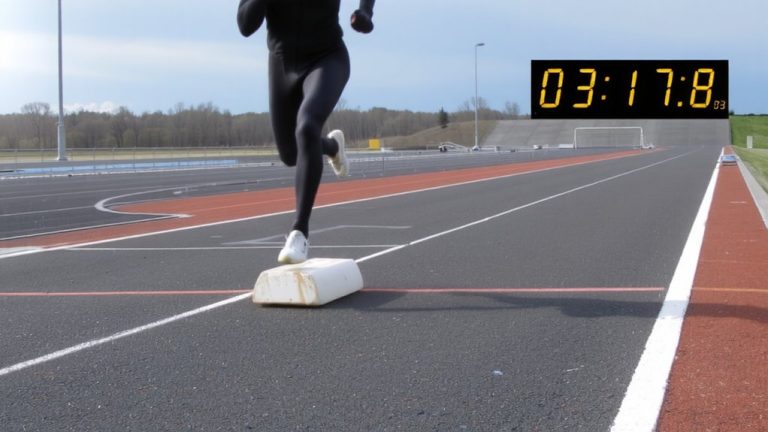
How to Use Interval Training to Break 2:00 in the Half-Marathon
You’ll break 2:00 by using interval training at 5K and 10K pace to boost lactate threshold and running economy. Try 10–12x400m at 5K speed with 90 seconds recovery, or 6–8x1K at 10K effort. Dial in 8:47–9:09/mile with race-pace repeats and weekly tempo runs near Zone 3. Keep 80% of miles easy to recover faster, and use a GPS watch to nail splits within 5–10 seconds. There’s more where that came from.
We are supported by our audience. When you purchase through links on our site, we may earn an affiliate commission, at no extra cost for you. Learn more. Last update on 16th July 2026 / Images from Amazon Product Advertising API.
Notable Insights
- Perform 10–12x400m at 5K pace with 90-second recovery to boost lactate threshold and running economy.
- Complete 6–8x1K repeats at 10K pace with 60–90 seconds rest to build race-specific aerobic endurance.
- Include race-pace intervals of 400m–1600m at 8:47–9:09/mile to condition the body for sustained half-marathon effort.
- Use 1–2 minutes of jogging recovery between intervals to maintain form and ensure consistent, high-quality repeats.
- Pair interval training with 80% easy miles and weekly tempo runs to support recovery and aerobic adaptation.
Why Speed Work Breaks the 2-Hour Barrier
If you’re aiming to break the 2-hour barrier in the half marathon, speed work isn’t just helpful-it’s essential. Interval training at 5K and 10K race pace boosts your lactate threshold, so you sustain 9:00–9:09/mile without burning out. Running 10–12x400m at 5K pace with 90-second recovery sharpens running economy and neuromuscular coordination, helping you hit 180 strides per minute efficiently. Longer intervals like 6–8x1K at 10K pace condition your aerobic system for race-specific endurance. Tempo runs, especially 2×20 minutes near the top of Zone 3, train your body to clear lactate faster, delaying fatigue. Over 12–20 weeks, consistent speed work fine-tunes form, improves stride efficiency, and locks in goal half marathon pace-making sub-2:00 feel not just possible, but manageable.
Run Intervals at 8:47–9:09/Mile for Race-Specific Fitness
You’ve built speed with 5K and 10K pace intervals, and now it’s time to lock in the exact effort needed to break 2 hours-running intervals at 8:47–9:09 per mile sharpens your body’s ability to hold race pace for the full 13.1 miles. As a half-marathon runner training for a sub-2:00 finish, you need race-specific fitness, not just speed. During weekly speed sessions, run 400m to 1600m repeats at this pace to build endurance and neuromuscular efficiency. Try 6–8 x 1K at 9:09/mile with 60–90 seconds rest to simulate race intensity. Use 8:47/mile as a buffer so race day feels controlled. Add race-pace segments into long runs-4–6 miles at 9:00–9:09/mile-so your body adapts to running hard when tired. This training prepares first half marathon runners and veterans alike to sustain pace, mile after long mile, to the finish.
Recover Right So Easy Miles Boost Performance
Why do the fastest half-marathoners log more slow miles than anyone realizes? Because easy miles aren’t lazy-they’re strategic. Done right, they boost aerobic development and make your body a fat-burning, lactate-clearing machine. Keep most runs low-intensity, staying in Zone 2 based on heart rate (about 60–75% max), so you recover fully between hard efforts. Recovery days aren’t wasted days-they’re when adaptation happens. Include light jogging post-intervals for faster lactate clearance. Add 30 minutes of strength work weekly to support consistent running and prevent injury. Skip this, or run easy miles too fast, and you’ll miss the gains needed to sustain 9:00/mile.
| Focus | Benefit |
|---|---|
| Easy miles (80% of weekly mileage) | Aerobic development |
| Zone 2 heart rate | Ideal fat utilization |
| Low-intensity runs | Faster recovery |
| Light jogging post-interval | Lactate clearance |
| Strength work on recovery days | Consistent running |
Simulate Race Day With Tempo and Goal-Pace Runs
Running easy most of the time sets the stage for better recovery and stronger aerobic gains, but if you never practice holding your goal pace when tired, race day can quickly become a grind. That’s where tempo runs and goal-pace intervals come in. Aim for a “comfortably hard” pace-around 8:40–8:50/mile-for tempo runs to boost lactate threshold and stamina on key training runs. During long runs, add 6 miles at 9:00–9:09/mile to condition your body for sustained race pace. Midweek, try a 10-mile run with the final 4 miles at half marathon goal to simulate late-race fatigue. Alternate these with continuous tempo efforts and goal-pace intervals to build endurance and neuromuscular familiarity. A 3K time trial helps calibrate your realistic training pace and sub 2 hour half potential. These drills make your goal pace feel natural on race day.
Don’t Sabotage Progress: Fix These Interval Mistakes
While chasing faster times, it’s easy to push too hard during interval sessions, but going all-out on short repeats like 200m or 400m at maximum effort often backfires, sacrificing aerobic development and undermining race-specific endurance; instead, structure your interval training around race pace efforts-like 10 x 400m at 5K pace-with proper recovery intervals of 1–2 minutes jogging to maintain form and intensity. Skipping warm-up or cool-down increases injury risk and cuts aerobic benefit, so always start with 10–15 minutes of easy jogging plus dynamic drills. Avoid flying out too fast; use a GPS watch to hit even splits within 5–10 seconds per mile. Overdoing short sprints instead of mile or 1K repeats limits gains; balance speed workout volume with tempo runs. Consistency beats hero miles-smart execution fuels breakthroughs.
On a final note
You’ve got this: hit intervals at 8:47–9:09/mile to build race-specific speed, then ease into recovery jogs to boost endurance. Pair tempo runs with goal-pace efforts to simulate race conditions, and wear responsive shoes like Nike Zoom Pegasus 40 for cushioned turnover. Fuel with 30–60g/hour carbs using GU Energy Chews, stay hydrated, and avoid junk-mile traps. Consistency, smart recovery, and precise pacing cut deep into times-breaking 2:00 is within reach.