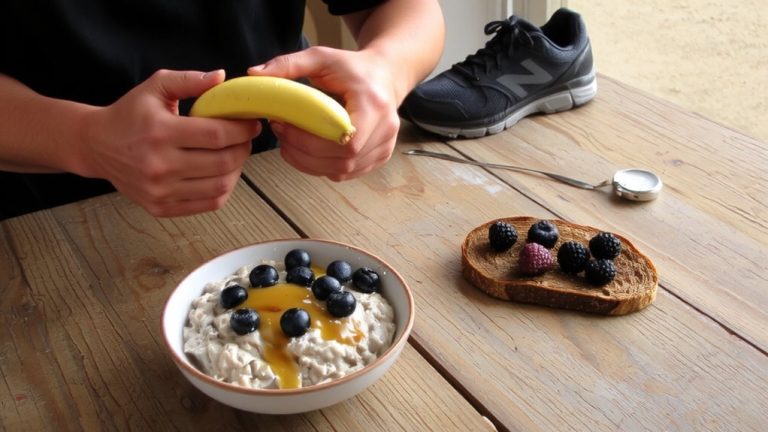
How to Eat Before a Marathon Without Feeling Bloated
Cut back on fiber 48 hours before your marathon-skip raw veggies, whole grains, and apples to reduce bloating. Stick to low-fiber carbs like white rice, pasta, and plain bagels, each under 5g fiber per meal. Carb-load with 10g per kg of body weight over 2–3 days, spreading 700g total across 5–6 small meals. Eat your largest dinner two nights out, finish it 12 hours pre-race, and avoid big meals near bedtime. On race morning, have 50–100g carbs 3 hours early-try oatmeal or toast with a gel 15 minutes before. Sip 500–750ml of a carb-electrolyte drink to stay fueled and light. Avoid high-fat, carbonated, or creamy foods-they’ll slow you down. Your gut will thank you when you start strong, not stuffed. You’re already on the right track-there’s more where that came from.
We are supported by our audience. When you purchase through links on our site, we may earn an affiliate commission, at no extra cost for you. Learn more. Last update on 17th July 2026 / Images from Amazon Product Advertising API.
Notable Insights
- Reduce fiber intake to under 5g per meal in the 48 hours before race day to minimize bloating.
- Start carb-loading 2–3 days pre-race with 10g of carbs per kg of body weight to optimize energy.
- Choose low-fiber, easily digestible carbs like white rice, pasta, and plain bagels to limit gut discomfort.
- Eat smaller, frequent meals every three hours and finish your last large meal at least 12 hours before the start.
- On race morning, consume 50–100g of carbs 2.5–3 hours before start and avoid high-fat, high-fiber, or carbonated foods.
How to Avoid Bloating Before a Marathon: Key Causes and Fixes
While you’re fueling up for race day, cutting back on fiber in the final 48 hours can make a real difference in how bloated you feel at the starting line-so skip raw veggies, whole grains, and high-fiber fruits like broccoli, quinoa, and apples, since they ferment in the gut and increase gas production. To reduce fiber and prevent digestive discomfort, focus on low in fibre options during race week, especially in the days leading up to the event. Eat smaller meals every three hours to ease digestion and support glycogen stores without bloating. Avoid excessive carbohydrate loading the night before; instead, have a light pasta or rice dish early. Limit high-fat foods and large dairy portions-they slow gastric emptying and worsen bloating. Plan your largest pre-race meal two nights prior, giving your body time to settle and store fuel efficiently.
Smart Carb-Loading Tips That Prevent Bloating and Gas
Since your body can only store so much glycogen, starting to carb-load 2–3 days before the race gives you time to top off your fuel tanks without overwhelming your digestive system, and hitting that 10 grams of carbohydrate per kilogram of body weight target-say, 700 grams for a 154-pound runner-spreads more easily across 5–6 smaller meals than a few big ones. Smart Carb Loading means you should spread carbohydrate intake every 2–3 hours using low-fiber, easily digestible choices like white rice, pasta with tomato sauce, or a plain white bagel. These options fuel your muscles without triggering digestive issues. For three days, skip beans, raw veggies, and high-fiber foods that cause gas. Stick to simple carbs that settle well, and hydrate with 2–3 liters of fluid daily, including electrolyte drinks, so your glycogen stores fill smoothly and you stay light on your feet.
What to Eat the Night Before and Morning of Without Bloating
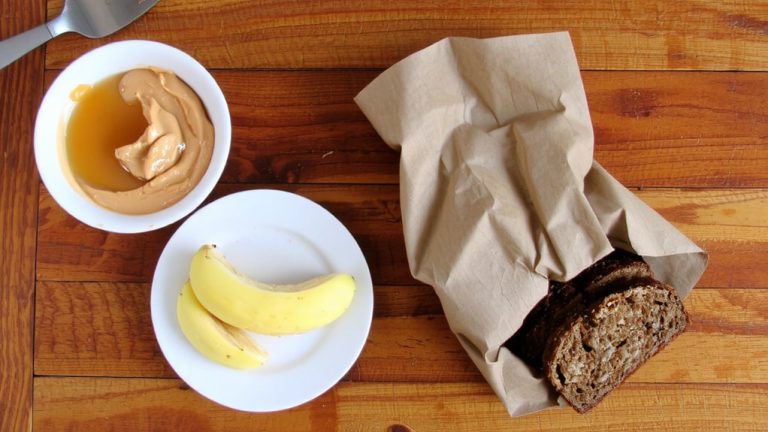
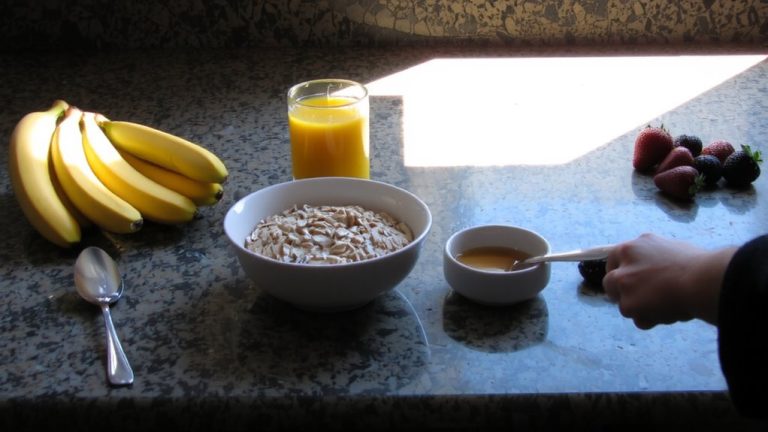
You’ve dialed in your carb-loading over the past few days, spreading out those 10 grams of carbohydrates per kilogram of body weight across meals that settle well-white rice, plain bagels, and low-fiber pasta-so now it’s time to nail the final details. Stick to a low-fat, low-fiber pre-race dinner like white rice with lean chicken or pasta with tomato sauce at least 12 hours before the race; this gives your stomach time to fully digest without bloating. On race day, eat a 50–100 gram carbohydrate breakfast-think oatmeal or toast with nut butter-2.5 to 3 hours pre-start. Sip 500–750ml of a carb-electrolyte drink to stay fueled. Then, 15–30 minutes before the gun, take in a small boost like energy gels or a banana. You’re not chasing carbs per hour now-you’re topping off stores with easily digestible fuel that won’t weigh you down.
Foods and Habits That Cause Bloating: Avoid These
A heavy meal the night before race day can spell trouble, especially when it’s loaded with fiber, fat, or excess volume. You want to avoid high-fiber foods like raw veggies, beans, and berries-keep meals under 5g of fiber in the 48 hours before your marathon to reduce gas and bloating. Skip fried foods or creamy sauces; that fat slows gastric emptying, leaving you feeling sluggish. Don’t overdo large portions of pasta or rice, even though you’re carbo-loading-going beyond 8–10g of carbs per kg of body weight can lead to excess glycogen storage and water retention. Ditch carbonated beverages and chewing gum, too; they pump air into your gut and worsen bloating. Finally, don’t eat big meals within two hours of bedtime-your digestion slows, impairing glycogen synthesis and increasing overnight bloating.
On a final note
You’ve got this: stick to familiar, low-fiber carbs the night before-think white rice, toast, or a Clif Bar-and sip 16–20 oz of water with electrolytes upon waking. Avoid gas-producing foods like beans, broccoli, or carbonated drinks. Eat 2–3 hours before start time, keeping portions small. Test your race-day plan in training, and you’ll feel light, fueled, and ready to hit your target pace without discomfort.