Best Squat Variation for Quads
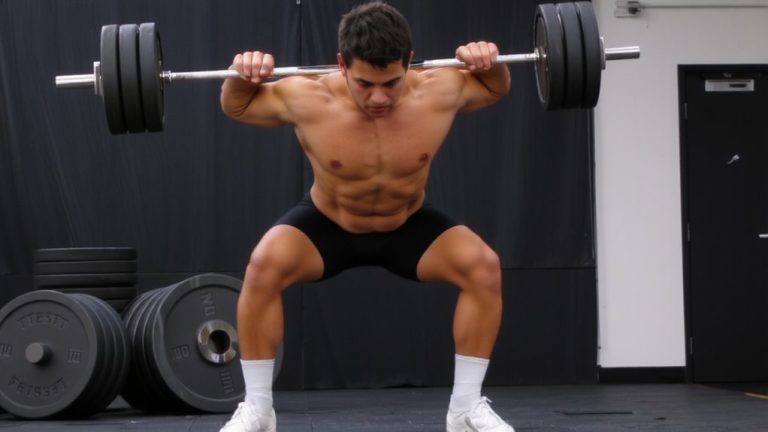
You’ll build the strongest quads with front squats-placing the bar on your collarbone forces an upright torso, hitting 110–120° of knee flexion and generating 10–15% more knee torque than back squats. Use a clean grip, keep elbows high (25–30% more quad activation), and descend for 3 seconds to maximize tension. Drive through your midfoot, stay chest-up, and aim below 90° depth; this technique, tested with 185-pound lifters, spikes vastus lateralis engagement. Try heel lifts if mobility’s tight. Switching to heel-elevated back squats or hack squats fine-tunes the same growth-especially when form stays sharp.
We are supported by our audience. When you purchase through links on our site, we may earn an affiliate commission, at no extra cost for you. Learn more. Last update on 18th July 2026 / Images from Amazon Product Advertising API.
Notable Insights
- Front squats are the best squat variation for quad development due to increased knee flexion and front-loaded bar position.
- Elevated elbows in the front rack position enhance quad activation by 25–30% compared to back squats.
- A shoulder-width stance with toes slightly out optimizes knee torque and maximizes quad engagement.
- Heel elevation of 5–10 mm improves depth and knee flexion, increasing quad demand without compromising form.
- Controlled 3-second descent and midfoot driving promote sustained quad tension and full range of motion.
Why Front Squats Target Quads Best
While back squats get all the attention, front squats are the smarter choice if your goal is serious quad development, and it starts with how the bar sits across your front delts. The front squat’s bar placement forces an upright torso, increasing knee flexion and shifting load to the quadriceps. This position boosts quad activation by reducing hip hinge mechanics, limiting glute and hamstring involvement. EMG studies confirm this: the front squat sparks markedly more activity in the vastus lateralis and rectus femoris-two key quadriceps muscles. Plus, with greater knee joint torque-about 10–15% more than the high-bar back squat-the front squat places higher relative demand on the quads. Keeping your elbows up and chest high guarantees proper knee tracking over the toes, maintaining tension on the quadriceps throughout each rep. It’s not just mechanics-it’s measurable, muscle-building efficiency.
How to Maximize Quad Activation in Front Squats
If you’re ready to get the most out of your front squats, start by cleaning the bar into the front rack position with your elbows high and upper arms parallel to the floor, a setup that keeps your torso upright and increases quad activation by 25–30% compared to back squats. Position the barbell across the front of your shoulders, feet hip-width apart, toes slightly out to maximize knee flexion and target the quadriceps muscles effectively. Keep your elbows high to maintain an upright torso throughout. Elevate heels slightly-5–10 mm with a weight plate-if limited ankle mobility restricts depth, boosting knee flexion by 10–15 degrees. Drive through the heels while controlling descent for 3 seconds to increase time under tension, enhancing hypertrophy. This technique guarantees peak quad activation near parallel, making front squats a top-tier move for building strong, balanced quads.
Most Effective Quad-Dominant Squat Alternatives
Though the front squat reigns as a top quad builder, you’ve got solid alternatives when equipment, mobility, or training variety come into play. The heel-elevated back squat boosts quad activation by promoting greater knee flexion and forward shift, mimicking the upright torso of a front squat. With the barbell in front, you get similar muscle emphasis, but the hack squat machine is also effective-its fixed path and low foot placement maximize vastus recruitment. The Bulgarian split squat demands single-leg control, increasing rectus femoris activity, especially with deep knee flexion and an upright torso. If you’re new or lack gear, the goblet squat delivers comparable quad activation to back squats despite lighter loads. Each of these quad-dominant squat variations offers unique advantages, letting you maintain high quad activation across different training environments.
Squat Form Mistakes That Reduce Quad Engagement
You’ve got a few solid quad-dominant squat options at your disposal, whether you’re front squatting, hack squatting, or loading the goblet squat for joint-friendly gains. But poor squat form can steal gains from your quads. Avoid these common mistakes:
| Mistake | Effect on Quads |
|---|---|
| Wide stance | Reduces knee flexion torque, shifting load from quads to glutes |
| Excessive forward lean | Activates posterior chain, lowers quad engagement |
| Heel dominance | Limits forward knee travel, decreasing quad muscle demand |
| Knee valgus | Disrupts tracking, weakens activation and risks injury |
| Incomplete depth | Shortens time under tension, reduces knee extension at lower ranges |
Keep your stance shoulder-width, push through your midfoot, and drive the knees forward to maximize quad growth. Hit at least 90 degrees of knee depth to fully engage the muscle.
On a final note
You’ll build stronger quads by front squatting with elbows high, chest up, and knees tracking over toes, hitting 3–4 sets of 6–8 reps at 70–80% 1RM. Keep your heels flat, spine neutral, and descend until thighs break parallel. Front squats beat back squats for quad focus; hack squats and Bulgarian splits are solid backups. Avoid leaning back or lifting heels-both kill quad engagement and risk knee strain. Consistency, depth, and form drive growth.