Best Lower Body Compound Exercises
You build serious lower body strength with barbell back squats, hitting quads, glutes, and hamstrings hard under load while bracing your core for spine protection. Romanian deadlifts stretch your hamstrings and glutes under tension, boosting posterior chain growth. Bulgarian split squats fix imbalances and sharpen coordination, each leg working solo. Hip thrusts deliver max glute activation at peak contraction, ideal for hypertrophy. The leg press handles heavy weight with less spinal load, letting foot placement tweak muscle focus-high for glutes, low for quads. You’ll see how each movement fits your goals, mobility, and strength curve.
We are supported by our audience. When you purchase through links on our site, we may earn an affiliate commission, at no extra cost for you. Learn more. Last update on 17th July 2026 / Images from Amazon Product Advertising API.
Notable Insights
- Barbell back squats build maximal lower body strength by targeting quads, glutes, and hamstrings under heavy load.
- Romanian deadlifts maximize posterior chain development with superior hamstring and glute activation via controlled eccentric loading.
- Bulgarian split squats correct imbalances and build unilateral strength, stability, and coordination in each leg.
- Hip thrusts produce the highest gluteus maximus activation, making them ideal for glute hypertrophy and strength.
- Leg presses allow heavy loading with less spinal compression, with foot placement adjusting emphasis between quads and glutes.
Choose the Best Lower Body Compound Exercises
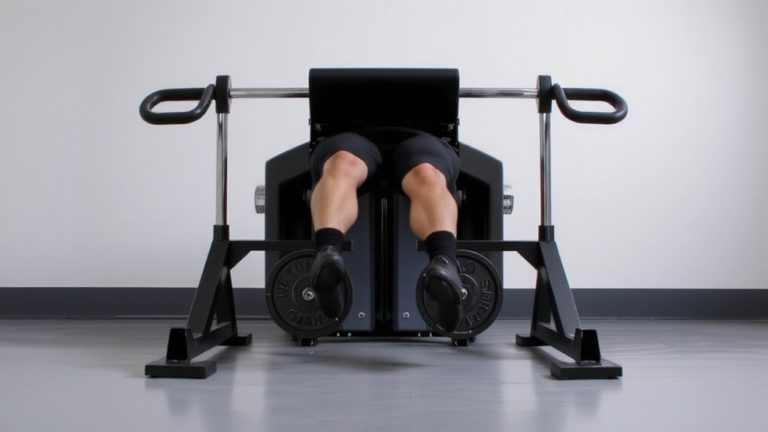
Want stronger, more resilient legs? You need the right compound leg exercises. The barbell back squat builds serious strength by targeting your quadriceps, glutes, and hamstrings under heavy load. For posterior chain development, Romanian deadlifts offer superior hamstring activation and gluteus maximus engagement through a controlled hip hinge. Fix imbalances and boost athleticism with Bulgarian split squats-they hit your quads and glutes hard while improving stability. If you’re after max glute growth, hip thrusts are unbeatable, showing the highest gluteus maximus activation of any move. The leg press? It lets you push big weight with less spine stress, and adjusting your foot position-higher for glutes and hamstrings, lower for quads-gives you full control. These compound leg exercises build real, balanced power.
Build Strength With Barbell Squats
When performed with proper technique, barbell squats pack a serious punch for building lower body strength, hitting your quads-especially the vastus lateralis, vastus medialis, and vastus intermedius-and gluteus maximus harder than almost any other move, making them a staple in strength programs. As a foundational compound movement, the barbell squat helps build strength efficiently by engaging multiple muscles at once. Keep an upright torso to maximize quadriceps activation, or allow a slight forward lean to target the glutes more. Initiate each rep by shifting hips back and bend knees, ensuring full range of motion without losing form. Always focus on bracing your core to protect your spine and boost muscle activation.
| Cue | Muscles Targeted | Benefit |
|---|---|---|
| Upright torso | Quadriceps | Greater quad engagement |
| Hips back and bend | Gluteus maximus | Balanced posterior drive |
| Bracing your core | Entire trunk | Stability under load |
| Full range of motion | Quads, glutes | Max muscle activation |
Power Your Posterior Chain With Deadlifts
Your strongest posterior chain starts with deadlifts, a powerhouse move that fires up your hamstrings-especially the biceps femoris and semimembranosus-and drives serious growth in the gluteus maximus, all while reinforcing functional hip extension under load. Deadlifts demand a flat back, braced core, and bar path close to your body, initiated by pushing the floor away. Barbell deadlifts maximize mechanical tension through heavy loading, making them ideal for strength and muscle gains. Keep the bar over mid-foot and engage your lats for control. If you’ve had back issues, trap bar deadlifts offer a safer alternative, promoting a more upright torso and reducing spinal shear. Both variations build serious posterior chain power when performed with proper form. You’ll notice stronger hip extension, improved posture, and increased athleticism. With consistent practice, deadlifts become a cornerstone of lower body strength, targeting hamstrings and gluteus maximus like few other moves can.
Fix Imbalances With Unilateral Moves
While bilateral lifts build overall strength, they often let weaker legs coast, but unilateral moves like Bulgarian split squats and single-leg Romanian deadlifts force each limb to bear full load, exposing and correcting imbalances that can hinder performance and increase injury risk. These unilateral exercises boost inter-limb coordination and balance neuromuscular demand, ensuring both legs contribute equally. Step-ups provide controlled single-leg propulsion, revealing hidden strength imbalances, while also driving hip extension force without compensation. EMG data shows single-leg Romanian deadlifts deliver up to 95% gluteus maximus activation per side, making them a precision tool for symmetry.
| Exercise | Key Benefit |
|---|---|
| Bulgarian split squats | Corrects strength imbalances |
| Step-ups | Enhances controlled single-leg propulsion |
| Single-leg Romanian deadlifts | Maximizes gluteus maximus activation |
Grow Stronger Glutes and Hammies
You’ll build serious glute and hamstring strength by mastering a few key movements that hit both muscles at their peak stretch and contraction, and the data backs it up. The Romanian deadlift is a hip hinge powerhouse, targeting the hamstrings and glutes through a long muscle stretch and controlled eccentric phase, boosting muscle growth. Barbell hip thrusts uniquely maximize gluteus maximus activation at peak contraction, making them essential for strength and shape. The Glute Ham raise hits the bi-articulate hamstrings via knee flexion and hip extension, preferentially loading the semitendinosus. Try single-leg Romanian deadlifts to amplify unilateral demand, improve balance, and enhance stretch-mediated hypertrophy. Together, these moves deliver balanced development. With consistent volume, you’ll see measurable gains in strength and size-no fancy gear needed, just proper form and progressive overload.
Match Exercises to Your Goals and Mobility
A well-chosen exercise can make all the difference in hitting your lower body goals while working around mobility limits, and the key is matching movement patterns to both your anatomy and objectives. If you want quad growth without spine compression, the leg press lets you lift heavier safely. Got tight shoulders? Try the safety bar squat or front squat with straps to stay upright and still crush your quads. For posterior chain development, Romanian deadlifts stretch your glutes and hamstrings under tension better than conventional deadlifts. Need to fix muscle imbalances? Bulgarian split squats boost single-leg strength and functional strength through greater stability demands. And if your goal is gluteus maximus size, barbell hip thrusts deliver the highest activation measured. Pick the right move, and you’ll train harder, safer, and smarter-no wasted reps, just results.
On a final note
You’re stronger when you pick lifts that match your goals and mobility. Barbell squats build raw power, deadlifts fire up your posterior chain, and unilateral moves fix imbalances fast. For glutes and hammies, try Romanian deadlifts and Bulgarian split squats-they hit hard and improve stability. Most lifters gain strength faster with 3–4 sets of 6–10 reps, using controlled tempos. Warm up thoroughly, prioritize form, and recover with protein and sleep.