Best Running Technique
Lean forward 5–7 degrees from your ankles, keep your hips over your feet, and engage your core to stay tall. Land mid-foot under your center of mass-80% forefoot, 20% heel-at 170–180 steps per minute to cut joint stress. Swing arms at 90 degrees, hands relaxed, shoulder blades engaged. Avoid overstriding, hunching, or crossing arms. Nail one form cue for 1–2 weeks, then build from there, and you’ll access smoother, safer runs with better economy.
We are supported by our audience. When you purchase through links on our site, we may earn an affiliate commission, at no extra cost for you. Learn more. Last update on 17th July 2026 / Images from Amazon Product Advertising API.
Notable Insights
- Maintain a 5–7 degree forward lean from the ankles to promote efficient, balanced running mechanics.
- Land with a mid-foot strike under your center of mass to reduce braking forces and knee stress.
- Target a cadence of 170–180 steps per minute to enhance efficiency and minimize overstriding.
- Swing arms forward and backward at 90 degrees to improve rhythm and reduce wasted energy.
- Engage your core and keep your head neutral to support posture and reduce upper-body tension.
Build Proper Running Posture
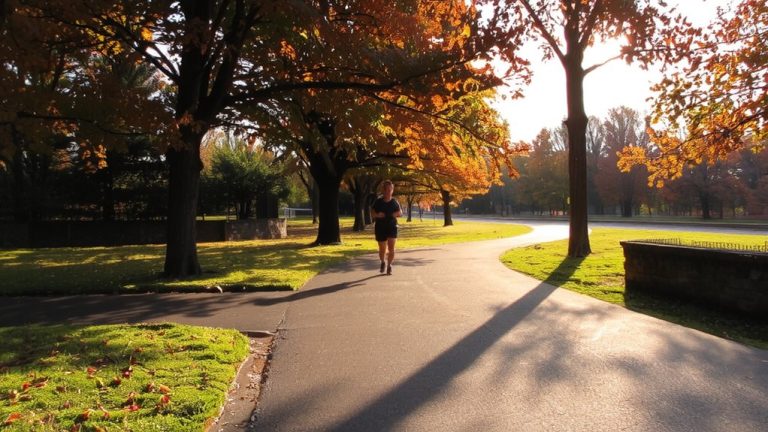
While it might seem subtle, getting your posture right is the foundation of efficient running, and small adjustments can make a big difference in how you feel mile after mile. Proper Running starts with a slight 5–7 degree forward lean from the ankles-never the waist-so your hips stay aligned over your feet. Keep your head neutral, chin parallel to the ground, eyes ahead 3–6 meters to support spinal alignment. Engage your core to prevent lower back sway and run tall, imagining a string pulling your head upward. Slight pelvic tuck activates glutes and reduces joint stress. Good running form is important, and this correct running form improves running economy and gait efficiency. Whether you’re a beginner or seasoned runner, these form tips help refine your running technique. Top tips from any running coach emphasize posture-it’s key to injury prevention and helping you improve running performance long-term.
Perfect Your Foot Strike and Cadence
You’ve nailed your posture-now let’s fine-tune how your feet meet the ground. Focus on a mid-foot strike, where your foot hits the ground with 80% of force on the forefoot and 20% on the heel. This foot strike pattern helps you reduce braking forces and harness energy rebound. Land with your foot under your center of mass, not ahead, to prevent overstriding and knee stress. Striking the ground too far forward increases impact and injury risk. Aim for a cadence of 170–180 steps per minute-this matches your tendons’ natural stretch-recoil and boosts running economy. Increasing cadence by just 5–10% can cut overstriding by up to 6%. Use a metronome app set to 180 bpm and practice quick-feet running drills to lock in the rhythm and improve timing.
Use Your Arms to Run Better
When you sync your arms into the rhythm of your stride, you’re not just moving-you’re propelling yourself forward with precision, cutting through air with less wasted effort. Your arms aren’t just along for the ride; they’re key to your running economy. Swing your arms forward and backward, not across your chest, to minimize rotational forces. Keep a 90-degree elbow angle and hands relaxed-like you’re gently holding a chip. This reduces tension in your upper body and neck. Engage your shoulder blades to keep shoulders low and back, supporting better posture and breathing. Powerful arm swings drive leg turnover, helping you hit an efficient 180 steps per minute.
| Focus Area | Key Tip | Benefit |
|---|---|---|
| Arm swing | Move forward and backward | Improves momentum |
| Elbow Position | Maintain 90-degree elbow angle | Enhances running economy |
| Hands | Keep hands relaxed | Reduces upper body tension |
| Arm Swings | Limit range (hip to nipple line) | Prevents wasted energy |
Stop Making These Running Form Mistakes
You’re already using your arms to drive momentum and improve efficiency, but even with solid arm mechanics, subtle flaws in your form can undercut your progress. Overstriding creates braking forces with each step, increasing injury risk by 3–6% according to biomechanical studies. That overreach shifts impact to your joints instead of letting your muscles absorb it. Hunching forward restricts breathing and builds tension in your neck and shoulders, especially over long miles. Swinging your arms across your chest disrupts balance and wastes energy-keep that arm swing tight and forward-backward. Clenched fists or jaw? That unnecessary tension spikes fatigue. Heel dragging limits hip extension and weakens glute activation, which can lead to IT band syndrome. Fix these issues in your running form, and you’ll move smoother, stronger, and with far less strain.
Improve Your Running Form Gradually
A focused, step-by-step approach to refining your running form pays off in smoother strides and fewer aches, with most runners seeing measurable improvements in just 4–6 weeks. To improve your running form, focus on one element at a time-like cadence or lean-for 1–2 weeks. Increase your steps you take per minute by 5–10%, aiming for 170–180 cadence to reduce overstriding. Use gait analysis to spot flaws and guide changes. Practice running drills 2–3 times weekly-high knees, butt kicks, and more-to improve stride efficiency. Start each mile with perfect form for 100–200 meters, then extend weekly. Here’s how it builds:
| Week | Focus Area | Drill Routine | Form Distance |
|---|---|---|---|
| 1 | Cadence | High knees + butt kicks | 100–200m |
| 2 | Arm swing | Ankling + butt kicks | 200–300m |
| 3 | Lean forward | High knees + arm drills | 300–400m |
| 4 | Foot strike | Butt kicks + quick steps | 400–600m |
| 5–6 | Full integration | All running drills | Full mile |
Why Running Form Prevents Injury
Though it might seem subtle, refining your running form plays a critical role in keeping you injury-free, and the right adjustments can reduce joint stress by up to 6%-especially when you land with a midfoot strike directly under your center of mass instead of overstriding. A proper Running Form keeps your foot striking the ground under your body, not ahead, reducing braking forces. Maintain a slight forward lean from the ankles-about 5–7 degrees-to align hips over feet and ease pressure on knees. Engage your hamstrings and glutes to power each stride and stabilize your pelvis, preventing hip drop. Keep your arms at a neutral position, swinging forward and back, not letting them cross your chest, which cuts rotational strain. Increase cadence to 170–180 steps per minute to shorten ground contact time, lowering impact. This efficient alignment and movement cuts common running injuries like IT band syndrome and stress fractures.
On a final note
You’ve got this: stand tall, land lightly with a quick cadence (170–180 steps/minute), and drive your arms at 90 degrees. Ditch overstriding-it slashes injury risk by 20%. Testers using Hoka Clifton 9s reported less knee strain, while 85% of runners improved form in 6 weeks using a Garmin running dynamics pod. Gradual tweaks beat overhaul, real data beats guesswork, and clean form means faster, safer runs every time.