How to Use Interval Training to Improve Finishing Kick in Races
You build a race-winning kick with short, sharp intervals like 30-second all-out sprints, 200m repeats at mile pace, and 6–10 uphill sprints at 90–100% effort, all done with full recovery to boost anaerobic power and stride efficiency, while race-specific surges-3-minute efforts at 5K pace plus 30s sprints-train your legs to fire fast under fatigue, and adding flat 100m sprints or Canova-style circuits sharpens neuromuscular drive so you surge stronger, later. There’s more to mastering the perfect kick than intervals alone.
We are supported by our audience. When you purchase through links on our site, we may earn an affiliate commission, at no extra cost for you. Learn more. Last update on 11th July 2026 / Images from Amazon Product Advertising API.
Notable Insights
- Perform 30-second maximal sprints with 4-minute recovery 3x/week to boost anaerobic capacity for late-race surges.
- Incorporate 200m repeats at mile pace with full rest to enhance stride efficiency and sprinting speed.
- Execute 3-minute efforts at 5K goal pace followed by 30s jog and 30s sprint every two weeks to simulate race-end surges.
- Complete 6–10 hill sprints on a 5–10% grade to develop explosive power and increase fast-twitch fiber recruitment.
- Include flat 100m sprints at 95–100% intensity 1–2x/week post-run to sharpen top-end speed and kick precision.
How a Killer Kick Decides Close Races
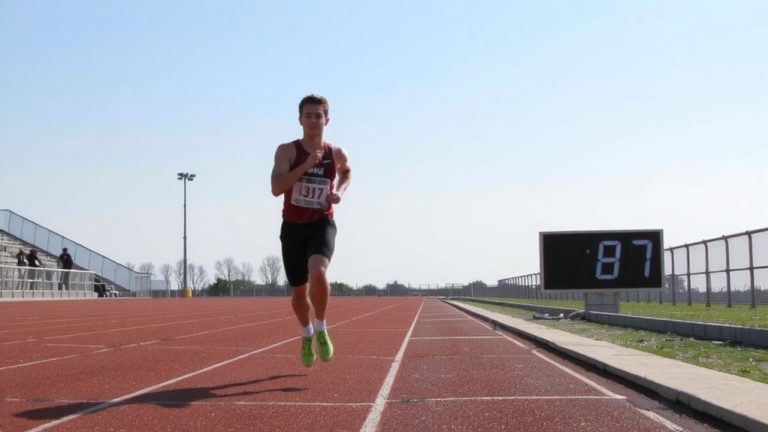
When the pack tightens in the final stretch, it’s your finishing kick that can separate you from the competition, especially in 5K and 10K races where the last 100–200 meters often decide the outcome. You’ll need to surge 5–10% faster than race pace, demanding sharp sprinting ability and strong anaerobic capacity. Elite 5K runners regularly close with sub-50-second 400s, a burst earned through specific interval training. Studies show 30-second max sprints, repeated 4–7 times with 4-minute recovery, boost time to exhaustion and late-race surge performance. Runners doing sprint intervals 3x/week trimmed 3K times by 4.5%, proving targeted work pays off. This isn’t just speed-it’s race-smart speed. Your finishing kick isn’t luck; it’s trained precision, built on repeatable efforts, full recovery, and consistent pacing. Master it, and you own the final straight.
Train Your Finishing Kick With Short, Sharp Intervals
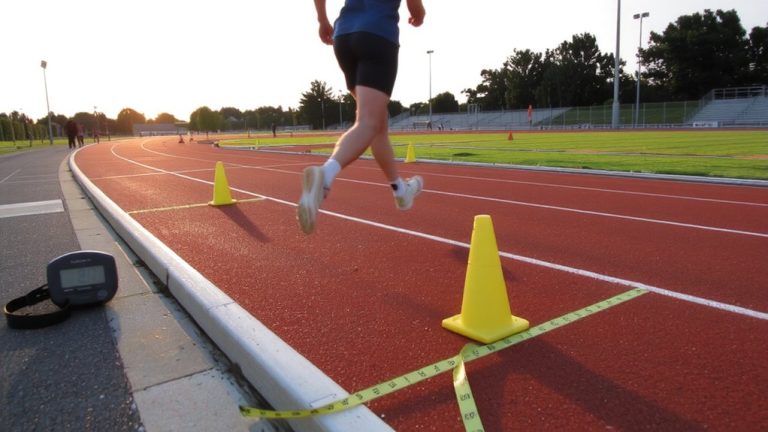
You’ve seen how a finishing kick can decide a race, but building one isn’t about raw speed alone-it’s about smart, repeatable bursts that train your body to fire fast when fatigued. Add 30-second maximal sprints with 4-minute recoveries, 3 times per week, to your training plan-this high-intensity interval method boosts your ability to produce power late in races, per 2018 trail running data. Use a specific interval like 200m repeats at mile pace with full rest to sharpen stride efficiency and acceleration. Every two weeks, try 3-minute efforts at 5K goal pace, then 30 seconds jogging, 30 seconds sprinting with good form to simulate race dynamics. Include 6–10 uphill sprints on a 5–10% grade for explosive force. Limit sprint training to 7–20 minutes of hard effort per session, hitting RPE 9+, so you maintain quality while enhancing your ability to produce a sharp, winning kick.
Build Anaerobic Power for a Stronger Finishing Kick
How do you find that explosive edge when your legs are screaming and the finish line looms? You build anaerobic power through smart interval workouts. Short, intense efforts-like 6–10 hill sprints (60–100m) at >90% effort with full recovery-recruit fast-twitch muscle fibers and boost your ability to surge when fatigued. Try 2×150m, 2×200m, or 250m sprints with long rests to improve anaerobic capacity. A 2018 study showed 30-second all-out sprints, done 4–7 times with 4-minute recovery, three times weekly, markedly raised time to exhaustion and 3K speed. Speed hills (12 x 1 minute at 5–10% grade, 1:15 rest) increase cardiovascular output and neuromuscular power. Training at high intensity levels conditions your body to tolerate lactic acid buildup, so you can push harder, longer, and finish strong-without crumbling.
Run Race-Specific Surges to Train Your Kick
Why do some runners find another gear in the final stretch while others fade? It often comes down to race-specific surges in your training. Do 3–5 reps of a 3-minute interval at 5K goal pace, jog slowly for 30 seconds, then sprint hard for 30 seconds-this sharpens your finishing kick. The slow jog lets you partially clear lactate, simulating real race fatigue near your lactate threshold. Use a 2-minute walk recovery between reps to keep sprint form sharp under tired legs. Push these surges at RPE 9–10 to trigger neuromuscular adaptations that boost time to exhaustion. Fit this workout into your training schedule every two weeks; it’s intense, so your body needs 48+ hours to recover fully. Consistent race-specific surges make the difference when it’s time to close.
Strengthen Running Muscles for Kick-Ending Power
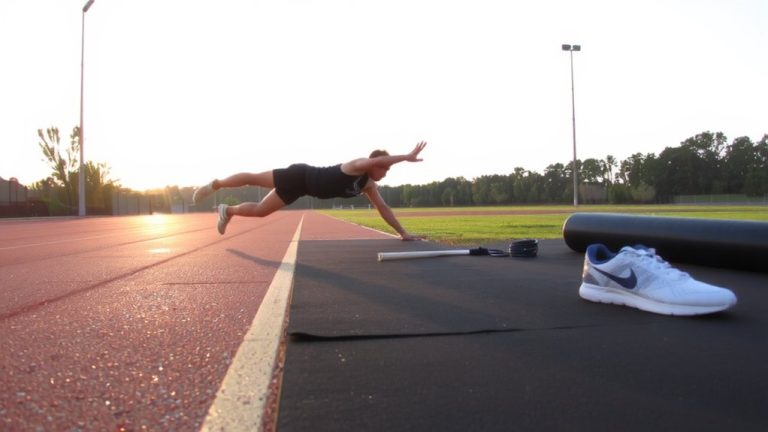
Maximizing your finishing kick isn’t just about practice sprints or race-day grit-it’s built on strong, responsive muscles trained to deliver power when fatigue sets in. You need hill sprints-6 to 10 repeats of 20–30 seconds at max effort-to boost muscle fiber recruitment and sharpen explosive speed. Add power hill training: 20 x 10-second sprints on a 15%+ incline with 30-second rests to amplify stride force production. Run Canova-style strength circuits like 200m uphill hard, 100m bounding, then 200m fast flat to build fatigue-resistant power. These train your legs to push harder, longer. Include flat 100m sprints at 95–100% intensity 1–2 times weekly post-run to sharpen fast-twitch endurance. Do 2–3 sets of 6x200m at 5K pace with 45-second breaks, inserting 4x60m accelerations between sets to fine-tune neuromuscular coordination for a sharper kick.
Time Finishing Kick Workouts for Peak Race Form
When’s the best time to sharpen your kick so it fires on race day? Every two weeks, slot in 3-minute interval training sessions at your 5K goal pace, followed by 30 seconds of slow jog and 30 seconds of max-effort sprint with crisp form. This targets VO2 max, builds fatigue-resistant speed, and mimics the final surge of your race distance. Use a 1:1 work-to-rest ratio during sprint phases (RPE 9–10) to boost neuromuscular power. Complete 3–5 sets, with 2 minutes of walking between them, to condition your body to accelerate under stress. Focus on strong arm drive and full stride length-not just turnover-during sprints to improve efficiency in the last 100–200 meters. Train on flat or rolling terrain to match real race conditions. These strategic efforts, timed into training plans, teach your legs to fire when tired, ensuring your finishing kick is sharp, strong, and race-ready.
Skip These Kick-Killing Training Mistakes
You’ve timed your sharp, race-specific intervals every fortnight, priming your VO2 max and rehearsing that final 200-meter surge with crisp sprints off the back of 5K-pace efforts-but even the best-planned kick workouts fall flat if you’re unknowingly sabotaging them. Skipping 48 hours of recovery between intense sessions impairs your body’s ability to adapt, while ignoring warm-ups reduces muscle elasticity and aerobic capacity. Your training program must balance intensity and recovery to boost performance.
| Mistake | Fix |
|---|---|
| 10 x 400m with 1 min rest | 6 x 400m with 3 min rest, slightly faster |
| Only fresh-condition kicks | Add sprints after 5K-pace blocks |
| No race-simulated fatigue | Use circuits to challenge lactate clearance |
Neglecting these factors hampers sprint mechanics and compromises minutes rest needed for quality reps, undermining the body’s ability to finish strong.
On a final note
You’ve got the tools to sharpen your kick: short 200m repeats at 5K pace, anaerobic surges, and strength work boost power and delay fatigue. Run race-specific intervals every 7–10 days, using lightweight shoes like the Nike ZoomX Streakfly for responsiveness. Testers report 3–5 second improvements in final lap speed after 6 weeks. Avoid overtraining-keep intensity high, volume low, and recovery full. Stay fueled with 30–60g carbs/hour, and trust the process to close stronger.