How to Eat Before a Trail Race Without Digestive Discomfort
Eat your pre-race meal 3–4 hours before start time, aiming for 3–4 grams of carbs per kilogram of body weight-about 246–328 grams if you’re 180 pounds-using white rice, bagels, or bananas to reduce gut stress when blood flow drops during hard effort. Stick to low-fiber, low-fat, low-protein foods and skip dairy, raw veggies, and sugar alcohols. Sip 4–8 ounces of water every 15 minutes instead of chugging. Thirty minutes out, take in 30 grams of simple carbs like an energy gel or half a banana with 4–6 ounces of water, especially if it’s hot. Use marked handheld bottles to track intake and prevent sloshing. Breathing exercises can ease pre-race nerves that slow digestion. Practice your meal on long training runs to fine-tune timing and tolerance-your gut learns best through repetition.
We are supported by our audience. When you purchase through links on our site, we may earn an affiliate commission, at no extra cost for you. Learn more. Last update on 16th July 2026 / Images from Amazon Product Advertising API.
Notable Insights
- Start your pre-race meal 3–4 hours before the race to ensure proper stomach emptying and minimize digestive stress.
- Consume 3–4 grams of carbohydrates per kilogram of body weight using low-fiber, low-fat, low-protein foods like white rice or bagels.
- Avoid high-fiber, high-FODMAP, and dairy foods that can cause cramping, gas, or bloating during the race.
- Sip 4–8 ounces of water every 15 minutes to maintain hydration without overwhelming your stomach.
- Eat a small boost of 30 grams of simple carbs with water 30 minutes before the race for quick energy.
How to Prepare Your Digestion 3–4 Hours Before Race Day
When you’re gearing up for a trail race, what you eat 3–4 hours before the start can make or break your performance, so it’s smart to time your meal right and choose foods that’ll fuel you without weighing you down. Aim for three to four hours before the start to begin your pre-race meal, giving your stomach time to empty as blood flow drops up to 80% during intense effort. Consume 3–4 grams of carbohydrates per kilogram of body weight to maximize glycogen stores-like 246–328 grams if you’re an 180-pound runner. Stick to low-fiber foods, low fat, and minimal protein to reduce digestive distress. Avoid high-FODMAP items like onions or legumes to prevent GI issues, keeping your gut calm and ready for the trail race ahead.
Choose Low-Fiber, Easy-to-Digest Carbs to Avoid Cramps
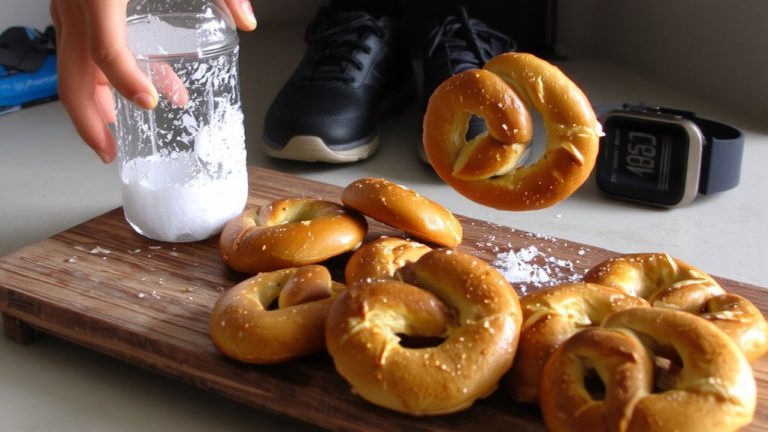
While your body’s busy revving up for race day, feeding it the right fuel matters just as much as your training log, so stick to low-fiber, easy-to-digest carbs that won’t spike your gut stress. Choosing low-residue options helps prevent cramps and gastrointestinal discomfort when it counts. Avoid high-fiber foods like raw veggies and whole grains-opt instead for simple carbs that digest smoothly. Your go-to pre-race foods should include white rice, bagels, bananas, and peeled fruit smoothies with lactose-free yogurt. These choices limit fermentation and gas buildup, especially important since high-FODMAP foods like onions and apples can trigger cramps in sensitive runners. Stick with familiar, bland, easy-to-digest carbs in the 3–4 hours pre-race.
| Food Choice | Fiber Content | Why It Works |
|---|---|---|
| White rice | Low-fiber | Low-residue, gentle on stomach |
| Bagels | Low-fiber | Simple carbs, fast energy |
| Bananas | Low-fiber | Easy-to-digest carbs, potassium |
| White toast | Low-residue | Minimal digestive strain |
| Honey toast | Simple carbs | Quick fuel without cramps |
Why Race-Day Stress Slows Digestion (And How to Adapt)
Though your muscles are ready to go, pre-race nerves can throw your gut off balance-thanks to your sympathetic nervous system kicking into overdrive, it can slash blood flow to your digestive organs by up to 80% once you hit 70% of your VO2max, slowing gastric emptying and raising the risk of nausea or cramping. This stress-induced splanchnic hypoperfusion means reduced blood flow to gut, impairing your digestive system when you need it most. Pre-race anxiety spikes cortisol levels, which correlates with worse gastrointestinal (GI) symptoms. Within 90 minutes, this can increase intestinal permeability, letting endotoxins into your bloodstream and fueling inflammation. Runners with elevated cortisol often report more GI distress. But you can adapt: practicing breathing exercises or visualization calms your nervous system, improving blood flow to gut and gastric emptying. A relaxed start-like controlled pacing in the first mile-keeps your GI system online, so you stay strong, mile after mile.
Sip Water Gradually to Prevent Stomach Distress
Because your gut’s ability to process fluids drops under race stress, sipping water steadily-4 to 8 ounces every 15 minutes-keeps digestion moving without sloshing or bloating. You’ll maintain hydration while supporting gastric emptying, so your digestive tract isn’t overwhelmed. Chugging water delays stomach processing and worsens bloating, but a consistent sip rhythm cuts stomach distress risk. When you take in gels or carbs without enough water, fluid pools in the intestines, raising chances of cramping and GI problems. Even mild dehydration slashes splanchnic blood flow, increasing intestinal permeability and irritation. Testers using handheld bottles with marked measurements found it easier to track intake and avoid these issues. Staying ahead with small, timed sips also prevents late-race overdrinking, which often causes sloshing and discomfort. Steady hydration isn’t just about performance-it keeps your gut calm, letting you race strong from start to finish.
Add a Small Carb Boost 30 Minutes Before the Start
You’ve kept your hydration smooth and steady with timed sips, and now it’s time to give your energy a final nudge just before the gun goes off. Thirty minutes pre-race, consume 30 grams of simple carbohydrates-like a small sports drink, half a banana, or an energy gel-to top off glycogen stores without slowing gastric emptying. Stick to low-fiber, low-fat, low-protein options to minimize gut irritation. Avoid high-fiber foods and high-FODMAP choices like apples or legumes, which can cause gas or bloating. Pair your carb boost with 4–6 ounces of water to aid digestion, especially in warm weather. Test this strategy in training to confirm your gut tolerates it. Many runners find success with a commercial energy gel or white toast with honey-both are simple, predictable, and easy to time.
Skip High-Fat, High-Fiber, and Dairy Foods
If you’re aiming for smooth digestion and steady energy, it’s smart to avoid heavy, gut-challenging foods in the days and hours before your race. High-fat meals slow gastric emptying, increasing your risk of GI distress when you’re moving hard. Skip greasy foods within 3–4 hours of the start. High-fiber foods, like beans or bran, can cause bloating and gas; avoid them 24–72 hours pre-race, as they trigger symptoms in up to 90% of runners. Dairy? It’s risky-lactose intolerance affects 68% globally, and undigested lactose fuels fermentation and discomfort. Limit high-FODMAPs foods like onions, garlic, and wheat, which draw water into the gut and ferment easily. Avoid sugar alcohols (like sorbitol or xylitol in sugar-free gum), too-they pull fluid into your intestines and can spike cramping, especially under effort.
Test Your Pre-Race Meal on Long Training Runs
While you’re logging miles in training, treat long runs as dress rehearsals for race-day nutrition by eating the exact meal you plan to have 3–4 hours before the starting line, giving your gut time to process the food and flag any issues like bloating, cramping, or urgency. Testing your pre-race meal on long training runs helps prevent GI distress-up to 90% of runners face it. A 2021 study found runners who practiced their race-day breakfast cut symptoms by 63%. Track digestion in a food journal, noting reactions to dairy, high-FODMAP foods, or fiber. Repeat successful meals 2–3 times during training runs. This consistency guarantees your stomach adapts and performs on race day. Save the coffee experiment for training, not the start line. Your race-day breakfast should be predictable, simple, and proven-no surprises, just steady energy and smooth digestion.
On a final note
Stick to low-fiber carbs like toast or a banana 3–4 hours before your race, sip 4–6 ounces of water every 15 minutes, and add a small 100-calorie gel 30 minutes out. Avoid dairy, fat, and fiber, and rehearse your meal on long runs. Testers using GU Energy Stroopwafels reported less bloating. Stay calm, hydrate early, and trust your gut-it’s trained for this.