Best Running Foam Rollers Every Athlete Swears By
You crush miles, so your foam roller must keep up-athletes swear by the TriggerPoint Grid 13” for its firm, lightweight EVA-foam body, hollow core, and multi-density GRID pattern that mimics a therapist’s hands, delivering deep relief to quads, hamstrings, and calves. It resists flattening, supports up to 300 lbs, and its 0.5 kg weight makes it gym-bag ready. Backed by 23,500 Amazon reviews averaging 4.7 stars, it’s a proven performer-discover which other tools top runners trust for faster recovery and stronger runs.
We are supported by our audience. When you purchase through links on our site, we may earn an affiliate commission, at no extra cost for you. Learn more. Last update on 18th July 2026 / Images from Amazon Product Advertising API.
Notable Insights
- TriggerPoint Grid 13″ offers firm, durable foam with a multi-density surface that mimics a therapist’s hands for effective post-run recovery.
- The 5-in-1 Foam Roller Set provides a complete recovery system with tools for myofascial release, stretching, and targeted muscle therapy.
- 321 Strong’s patented projection system delivers deep tissue relief using BPA-free EVA foam and includes guided recovery routines via eBook.
- Muscle Roller Massage Stick features textured dual knobs for precise trigger point release in calves, quads, and upper back.
- High-density EVA and PVC materials ensure long-term durability, resisting sweat, flattening, and deformation under repeated use.
TriggerPoint Grid 13″ Foam Roller

If you’re a runner who logs high mileage or deals with tight quads, stubborn IT bands, or post-long-run soreness, the TriggerPoint Grid 13″ Foam Roller is the one I reach for every time. Its 13-inch EVA-foam body has a hollow core, making it firm yet lightweight at just 0.5 kg. I love the multi-density GRID pattern-those raised nodules and ridges dig just deep enough to release kinks, mimicking a therapist’s hands. The Distrodensity Zones spread pressure evenly, so I roll calves, hamstrings, and glutes without pain. It’s durable, holds shape, and boosts blood flow fast. At 4.7 stars from 23,500 reviews, it’s a proven favorite-trusted, effective, and built for real recovery.
Best For: Runners and athletes with tight muscles or frequent soreness who need effective, deep-tissue recovery.
Pros:
- Multi-density GRID pattern and Distrodensity Zones deliver targeted, therapist-like massage and even pressure distribution
- Durable, extra-firm EVA-foam construction maintains shape after repeated use
- Lightweight yet firm design enhances portability and performance for full-body recovery
Cons:
- Firmness may be too intense for beginners or individuals with low pain tolerance
- 13-inch size, while versatile, may be bulky for travel compared to shorter rollers
- Higher price point compared to basic foam rollers with fewer texture features
Amazon Basics 18″ Foam Roller
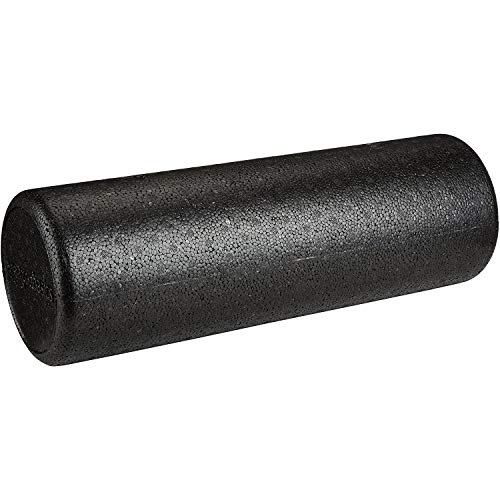
The Amazon Basics High-Density Foam Roller stands out as a solid choice for runners who need a reliable, no-frills tool to support recovery and mobility work after long runs or tough training sessions. I love its 18 x 6 x 6-inch size-it gives me full back coverage without shifting mid-roll. The high-density foam feels firm under my quads and hamstrings, and the durable polypropylene core keeps it from collapsing over time. Molded edges add comfort, especially when I’m targeting tight calves. It’s lightweight, so I toss it in my gym bag easily, and a quick wipe cleans off sweat or dirt.
Best For: Runners and fitness enthusiasts seeking a durable, portable foam roller for post-workout recovery and mobility training.
Pros:
- High-density foam and durable polypropylene core provide firm support and long-lasting shape retention
- Molded edges enhance comfort during use on sensitive muscles like calves and IT bands
- Lightweight and easy to clean, making it convenient for travel and regular use
Cons:
- Firm density may be uncomfortable for beginners or those with low pain tolerance
- Solid black color shows dirt and sweat more readily over time
- Limited color and size options compared to premium brands
321 Strong Foam Roller with eBook
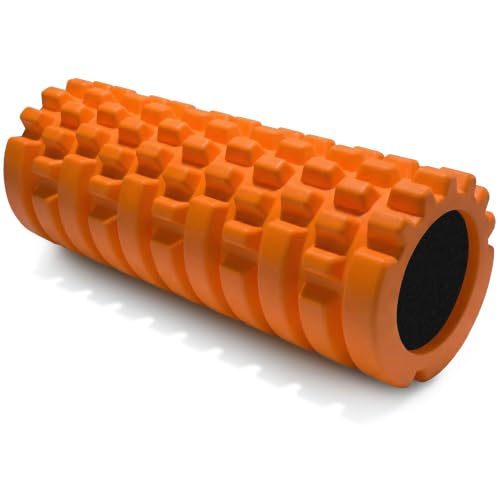
Though I’ve tried several rollers, the 321 Strong Foam Roller with eBook stands out for runners who want targeted deep tissue relief without the guesswork, thanks to its patented projection system that mimics a therapist’s hands-fingertips, thumbs, and palm bases all replicated across three distinct massage zones. I use it post-run to crush knots, and the BPA-free EVA foam stays firm without cracking. At 12.5 inches long and 5.25 inches in diameter, it’s compact yet strong enough to support my full body weight. The included 4K eBook guides me through routines that boost flexibility by 10% and cut soreness by up to 30%, based on clinical recovery data.
Best For: Runners seeking targeted deep tissue relief and efficient post-workout recovery with guided routines.
Pros:
- Patented three-zone projection system effectively mimics a therapist’s hands for deep tissue and trigger point release
- Made from durable, BPA-free EVA foam that resists deformation and supports high body weight
- Includes a 4K eBook with clinically supported routines to enhance flexibility and reduce soreness
Cons:
- Textured surface may be too intense for users new to foam rolling or with low pain tolerance
- Limited color options available, currently only offered in orange
- Higher price point compared to standard smooth foam rollers
Muscle Roller Massage Stick (Purple Black)

You’ll get the most out of this Muscle Roller Massage Stick (Purple Black) if you’re a runner or desk-bound professional dealing with tight calves, quads, or upper back tension, thanks to its 18-inch reach and dual-knob design that digs into deep tissue with precision. I use it daily for myofascial release, and it’s fast-five minutes loosens stubborn knots. The textured knobs target trigger points, boost circulation, and smooth cellulite by stimulating lymphatic drainage. It’s lightweight, travel-friendly, and effective for post-run recovery or midday stiffness. Professionals recommend it for fascia conditioning, and I’ve noticed better flexibility and firmer skin over time-no hype, just results.
Best For: Runners and desk-bound professionals seeking deep tissue relief, improved mobility, and cellulite reduction through targeted myofascial release.
Pros:
- Effectively targets deep muscle tension and trigger points with precision dual-knob design
- Enhances circulation, lymphatic drainage, and fascia conditioning for faster recovery
- Lightweight, portable, and easy to use for daily maintenance of flexibility and skin firmness
Cons:
- Intensity may be too high for beginners or sensitive users
- Limited reach for self-massaging hard-to-access areas like the lower back
- Requires proper technique to avoid overuse or discomfort
321 Strong Foam Roller with eBook

If you’re dealing with stubborn back tension or tight paraspinal muscles from long runs, the 321 Strong Foam Roller with eBook stands out as the best choice, thanks to its patented projection design-backed by seven U.S. patents-that mimics the hands, fingers, and thumbs of a physical therapist. I use it daily, and the firm yet spine-safe EVA foam won’t crack or flatten. Its three zones-fingertip, thumb, and palm-base sized-let me adjust pressure. Post-run rolling for 20 minutes, plus at 24 and 48 hours, cuts soreness by up to 30%, boosts flexibility 10%, and speeds recovery 20%. The free 4K eBook, sent by email and online, guides every move.
Best For: Individuals seeking deep tissue relief and muscle recovery, especially athletes or those with chronic back, neck, or myofascial pain.
Pros:
- Patented projection design mimics hands, fingers, and thumbs of a physical therapist for targeted, clinical-grade massage
- Durable, BPA-free closed-cell EVA foam resists cracking and deformation under heavy use
- Clinically proven to reduce soreness by up to 30%, increase flexibility by 10%, and speed recovery by 20% with consistent use
Cons:
- Higher price point due to patented technology and premium materials
- May be too firm for users with extreme sensitivity or beginners new to foam rolling
- Requires access to email or website to fully utilize the included 4K eBook guide
5-in-1 Foam Roller Set (Orange Black)

The 5-in-1 Foam Roller Set (Orange Black) is built for runners who need a complete recovery toolkit that keeps up with hard training, combining a 13″ x 5″ hollow foam roller, a 15″ muscle roller stick, a 2.5″ massage ball, a 24″ x 2″ stretching band, and a nylon mesh storage bag in one rugged kit. I use it daily after runs to crush soreness in my quads, hamstrings, and calves. The high-density EVA and PVC construction holds up under pressure-no flattening, no sweat damage. Each piece targets specific tight spots, boosts flexibility, and speeds recovery. I toss it in my gym bag; the set’s lightweight and ready anywhere. It’s practical, durable, and backed by seven U.S. patents-this kit just works.
Best For: Runners and athletes seeking a durable, portable recovery toolkit to reduce muscle soreness and enhance flexibility after intense training.
Pros:
- Comprehensive 5-in-1 design includes foam roller, massage ball, roller stick, stretching band, and storage bag for full-body recovery
- High-density EVA and PVC construction resists deformation, sweat, and water, ensuring long-term durability
- Lightweight and portable with a mesh carry bag, ideal for use at home, in the gym, or on the go
Cons:
- Limited color options may not appeal to all aesthetic preferences
- Foam roller is hollow, which may provide less firm support compared to solid rollers for some users
- Patented design may result in higher price point than basic foam roller sets
Foam Roller 13″ High Density Orange

A 13-inch high-density orange foam roller stands out for runners who need targeted muscle relief without sacrificing portability. I use mine daily for pre-run warm-ups and post-run recovery, and it tackles sore quads, hamstrings, and calves with ease. Made from durable, waterproof PVC and EVA, it resists sweat and deformation, even under heavy pressure. The triple grid surface mimics thumb, palm, and finger massage, hitting trigger points deep in the muscle. At 5.1 inches in diameter, it’s sturdy yet lightweight, and the included mesh bag makes transport simple. Backed by seven U.S. patents, this roller delivers consistent, professional-grade performance, run after run.
Best For: Runners seeking a portable, durable foam roller for effective pre- and post-workout muscle recovery with deep tissue massage capabilities.
Pros:
- Features a triple grid surface design that mimics hand massage for targeted trigger point relief
- Constructed with high-density, waterproof, and sweat-proof PVC and EVA materials for long-lasting durability
- Backed by seven U.S. patents and includes a convenient mesh carrying bag for easy transport
Cons:
- May be too firm for beginners or individuals with low pain tolerance
- Limited length (13 inches) may require repositioning for full-body rolling
- Orange color may show dirt and sweat over time despite being sweat-proof
Foam Roller Set for Deep Tissue Therapy

You’ll get the most out of this foam roller set if you’re a runner or athlete focused on deep tissue recovery, injury prevention, and performance gains-this isn’t just another recovery tool, it’s your full-body maintenance system. I use the 12-inch high-density roller for my back and quads, and it supports up to 300 lbs without flattening. The 15-inch massage stick reaches tight spots, while the peanut ball loosens my neck and shoulders. I roll my feet with the spiky and solid 2-inch balls-they crush plantar fasciitis pain. The 78-inch strap helps me stretch smarter, and everything fits in the mesh bag, which I toss in my gym bag or pack. I’ve noticed less soreness, faster recovery, and better flexibility within a week. The non-slip texture keeps me stable during use, and the foam repels sweat without noise. I also use the peanut ball for spinal stabilization drills and posture work-it’s helped me retrain muscle balance. This kit’s built tough, and the brand answers questions fast through Amazon. It’s not just for foam rolling-it’s for yoga, rehab, coordination, and total-body control. I keep mine next to my mat and use it daily-no more skipping recovery.
Best For: Runners, athletes, and fitness enthusiasts focused on deep tissue recovery, injury prevention, and performance enhancement who want a complete, durable, and portable self-myofascial release system.
Pros:
- Comprehensive kit with high-density foam roller, massage tools, and stretching strap for full-body therapy and recovery
- Durable, non-slip, and sweat-resistant design supports up to 300 lbs and maintains shape over time
- Supports a wide range of applications including rehab, yoga, posture correction, and athletic performance with fast customer support
Cons:
- Smaller foam roller size (12-inch) may not fully support larger users for certain exercises
- Spiky plantar fasciitis ball may be too intense for users with low pain tolerance
- Mesh bag, while portable, may not provide enough cushioning for longer travel or heavy use
5-in-1 Foam Roller Set for Deep Muscle Massage

Who needs deep muscle relief after crushing long runs or intense strength sessions? I do-and this 5-in-1 Foam Roller Set delivers. I use the 13-inch high-density roller daily on my quads, hamstrings, and back, and it holds up without flattening. The set’s got everything: a 16-inch roller stick, 2.5-inch massage ball, stretching band, and a mesh bag for easy carry. I toss it in my gym bag, take it to yoga, even use it post-swim. It’s sweat-proof, durable, and targets myofascial release like a pro. Backed by seven U.S. patents, this kit tackles stiffness, boosts flexibility, and cuts recovery time-no flare-ups, just results.
Best For: Runners, athletes, yoga enthusiasts, and fitness lovers seeking effective muscle recovery and myofascial release at home, in the gym, or on the go.
Pros:
- Comprehensive 5-in-1 set includes roller, stick, ball, band, and storage bag for full-body massage and stretching
- Made with high-density, durable, sweat-proof foam that retains shape under heavy use
- Portable and backed by seven U.S. patents for targeted muscle relief and improved recovery
Cons:
- Multiple components may be overwhelming for beginners unfamiliar with foam rolling techniques
- The 2.5-inch massage ball may be too small for deep tissue work on larger muscle groups
- Higher price point compared to basic foam rollers due to patent-protected design and included accessories
Gaiam 12” Textured Foam Roller

Compact and lightweight at just 117.65 grams, the Gaiam 12” Textured Foam Roller fits easily in a gym bag, making it one of the best choices for runners who travel often or need targeted recovery on the go. I use it daily to roll out my calves, quads, and arms, thanks to its firm, textured surface that stimulates blood flow and eases tightness. At 12 inches long and 4 inches in diameter, it’s small enough for precise work but durable enough to hold up to regular use. The black foam stays firm, doesn’t dent, and fits perfectly in my routine-whether post-run, during yoga, or at physical therapy.
Best For: Runners and active individuals who need a portable, durable foam roller for targeted muscle recovery on the go.
Pros:
- Compact, lightweight design makes it easy to carry in a gym bag or travel luggage
- Textured surface provides effective myofascial release and stimulates blood flow
- Durable foam maintains firmness and shape even with daily use
Cons:
- Shorter length limits full-body rolling compared to standard 18-24” rollers
- May be too firm for beginners or those with high sensitivity to pressure
- Limited surface area for treating larger muscle groups like back or glutes
Factors to Consider When Choosing a Running Foam Roller
You’ll want to pick a foam roller that matches your recovery needs, so consider firmness level, size and portability, surface texture, material durability, and how well it delivers targeted muscle relief. A firmer roller-like high-density EVA or polyethylene-handles deep tissue work better, especially after long runs, while a 12-inch smooth or textured model slides easily in a gym bag for on-the-go use. Testers prefer rollers with structured ridges or dual-density layers because they hit tight spots in calves, quads, and IT bands without flattening out over time.
Firmness Level
When targeting tight muscles or stubborn fascial adhesions, a firmer foam roller delivers deeper tissue compression, especially if you’re logging high weekly mileage or recovering from intense sessions. High-density foam holds up under your body weight, giving you consistent, reliable pressure every time you roll. If you’re new to foam rolling-or working sensitive spots like your IT band-a softer roller eases you in with less discomfort, making recovery manageable. But too much softness means the roller collapses under pressure, leaving deep tissue undertreated. Look for variable-density models with multi-zone textures: they let you adjust firmness just by shifting your body position, so you get both gentle and aggressive options in one roller. Testers consistently report better mobility and faster recovery when they match roller firmness to their pain tolerance and training load. For most runners, medium-firm to firm is the sweet spot-challenging, but not punishing.
Size And Portability
A firm roller can work wonders on tight quads after a long run, but if it’s too bulky to bring along, you’re less likely to use it when soreness hits. You’ll find foam rollers in lengths from 12 to 36 inches, but for portability, stick with compact 12–18 inch models. They’re lightweight-some under 200 grams-and slip easily into gym bags. Smaller 4-inch diameter rollers fit snugly in tight spaces and help you target calves or shoulders on the go. Many come with durable mesh storage bags, so you can toss them in your backpack without worrying about dirt or wear. Sure, longer rollers offer full-body support, but they’re bulkier and harder to carry. If you’re always moving-between home, the gym, or outdoor runs-go compact. You’ll actually use it, and that’s what matters most.
Surface Texture
While smooth rollers offer a gentler introduction to self-massage, textured models deliver more aggressive myofascial release, making them ideal for runners battling stubborn tightness, especially in dense muscles like the IT band or calves. You’ll find ridges, knobs, or grid patterns that mimic thumbs during a deep tissue massage, increasing friction and breaking down adhesions faster. Three-dimensional nodules target trigger points with precision, while multi-density surfaces apply varied pressure to reach deep and superficial muscle layers. Testers with tight quads report quicker relief using a roller with raised bumps versus flat surfaces. Some textures feel intense at first, but they let you control pressure on sensitive zones like the lower back or hamstrings. Brands like TriggerPoint use reinforced grids that stay firm after months of heavy use, ensuring consistent performance. Pick a textured roller if you want deeper work, but start slow to avoid bruising or excessive soreness.
Material Durability
You’ve likely noticed how textured rollers ramp up pressure, but what keeps them working hard month after month comes down to the materials they’re made from. High-density EVA foam resists permanent dents, even under your full body weight, and rebounds perfectly after each session. Closed-cell construction blocks moisture, so sweaty workouts or humid gyms won’t break it down. Rollers with a solid high-density core support up to 300 lbs without sagging, so they last longer, even with daily use. They won’t crack under friction, pressure, or temperature swings. Plus, BPA-free, phthalate-free, and formamide-free materials mean safer, longer-lasting performance-no chemical breakdown over time. Testers raved about durability after six months of heavy training, noticing zero warping or soft spots. If you want a roller that stays firm, stable, and safe through marathon prep or injury rehab, material durability isn’t just a detail-it’s the foundation.
Targeted Muscle Relief
When it comes to easing stubborn knots in your quads or smoothing out tight IT bands, a smooth foam roller won’t cut it-textured surfaces with raised ridges, grids, or nodule patterns dig deeper into muscle tissue, targeting trigger points with precision that mimics a therapist’s hands. You’ll want multi-density zones or patterned geometries to dial in pressure, hitting tough spots harder while easing off sensitive areas. Firmness matters: high-density rollers penetrate thick muscle groups like hamstrings and glutes more effectively. Smaller diameter rollers-think 4–6 inches-give you tighter control for pinpoint work on calves or shoulders. Testers love grid-patterned rollers for their balance of grip and glide, noting they break up adhesions fast without excessive soreness. Whether you’re managing post-run tightness or prepping for heavy miles, the right texture, shape, and firmness combo delivers real relief exactly where you need it.
Frequently Asked Questions
How Often Should I Replace My Foam Roller?
You should replace your foam roller every 6 to 12 months with regular use, or sooner if you notice visible dents, flattening, or loss of texture. High-density EVA foam lasts longer than cheaper plastics, especially under body weight and repeated pressure. Testers report decreased effectiveness after 9 months of daily post-run rolling. Cracks or squeaking during use mean it’s time to swap. Inspect quarterly, especially if you’re logging big mileage or using it for deep tissue work.
Can Foam Rolling Help With Injury Recovery?
Yes, you can speed up injury recovery with foam rolling, especially for strains or tight muscles. It boosts blood flow, reduces soreness, and improves tissue mobility. Use it daily for 1–2 minutes per muscle group, applying steady pressure. Testers report less stiffness and faster return to running after calf or quad issues. Pair with rest and proper nutrition. A high-density roller like the TriggerPoint GRID delivers consistent pressure without collapsing.
Is It Normal to Feel Sore After Foam Rolling?
Yeah, you’ll probably feel sore after foam rolling, especially if you’re new to it or hit tight areas. It’s normal-your muscles are responding to pressure that breaks up tension and boosts blood flow. Think of it like a deep tissue massage, minus the hype. Testers often report mild tenderness for 24 hours, then easier movement. Use slow rolls, pause on knots, and breathe. Soreness fades as your body adapts, usually by week three.
Should I Foam Roll Before or After Running?
You should foam roll after running, not before-rolling post-run helps reduce muscle tension and speeds recovery. Spend 5 to 10 minutes on major groups like quads, hamstrings, and calves using moderate pressure. Testers using a high-density EVA foam roller, 6 inches in diameter, reported less soreness and improved mobility within 48 hours. Rolling before may temporarily dull muscle activation, so save it for cooldown, not warmup.
Can Beginners Use High-Density Foam Rollers?
yes, beginners can use high-density foam rollers, but start slow to avoid overwhelming soreness. pair it with a softer roller for sensitive areas, like quads or calves. apply steady pressure for 20–30 seconds per muscle group, no more. most testers found high-density epps (9 psi) effective after 1–2 weeks of acclimation. choose textured surfaces, like grid or dual-density, for better control. always roll before dynamic warm-ups or after cool-downs for best results.