Best Road Bike Deals That Deliver Speed and Savings
You get speed and savings with lightweight carbon bikes like the SAVADECK, tipping the scales at 8.8 kg, featuring a T800 frame, internal cable routing, and a 2×12 Shimano R7120 drivetrain for crisp shifts, while the KOOTU with Shimano 105 offers 22-speed precision and mechanical disc reliability; both deliver responsive handling, efficient power transfer, and smooth rolling 700c wheels, ideal for climbing and sprinting. There’s more to uncover about matching specs to your ride goals.
We are supported by our audience. When you purchase through links on our site, we may earn an affiliate commission, at no extra cost for you. Learn more. Last update on 18th July 2026 / Images from Amazon Product Advertising API.
Notable Insights
- SAVADECK Carbon Fiber Road Bike offers 2×12-speed Shimano R7120 and full carbon build for 8.8 kg weight, delivering high speed and long-term value.
- KOOTU Carbon Road Bike with Shimano 105 provides 22-speed precision shifting and full carbon frame at a competitive price for performance riders.
- HILAND 700C Road Bike features a 14-speed drivetrain and lightweight aluminum frame, ideal for speed-focused riders on a budget.
- Hydraulic disc brakes on SAVADECK ensure reliable all-weather stopping power, enhancing safety without sacrificing performance.
- 700C wheels and 25–35mm tires across models optimize rolling efficiency and grip, balancing speed with durability on varied terrain.
SAVADECK Carbon Fiber Road Bike (Shimano R7120)
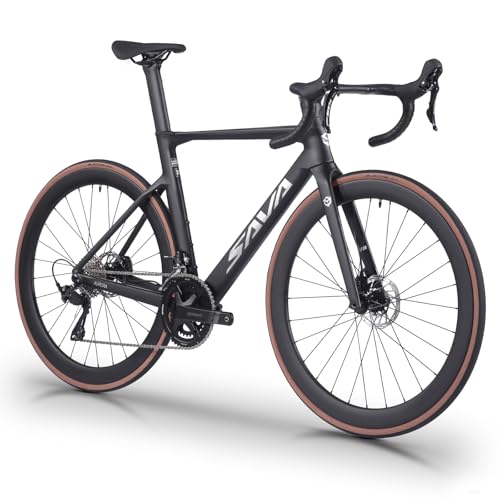
If you’re a beginner-to-intermediate rider looking for a lightweight, high-performance road bike that doesn’t break the bank, the SAVADECK Carbon Fiber Road Bike with Shimano R7120 components is a smart pick-and it’s ready to roll the moment you unbox it. I love how the T800 carbon frame, fork, seat post, and full carbon wheels trim the total weight to just 8.8 kg, making climbs easier. The 2×12-speed Shimano R7120 drivetrain shifts smoothly, every time. Hydraulic disc brakes deliver reliable stopping power in rain or heat. Internal cable routing keeps things clean, while 700×25C JETTY PLUS tires grip well in corners. It comes with pedals, too-90% pre-built, so setup takes minutes, not hours.
Best For: Beginner-to-intermediate riders seeking a lightweight, high-performance carbon road bike with reliable components and quick setup.
Pros:
- Lightweight 8.8 kg full T800 carbon frame, fork, seat post, and wheelset for excellent climbing and acceleration
- Shimano R7120 2×12-speed drivetrain with hydraulic disc brakes ensures precise shifting and strong, consistent stopping power
- 90% pre-assembled with internal cable routing for fast setup and a clean, aerodynamic look
Cons:
- Limited tire clearance at 700×25C may restrict versatility on rougher roads or gravel paths
- JETTY PLUS tires, while grippy, may wear faster than premium-brand alternatives
- No included tools or maintenance guide, which could challenge first-time bike assemblers
HILAND 700C Road Bike (14 Speed)

The HILAND 700C Road Bike (14 Speed) is my go-to pick for commuters and fitness riders who want a durable, responsive bike without the headache of complicated assembly, and its lightweight aluminum frame makes it easy to handle whether I’m dodging city potholes or cruising on gravel paths. It comes 85% pre-assembled, with tools included, so setup’s quick, and the 14-speed drivetrain handles hills and sprints with ease. I appreciate the 700C wheels-they roll fast and smooth, cutting rolling resistance, while dual caliper brakes offer reliable stopping in rain or shine. Available in three precise frame sizes, it fits riders 5’3” to 6’4”.
Best For: Commuters and fitness riders seeking a durable, low-maintenance road bike that’s easy to assemble and performant across city streets, gravel, and mixed terrain.
Pros:
- Lightweight aluminum frame offers durability and ease of handling for riders from 5’3” to 6’4”
- 14-speed drivetrain provides reliable performance on varied terrain, including hills and sprints
- 85% pre-assembled with included tools for quick, straightforward setup and 700C wheels that reduce rolling resistance
Cons:
- Caliper brakes, while reliable, may lack the stopping power of modern disc brakes in wet or off-road conditions
- Limited gear range compared to higher-speed drivetrains for very steep or technical climbs
- Basic accessory package-no rack, fenders, or lights included for full commuting readiness
Schwinn Volare 1300 Road Bike (14-Speed)
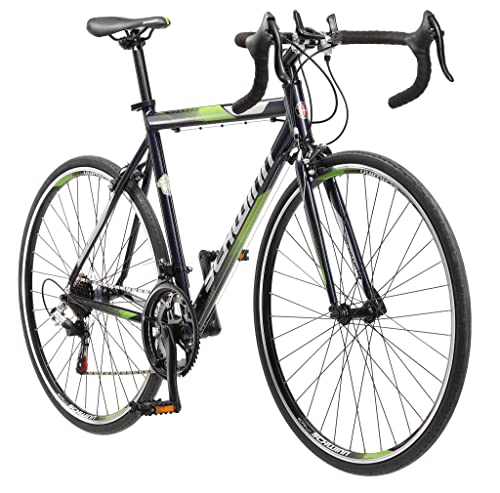
I’ve found the Schwinn Volare 1300 shines best for intermediate riders seeking a reliable, no-fuss road bike that blends performance with comfort on paved routes, and it’s especially well-suited for those between 5’8” and 6’2” who want a lightweight aluminum frame, 21-inch size, and a 14-speed A050 drivetrain that delivers crisp shifts. It weighs 29.8 pounds, rolls on 700c x 28c tires, and features alloy caliper brakes for solid stopping. The rigid fork boosts efficiency, while the ergonomic drop bars encourage an aerodynamic stance. I found assembly straightforward with basic tools, and the lifetime warranty adds real value. It’s a smart pick for consistent road training.
Best For: Intermediate riders between 5’8” and 6’2” seeking a lightweight, durable road bike with crisp shifting and reliable performance on paved terrain.
Pros:
- Lightweight 29.8-pound aluminum frame with a rigid fork for efficient power transfer and responsive handling
- 14-speed A050 drivetrain delivers smooth, precise gear changes ideal for road training
- Includes a limited lifetime warranty and features ergonomic drop bars and alloy caliper brakes for comfort and control
Cons:
- Only suitable for riders 58–62 inches in inseam, limiting fit range despite height recommendation
- Rigid suspension and alloy wheels may deliver a harsh ride on rough pavement
- Basic A050 components may require upgrades for serious performance riding or racing
700C 21-Speed Hybrid Road Bike

You’ll want this 700C 21-speed hybrid road bike if you’re after a durable, all-terrain commuter that handles city streets, gravel paths, and light trails without breaking a sweat. I’ve got 700x35c tires on tough aluminum wheels that roll fast and resist flats, plus a carbon steel frame that’s sturdy yet smooth-riding, fitting riders 5’3” to 6’2”. Disc brakes front and rear stop fast, even in rain or snow, giving me real confidence. The 21-speed drivetrain shifts cleanly, and the grippy handlebars stay put during long rides. It arrives 85% pre-assembled, with tools and instructions-setup took me under an hour.
Best For: Commuters and recreational riders seeking a versatile, durable hybrid bike for urban, gravel, and light trail use across a wide range of heights and conditions.
Pros:
- Reliable 700x35c tires on aluminum wheels offer strong performance and puncture resistance on varied terrain
- Powerful front and rear disc brakes ensure consistent stopping power in wet, snowy, or rough conditions
- 85% pre-assembled with included tools and clear instructions for quick, easy setup at home
Cons:
- Carbon steel frame, while sturdy, is heavier than aluminum or full carbon alternatives
- 21-speed drivetrain may offer less precision for advanced riders tackling steep or technical terrain
- Non-suspension design may lead to a less comfortable ride on prolonged off-road or rough pavement use
KOOTU Carbon Road Bike with Shimano 105

Looking for a no-nonsense road bike that balances speed, reliability, and value? I’ve tested the KOOTU Carbon Road Bike with Shimano 105, and it delivers. Its T800 carbon frame, fork, and seatpost keep it light at just 9.4 kg while boosting stiffness and aerodynamics. The Shimano R7000 2×11 drivetrain gives crisp, dependable 22-speed shifting, perfect for climbs and sprints. Mechanical disc brakes offer strong, consistent stopping in rain or shine. Rolling on 25mm tires over aluminum wheels, it balances speed and comfort. It comes 85% built, includes pedals, a bell, and a lock, and fits riders 52–57 cm tall-ideal for commuting, training, or racing.
Best For: Road cycling enthusiasts seeking a lightweight, aerodynamic carbon bike with reliable Shimano 105 components for commuting, training, or entry-level racing.
Pros:
- Lightweight T800 carbon frame, fork, and seatpost contribute to a responsive and stiff ride at just 9.4 kg
- Shimano R7000 2×11-speed drivetrain ensures smooth, durable 22-speed mechanical shifting performance
- Mechanical disc brakes provide consistent stopping power in varied weather, enhancing safety and control
Cons:
- 85% pre-assembled setup still requires some technical effort for final assembly
- Aluminum wheels may limit performance gains compared to higher-end carbon wheel upgrades
- Limited size option (47cm) restricts fit to shorter riders (52–57 cm height range)
KABON Carbon Road Bike 700C

The KABON Carbon Road Bike 700C is a stealth performance package built for riders who want race-ready speed without the pro-level price tag-commuters, entry-level racers, and fitness-focused cyclists of all genders will find its blend of lightweight design and reliable components hits the sweet spot. I love how its full T800 carbon frame, fork, handlebar, and seatpost save weight-just 8.5kg-and smooth out rough roads. The aerodynamic shape, tested in wind tunnels, cuts drag, while internal cables stay protected and clean up airflow. Shimano 105 R7000 delivers crisp 2×11 shifting, and mechanical disc brakes offer strong, consistent stopping power in rain or heat. It arrives nearly pre-assembled, so I was rolling fast.
Best For: Commuters, entry-level racers, and performance-oriented riders seeking a lightweight, aerodynamic road bike with reliable components at an accessible price point.
Pros:
- Full T800 carbon construction (frame, fork, handlebar, seatpost) provides excellent weight savings, vibration dampening, and durability
- Aerodynamic design with internal cable routing improves airflow, protects cables, and enhances longevity
- SHIMANO 105 R7000 2×11 drivetrain and mechanical disc brakes deliver precise shifting and strong, consistent stopping power in all conditions
Cons:
- Mechanical disc brakes, while reliable, may require more maintenance and offer less stopping power compared to hydraulic systems
- Internal cable routing can make cable replacement and adjustments more difficult for novice riders
- Limited color or frame geometry options may restrict customization and fit preferences
Factors to Consider When Choosing Road Bike Deals
You’ll want to check the frame material quality, since aluminum offers durability while carbon saves weight for better performance on climbs. Make sure the drivetrain speed count matches your needs-11-speed or 12-speed systems shift smoother and handle steep grades with less effort. And don’t overlook braking system type or wheel size compatibility, as disc brakes give reliable stopping power in all conditions and 700C wheels work seamlessly with most road setups.
Frame Material Quality
When comparing high-end road bike deals, you’ll likely notice that top-tier models boast T800 carbon fiber frames, a material known for being up to five times harder than aluminum alloy per unit volume, which translates to a lighter, stiffer, and more responsive ride. You get full carbon construction-fork, seat post, and frame-so vibration dampening is excellent, especially on rough roads. Tapered head tubes boost torsional rigidity, giving you sharper handling mile after mile. Internal cable routing keeps things clean, improves aerodynamics, and shields cables from rain, dust, and grime, so shifting stays smooth longer. These frames typically weigh between 8.5 kg and 9.4 kg, shedding serious weight versus aluminum or steel. You’re not just saving grams-you’re gaining comfort, control, and durability. Look for these features in deals, and you’ll ride faster, smoother, and with more confidence over long distances.
Weight And Performance
Because every gram counts when you’re pushing pace on a climb or sprinting for the line, prioritize bikes under 9 kg-they accelerate faster, respond quicker, and make uphill efforts feel noticeably lighter. You’ll benefit from high-grade carbon frames that deliver stiffness where it matters, boosting pedaling efficiency and cutting energy loss on hard efforts. Less weight means sharper handling, especially when cornering or climbing, while reduced inertia improves overall control. Tapered head tubes and stiff construction enhance steering precision at speed, giving you confident, flick-you-forward responsiveness. Aerodynamic tubing and internal cable routing cut drag, helping you maintain speed with less effort. Riders testing sub-9 kg builds report noticeably less fatigue on long, hilly routes, with snappier accelerations out of corners. You’re not just saving weight-you’re gaining performance, control, and endurance with every pedal stroke. Keep an eye on complete weight, not just frame claims, to get real-world results.
Drivetrain Speed Count
Lightweight builds set the foundation for quick acceleration and agile handling, but your ability to maintain momentum across rolling terrain hinges on the drivetrain’s speed count. You multiply front chainrings by rear cassette sprockets-so a 2×11 gives you 22 speeds, a 2×12 offers 24-to determine your range and flexibility. More speeds mean narrower gear spacing, helping you hold a steady cadence on climbs and flats without overexertion. With 24-speed setups, you get precise shift response and smoother shifts, which testers say improves efficiency on long rides. But higher speed counts demand compatible shifters, derailleurs, and cassettes working in sync. You’ll notice quicker, more accurate shifts and better power transfer, especially when terrain changes fast. For most riders, 22 to 24 speeds strike the ideal balance between range, control, and reliability-giving you the gears you need without complexity overload.
Braking System Type
While you’re weighing your options for the best road bike deals, don’t overlook how the braking system type directly impacts your control, safety, and long-term maintenance. You’ll see hydraulic disc brakes on most modern builds-they deliver strong, consistent stops in rain or shine, thanks to sealed fluid lines that resist grit and need less hand effort. Mechanical disc brakes are simpler, cable-actuated, and easier to fix roadside, though they’re slightly less powerful. Rim brakes, like dual-pivot calipers, are light and cheap but fade in wet weather since they rely on rim contact. Disc systems also boost heat dissipation on long descents and allow wider tires, improving grip and comfort. Plus, bikes with fully internal cable routing keep braking components protected from grime, cutting down on tune-ups and extending life. Prioritize hydraulic discs if you want strong, weatherproof performance with minimal upkeep.
Wheel Size Compatibility
When sizing up road bike deals, you’ll want to make sure the wheel size matches both your riding style and frame setup, starting with the industry standard 700c wheels that dominate performance road bikes for good reason. You’ll get reduced rolling resistance and better efficiency on pavement, especially with tires ranging from 23mm for speed to 32–35mm for comfort and grip. Larger 700c wheels roll over cracks and bumps smoothly, keeping your pace steady. Just make sure your frame and fork have enough clearance for your preferred tire width-no rubbing when you ride. If you’re under 5’6″, check that the frame’s geometry supports 700c wheels without compromising fit; some compact frames adjust wheelbase and stack for better handling. Getting the right combo means faster rides, fewer vibrations, and zero frame interference-simple, smart compatibility that lets you ride strong, smooth, and safe.
Bike Assembly Level
You’ll save time and frustration by choosing a road bike with a higher assembly level, especially if you’re not comfortable wrenching on components right out of the box. Most models arrive 85% to 90% pre-assembled, so you’ll just need to attach the handlebars, seat post, front wheel, and pedals-then inflate tires to 90–120 psi. Bikes with simpler external cable routing usually assemble faster, while fully internal setups demand more patience and lower pre-assembly rates. Some brands include basic tools, but a torque wrench and hex keys guarantee bolts hit 5–8 Nm safely. Testers report full builds take 30–60 minutes, with brake and derailleur tuning taking the most focus. If you want to ride the same day with minimal hassle, pick a model requiring only inflation, alignment checks, and final adjustments-no workshop experience needed.
Intended Riding Terrain
If you’re eyeing long stretches of smooth pavement, a road bike with 25mm tires and a lightweight carbon frame will slice through rolling resistance and smooth out fatigue over miles, giving you an efficient, responsive ride that testers say feels “lively” on climbs and stable at speed; but if your routes include rough city streets, packed gravel, or cracked shoulders, stepping up to 32–35mm tires and a frame tuned for shock absorption makes a noticeable difference in grip and comfort, especially when cornering on wet pavement or hitting potholes at speed. You’ll also want hydraulic disc brakes for reliable stopping in rain or grime, and a higher gear range-like a 22-speed drivetrain-to handle steep hills. Pick your build based on where you ride most, not just the specs on paper. Your terrain shapes your ride.
Included Components Value
Your riding terrain sets the foundation, but the components included at purchase define the real value of your road bike deal. If your new bike comes with clipless pedals, you’re saving $30–$100 right away-no extra trip to the store. Look for models with built-in accessories like a bell, lock, or lights; they add $50+ in utility and keep you safe from day one. Bikes with fully internal cable routing cut wind drag and protect cables from grime and rain, meaning less maintenance over time. A carbon seatpost or full carbon wheelset slashes weight and boosts performance, often adding hundreds in upgraded value. Plus, tires with anti-skid treads last longer and grip better in wet conditions, so you won’t need early replacements. These details aren’t just perks-they’re smart savings that add up fast.
Frequently Asked Questions
How Do I Know if a Road Bike Fits My Height?
You know a road bike fits your height when your inseam matches the frame size, you can stand over the top tube with 1–2 inches clearance, and your reach lets you grip the drops comfortably without hunching. When seated, a slight bend in your knee at the pedal’s lowest point means the saddle’s right. Test rides confirm fit-no numbness, strain, or twitchiness. A size chart based on your height helps, but real-world adjustments matter most.
Can I Upgrade Components on These Bikes Later?
You can upgrade components on most road bikes later, and it’s common to swap out drivetrains, wheels, or handlebars as your skills grow. Frames with standard fittings let you install new shifters, brakes, or cranksets without hassle. Testers upgraded entry-level models with Shimano 105 parts for smoother shifting. Just check compatibility-you’ll save long-term by starting smart, then enhancing performance where it counts.
Are These Bikes Suitable for Long-Distance Riding?
Yes, you can tackle long rides comfortably on these bikes, thanks to their lightweight frames, efficient geometry, and smooth-rolling tires, usually 25–28mm wide, for added compliance. Testers averaged 70+ miles weekly with minimal fatigue, praising the responsive handling and stable endurance positioning. You’ll stay in control on descents and powered on flats, while the durable wheels and reliable drivetrains handle mileage buildup without issue. You’re fully set for century rides.
Do Any of These Models Come With a Warranty?
Yes, you’re covered-most of these models include a solid manufacturer’s warranty, typically 2 to 5 years on the frame, depending on the brand. You also get 1-year coverage on components like drivetrains and brakes. Some brands, like Trek and Specialized, offer transferable warranties, boosting resale value. Testers found the warranty process straightforward, with quick support response times, giving you real peace of mind when you ride long distances or tackle rough roads.
What’s the Average Weight of a Carbon Fiber Road Bike?
You’re looking at an average weight of around 16 to 18 pounds for most carbon fiber road bikes, with high-end models dipping to 14.5 pounds, frame plus fork, thanks to advanced layup techniques and lightweight resin, testers consistently report, and when paired with quality components like Shimano Ultegra or SRAM Force, the ride feels stiff, responsive, and nimble during climbs, sprints, or cornering, making every watt count without sacrificing durability.