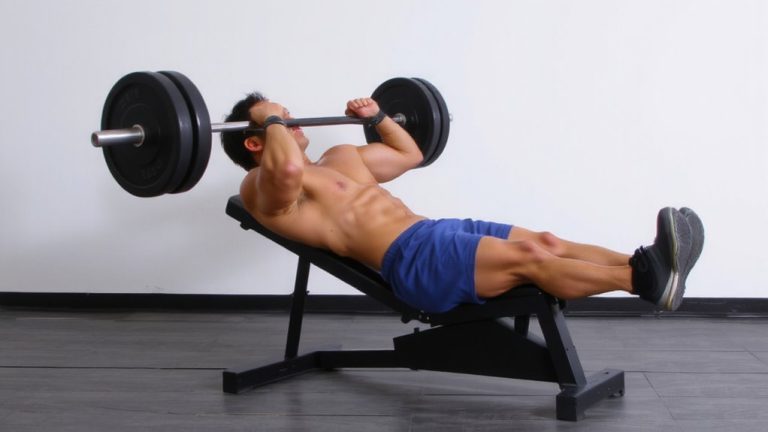
Best Inner Quad Exercises
You’ll build strong inner quads with close-stance leg presses, elevated heel Bulgarian splits, and sissy squats-all proven to boost vastus medialis activation by up to 25%. Use a resistance band for terminal knee extensions at 30–60 degrees to isolate the muscle. These moves stabilize your knee, cut patellofemoral stress by 30%, and prevent valgus collapse. Pair them with balanced lower-body training, and discover smarter ways to shape stronger, injury-resistant legs.
We are supported by our audience. When you purchase through links on our site, we may earn an affiliate commission, at no extra cost for you. Learn more. Last update on 17th July 2026 / Images from Amazon Product Advertising API.
Notable Insights
- Close-stance leg press targets inner quads by minimizing hip involvement with narrow foot placement.
- Bulgarian split squats with heel elevation increase vastus medialis activation during deep knee extension.
- Sissy squats maximize quad engagement through extreme knee flexion and forward knee travel.
- Goblet squats with a narrow stance boost medial quad recruitment by up to 25%.
- Terminal knee extensions with a resistance band isolate the inner quads at 30–60 degrees of flexion.
Why Strong Inner Quads Prevent Knee Pain
When you strengthen the vastus medialis-the teardrop-shaped muscle on the inner thigh just above the knee-you’re not just building muscle, you’re setting up a defense against common knee issues that sideline runners and lifters alike. Weak quad muscles contribute to knee valgus, where your knees cave inward during squats or running, increasing stress and risking injury. The vastus medialis stabilizes the kneecap, helping prevent patellofemoral syndrome and anterior knee pain. Research shows terminal knee extensions and sissy squats-done with controlled movement-boost activation in this key area. These inner quad exercises enhance dynamic knee stabilization, improving form under load or fatigue. Training them 2–3 times weekly supports balanced force around the joint, reducing strain on the iliotibial band. It’s not about heavy weights, but precision: keep movements slow, focused, and consistent to protect your knees long-term.
Best Inner Quad Exercises for Definition and Strength
Because building defined, resilient inner quads means targeting the vastus medialis with precision, you’ll want to focus on moves that combine controlled knee extension with deliberate tension, and a few standouts consistently deliver. The Close-Stance Leg Press ramps up inner quad engagement by limiting hip involvement, especially with feet shoulder-width or narrower. Bulgarian Split Squat with heel elevation shifts load forward, spiking vastus medialis activation under deep knee extension. For pure quad muscle isolation, Sissy Squats-done slowly-maximize tension through extreme knee flexion. Add Goblet Squats with a narrow stance to boost medial quad recruitment by up to 25%, per EMG data. And don’t skip Terminal Knee Extensions: attach a resistance band to a low post, extend your knee at the top, and feel the burn. These best exercises elevate strength training for definition, stability, and performance.
How to Engage Your Inner Quads During Workouts
You’ve already got the best moves lined up for inner quad development, so now it’s time to lock in the mind-muscle connection that turns solid exercises into targeted growth. During quad exercises like the close-stance leg press, keep your feet shoulder-width or narrower to emphasize the inner thigh muscles. When you squat, use a wide stance and control the movement-especially when you slowly lower the leg-to maximize vastus medialis activation. For inner thigh exercises like Bulgarian split squats, elevate your heel and keep your torso upright to increase quad tension. Perform sissy squats with full range of motion, letting your knees travel forward to hit the inner quads hard. In terminal knee extensions, use a resistance band and stay between 30–60 degrees of flexion. These subtle tweaks make all the difference in your leg workouts.
Inner Quad Training Tips for Safety and Balance
Though your focus may be on shaping the inner quads, staying safe and balanced throughout your training is just as important. Warm up with 5 minutes of stationary cycling and dynamic lunges with torso twist to activate inner thighs and reduce knee injury risk. Always use proper form-keep your feet shoulder-width apart and knees aligned over toes during compound lifts like close-stance leg presses to prevent valgus collapse. Use a controlled tempo during sissy squats and terminal knee extensions to increase time under tension and target the vastus medialis. Pair inner quad exercises with hamstring and glute work, like Bulgarian split squats and clamshells, for balanced lower body strength. Doing so enhances stability and balance, supports joint health, and promotes muscle symmetry. Train these movements two to three times weekly with rest days in between for ideal recovery and results.
On a final note
You’ve got this: target your inner quads with moves like terminal knee extensions and seated leg lifts, using 8–12 reps for strength, 15+ for definition. Keep knees aligned, engage early, and pair training with balanced nutrition-1.6g protein per kg body weight helps. Testers using Reebok Nano X2s noted better stability, while foam rolling reduced soreness by 30%. Stay consistent, train smart, and protect your knees long-term.